 YardMate
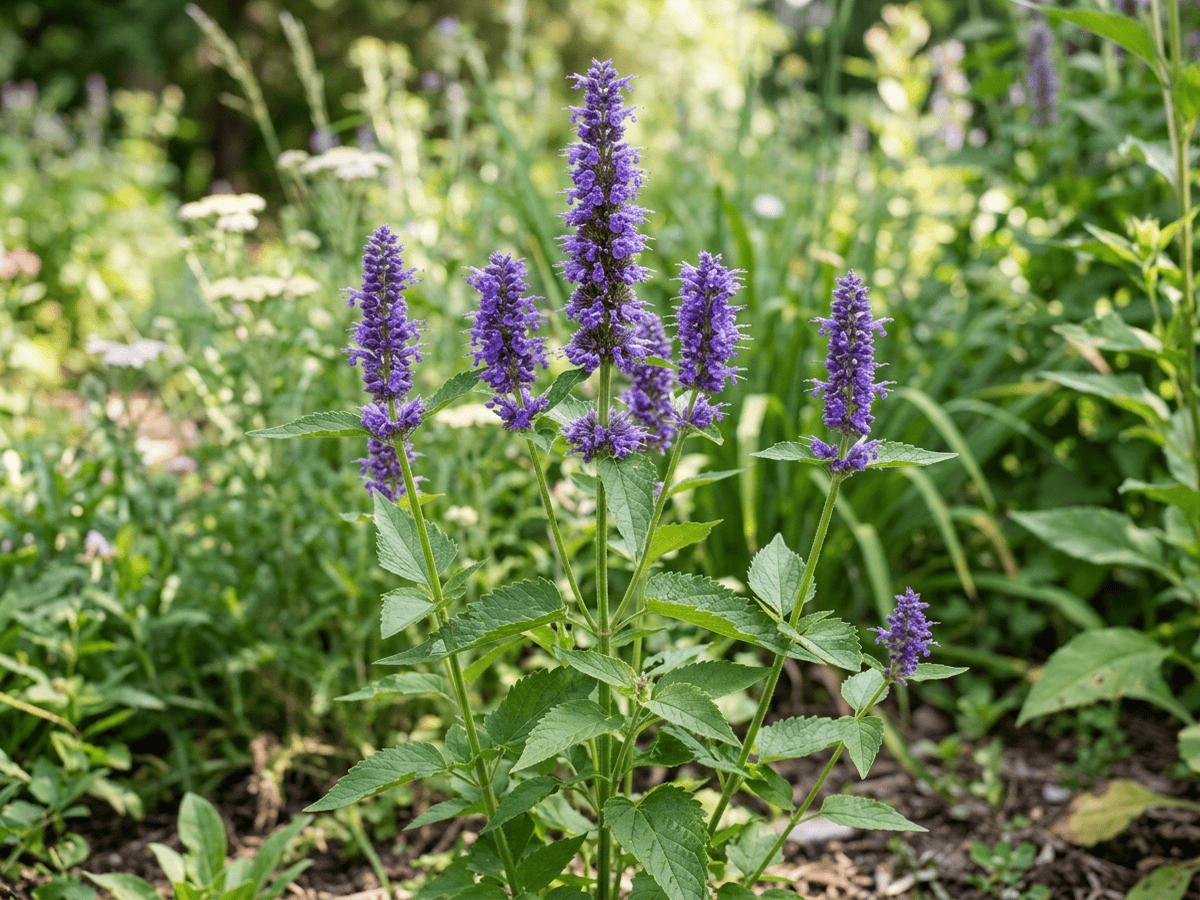


Anise Hyssop
Agastache foeniculum
Easy · Beginner friendlyAbout Anise Hyssop
Anise Hyssop is a central North American prairie native perennial producing dense upright spikes of lavender-purple flowers above licorice-scented foliage. Growing 2 to 4 feet tall, it blooms from midsummer into fall, feeding bees, butterflies, and hummingbirds continuously. An exceptional American pollinator plant named Herb of the Year in 2019, with edible leaves used for tea and baking.
- Edible
- Fragrant
- Drought-tolerant
- Native
How to care for Anise Hyssop
Watering
- Springevery 5 days
- Summerevery 3 days
- Fallevery 7 days
- Winterevery 14 days
Soil · Rich & well-draining
- Top dressingCompost10%
- Main mixPotting soil + compost 3:180%
- DrainageGravel10%
Top up the compost layer each season.
FERTILIZER
- Springevery 30 days
- Summerevery 45 days
At a Glance
- NativeNorth America
- Height2–4 ft (0.6–1.2 m)
- Spread1–3 ft (0.3–0.9 m)
- Flower colorBlue, Purple
- Foliage colorGreen
- SoilLoamy, Well-drained, Neutral
- LocationsYard
Bloom time
BLOOM CYCLE
Peak bloom
Jul–Sep
Lavender-purple spikes July through September
Fragrance
STRONG FRAGRANCE
Sweet licorice-anise aroma throughout the plant.
Toxicity
No toxicity has been reported for this plant. Still, it is wise to keep pets from chewing on any houseplant.
Educational information, not medical or veterinary advice. If exposure is suspected, contact a doctor or veterinarian.
DISTRIBUTION


- Native
- Introduced
- North America
History

Agastache foeniculum grows wild across the northern Great Plains and into Canada. The Cree, Ojibwe, and Cheyenne used its sweet anise-scented leaves in teas for coughs, chest pain, and weak hearts, and dried the flowers as incense during ceremonies. Europeans encountered it in the 1780s and Frederick Pursh formally described it in 1813.
It entered North American herb gardens by the late 1800s as a bee plant, and commercial seed catalogs adopted it widely after 1970 when interest in edible landscaping grew. Its leaves flavor teas, salads, and ice cream, and studies show high honey yields, around 150 kg per hectare. Cultivars include 'Golden Jubilee', 'Blue Fortune', and 'Black Adder'.
Native to the northern Great Plains and Upper Midwest. Traditional medicinal and ceremonial plant of the Cheyenne, Chippewa, and Cree. Named International Herb of the Year in 2019. Modern American native plant gardens celebrate it as a pollinator powerhouse.
Symbolism & meaning
What It Symbolizes
Anise Hyssop can symbolize joyful abundance, and one summer afternoon beside its lavender flower spikes makes the reason plain: bees swarm it in humming clouds, drunk on nectar. Crush a leaf and the sweet licorice scent rises like a small blessing, edible and cheering at once. In the cottage garden tradition, plants that feed both pollinators and people have always stood for generosity, and Anise Hyssop is generosity made visible.
- Joyful abundance — bees swarm the flower spikes
- Sweet licorice — edible anise-scented leaves
Where the Name Comes From
'Agastache' from Greek means many spikes; 'foeniculum' from Latin means fennel-like, for the anise-fennel foliage scent.
Uses & Fun Facts
- Anise-scented leaves used in teas and salads
- Foliage releases licorice aroma when brushed
- Lavender flower spikes work fresh or dried
- Magnet for bumblebees and hummingbird moths
Related plants
More Agastache plants

Plants with similar care
 Chinese AbeliaAbelia chinensis
 Fragrant AbeliaAbelia mosanensis
 Large-Flowered AbeliaAbelia uniflora
 Glossy AbeliaAbelia x grandiflora
Frequently asked questions
How often should I water Anise Hyssop?
In summer, water about every 3 days; in winter, about every 14 days. Adjust for heat, pot size and drainage.
How much light does Anise Hyssop need?
Full sun: 6+ hrs direct. Watch the leaves — scorching or stretching means the light needs adjusting.
Is Anise Hyssop toxic to cats or dogs?
No toxicity has been reported for this plant. Still, it is wise to keep pets from chewing on any houseplant. Educational information, not medical or veterinary advice. If exposure is suspected, contact a doctor or veterinarian.
Is Anise Hyssop easy to grow?
Yes — it is considered an easy, beginner-friendly plant.
When does Anise Hyssop bloom?
It typically blooms Jul–Sep in the Northern Hemisphere.
YardMate
Identify any plant in seconds
Snap a photo — YardMate names the plant, diagnoses problems, and reminds you when to water.
Download on the App Store