 YardMate



Dill
Anethum graveolens
Easy · Beginner friendlyAbout Dill
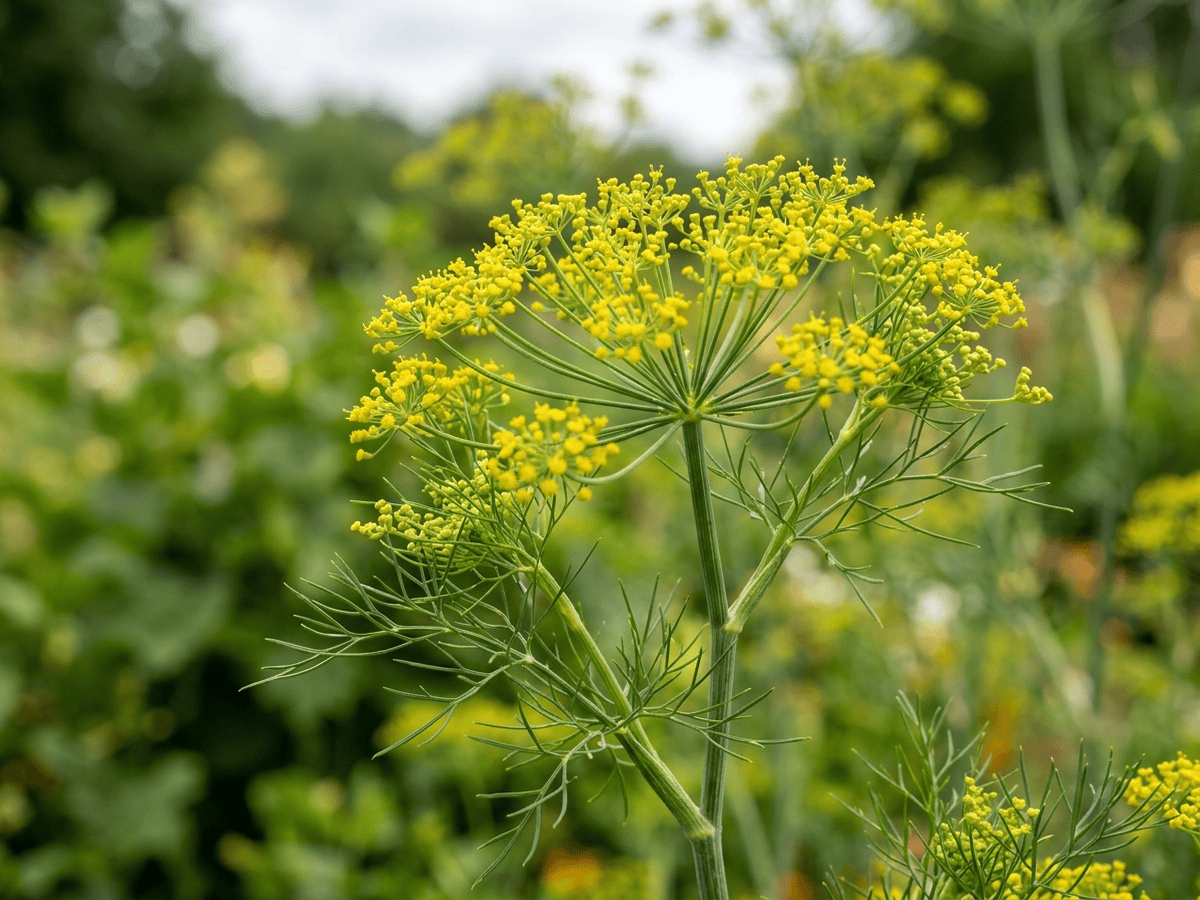
Anethum graveolens, dill, is a tall, feathery annual herb producing aromatic, thread-like leaves (dill weed) and flat-topped clusters of tiny yellow flowers that mature into flavorful seeds. Growing 60–90 cm tall, its wispy foliage creates an airy garden presence. Native to the Mediterranean and western Asia, dill is essential for Scandinavian, Eastern European, and Middle Eastern cuisines — gravlax, dill pickles, tzatziki, and borscht depend on it. Both the fresh herb and seeds are used. Dill is also the sole food plant for swallowtail butterfly caterpillars.
- Edible
- Fragrant
How to care for Dill
Watering
- Springevery 2 days
- Summerevery 2 days
- Fallevery 3 days
- Winterevery 5 days
Soil · Rich & well-draining
- Top dressingCompost10%
- Main mixPotting soil + compost 3:180%
- DrainageGravel10%
Top up the compost layer each season.
FERTILIZER
Balanced Feed 14-14-14
An even feed covers all three needs at once, keeping leaves, roots and blooms moving together with nothing pushed out of balance.
- Nitrogen · Leaves
- Phosphorus · Roots + Blooms
- Potassium · Strength
- Springevery 14 days
- Summerevery 14 days
- Fallevery 21 days
At a Glance
- NativeMediterranean, Western Asia
- Height2–3 ft (0.6–0.9 m)
- Spread1–2 ft (0.3–0.6 m)
- Flower colorYellow
- Foliage colorGreen, Blue-green
- Fruit colorBrown
- SoilLoamy, Well-drained
- LocationsYard · Balcony
Bloom time
BLOOM CYCLE
Peak bloom
Jun–Aug
Yellow umbrella flowers; let some flower for seeds and to attract swallowtail butterflies
Fragrance
STRONG FRAGRANCE
Distinctive caraway-anise aroma from carvone.
Toxicity
Humans Safe · Pets Safe
carvone and limonene
Safe
EXPOSURE No exposure route is reported.
EFFECT Culinary herb and no significant toxicity.
NOTE Listed as non-toxic for humans; avoid eating ornamental plants unless confirmed edible.
Safe
EXPOSURE No exposure route is reported.
EFFECT Not listed as toxic.
NOTE Listed as non-toxic for dogs; avoid eating ornamental plants unless confirmed edible.
Safe
EXPOSURE No exposure route is reported.
EFFECT Not listed as toxic.
NOTE Listed as non-toxic for cats; avoid eating ornamental plants unless confirmed edible.
Educational information, not medical or veterinary advice. If exposure is suspected, contact a doctor or veterinarian.
DISTRIBUTION

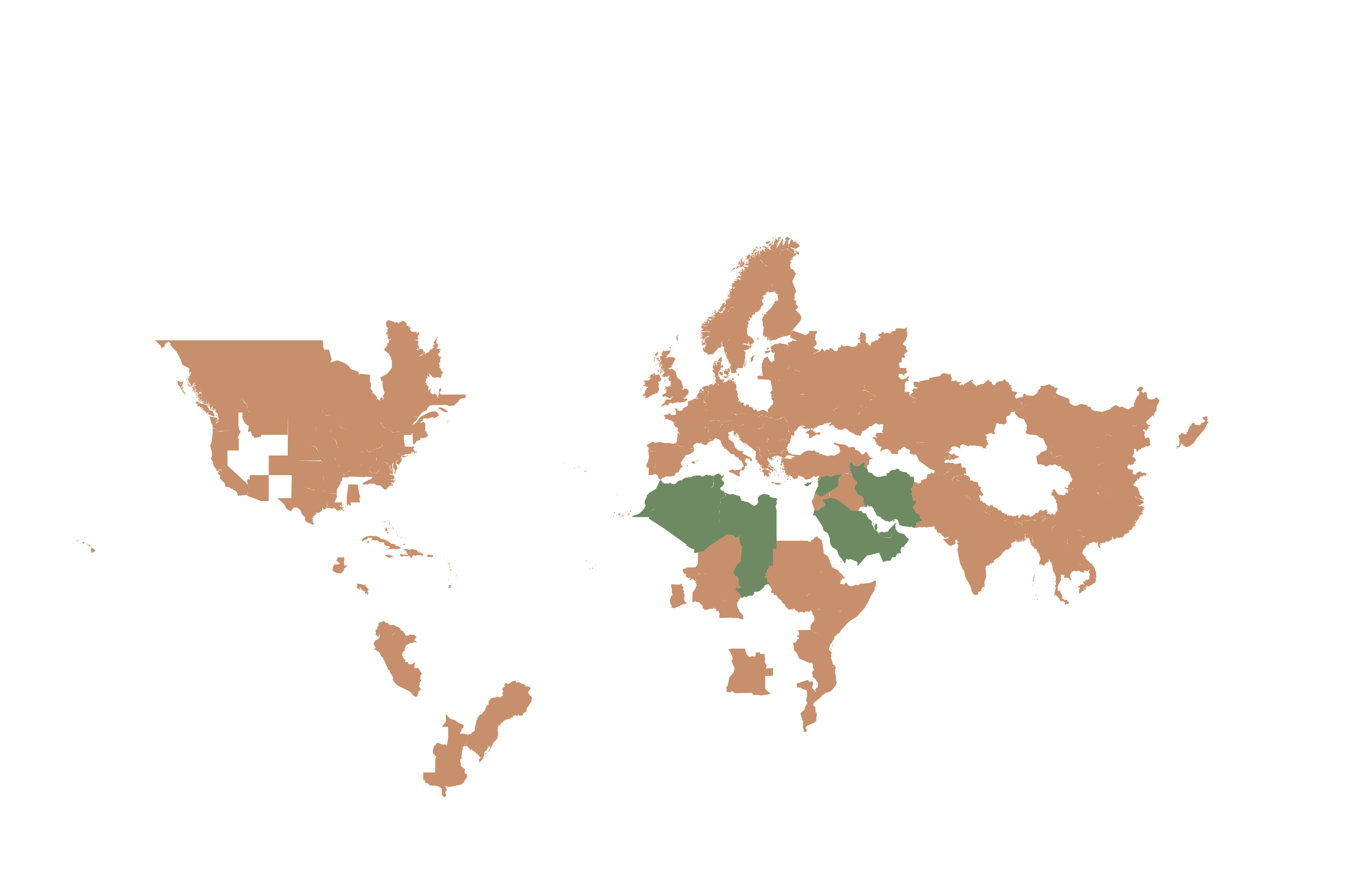
- Native
- Introduced
- Mediterranean
- Western Asia
History

Anethum graveolens is probably native to southwest Asia or the eastern Mediterranean and has been cultivated throughout the region for at least 5,000 years. The Ebers Papyrus (Egypt, circa 1550 BCE) lists it as a medicinal herb. Ancient Greeks used dill to stop hiccups and calm colicky babies, and Roman gladiators ate dill-flavored food before contests.
The English name derives from Old Norse "dilla" or Anglo-Saxon "dylle," meaning to soothe or lull — reflecting its ancient use for infant digestive complaints, a use that survives in modern "gripe water" preparations. Dill is central to Scandinavian cuisine (gravlax, sill, potato dishes), Eastern European dishes (Polish ogórki kiszone pickles, Russian ukha fish soup, Ukrainian borscht), Persian cuisine (baghali polo), and American pickling tradition.
Dill has been used for over 5,000 years — mentioned in Egyptian medical papyri and Babylonian texts. Black swallowtail butterflies lay their eggs exclusively on dill-family plants. Both leaves (dill weed) and seeds (dill seed) are used, with slightly different culinary applications.
Symbolism & meaning
What It Symbolizes
Dill carries the ancient meaning of protection — medieval households hung it above doorways as a charm against evil and ill intent. Its feathery leaves and golden umbels held the quiet job of warding harm from kitchen and home. To grow Dill is to keep a small folk-amulet alive in the herb patch: practical, fragrant, and steeped in centuries of household magic.
- Protection — Medieval door charm against evil — representing safety and warding off harm
Where the Name Comes From
Anethum from Greek 'anethon' (dill). Graveolens means 'strong-smelling.'
Uses & Fun Facts
- Feathery leaves and seeds essential for pickles, fish, and salads
- Crushed foliage and seeds release distinctive caraway-anise Dill scent
- Flat yellow umbels feed parasitic wasps and swallowtail caterpillars
Related plants
Plants with similar care
 Chinese AbeliaAbelia chinensis
 Fragrant AbeliaAbelia mosanensis
 Large-Flowered AbeliaAbelia uniflora
 Glossy AbeliaAbelia x grandiflora
Frequently asked questions
How often should I water Dill?
In summer, water about every 2 days; in winter, about every 5 days. Adjust for heat, pot size and drainage.
How much light does Dill need?
Full sun: 6+ hrs direct. Watch the leaves — scorching or stretching means the light needs adjusting.
Is Dill toxic to cats or dogs?
Pets Safe (Dogs Safe · Cats Safe) Educational information, not medical or veterinary advice. If exposure is suspected, contact a doctor or veterinarian.
Is Dill easy to grow?
Yes — it is considered an easy, beginner-friendly plant.
When does Dill bloom?
It typically blooms Jun–Aug in the Northern Hemisphere.
YardMate
Identify any plant in seconds
Snap a photo — YardMate names the plant, diagnoses problems, and reminds you when to water.
Download on the App Store