 YardMate


Bay Laurel
Laurus nobilis
Easy · Beginner friendlyAbout Bay Laurel
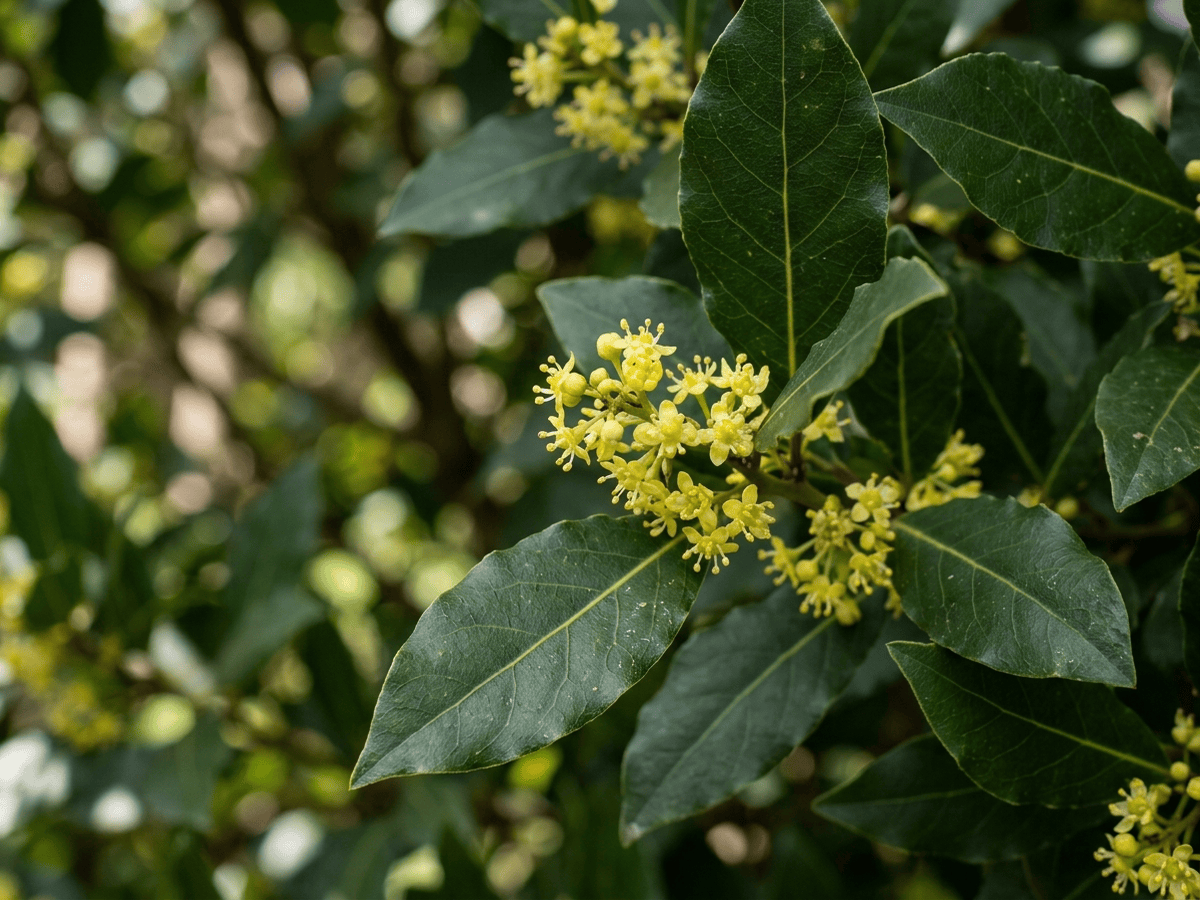
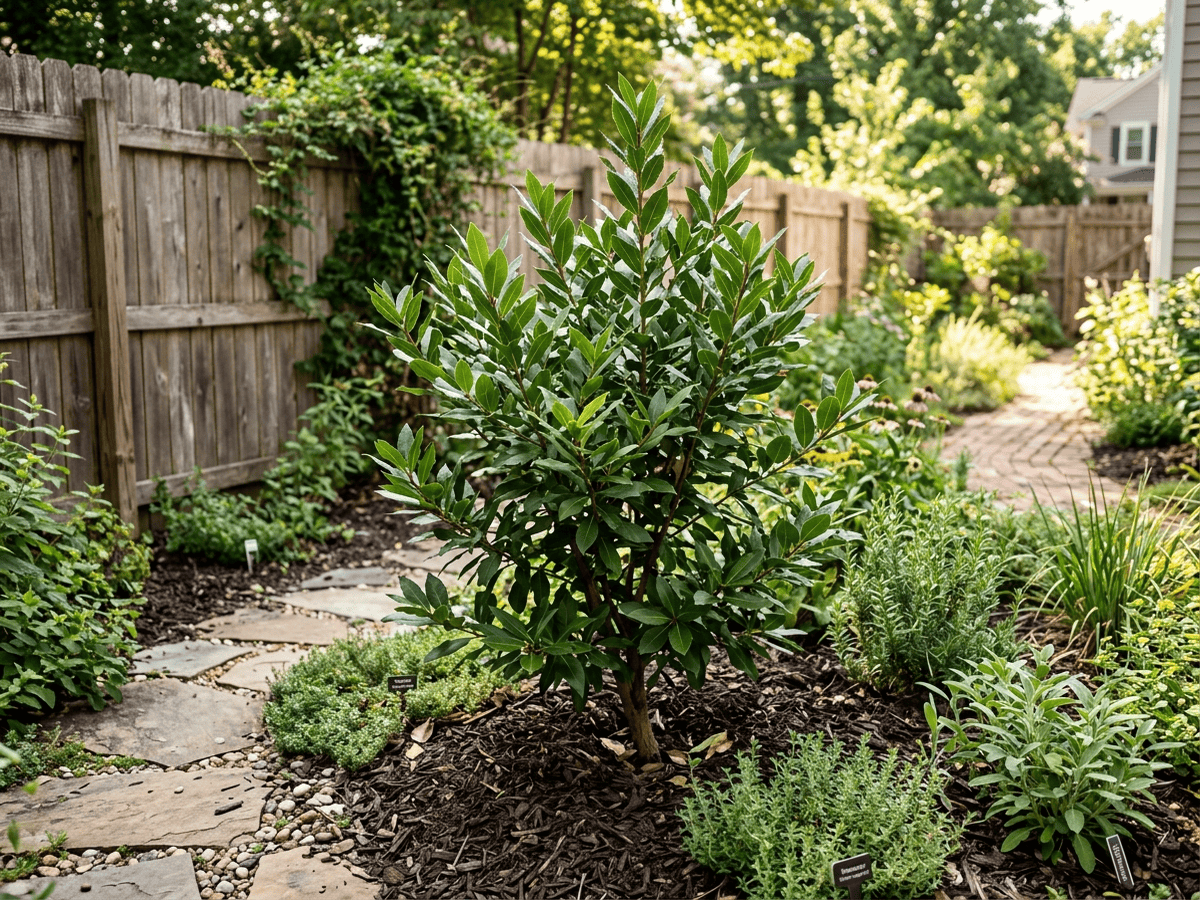
Laurus nobilis, the bay laurel, is an evergreen tree or shrub with aromatic, leathery, dark green leaves used as a flavoring in soups, stews, and sauces worldwide. Native to the Mediterranean, it can grow 10+ meters but is easily maintained as a clipped topiary or container plant. Bay leaves release their full flavor only after prolonged cooking. The tree was sacred in ancient Greece and Rome — victors, poets, and scholars wore laurel wreaths, the origin of 'laureate,' 'baccalaureate,' and the idiom 'resting on one's laurels.'
- Edible
- Evergreen
How to care for Bay Laurel
Watering
- Springevery 5 days
- Summerevery 4 days
- Fallevery 7 days
- Winterevery 14 days
Soil · Rich & well-draining
- Top dressingCompost10%
- Main mixPotting soil + compost 3:180%
- DrainageGravel10%
Top up the compost layer each season.
FERTILIZER
Balanced Feed 14-14-14
An even feed covers all three needs at once, keeping leaves, roots and blooms moving together with nothing pushed out of balance.
- Nitrogen · Leaves
- Phosphorus · Roots + Blooms
- Potassium · Strength
- Springevery 30 days
- Summerevery 30 days
- Fallevery 45 days
At a Glance
- NativeMediterranean, Western Asia
- Height10–30 ft (3–9.1 m)
- Spread8–15 ft (2.4–4.6 m)
- Flower colorYellow, Green
- Foliage colorDark-green
- Fruit colorBlack
- SoilLoamy, Well-drained
- LocationsYard · Balcony
Bloom time
BLOOM CYCLE
Peak bloom
Mar–May
Small yellow-green flowers in spring; grown primarily for aromatic leaves; excellent topiary
Fragrance
STRONG FRAGRANCE
Warm herbal-camphor aroma from fresh or dried leaves.
Toxicity
Humans Slight · Pets Moderate
1,8-cineole, linalool, and methyl eugenol
Slight
- Leaf
- Ingestion
EXPOSURE Eating leaves.
EFFECT Whole leaves are stiff and can cause mechanical injury in the GI tract if swallowed — traditional practice is to remove before serving.
NOTE Leaf flavor use safe; whole leaves should be removed from food before serving. Keep ornamental trees away from pets.
Slight
- All
- Ingestion
EXPOSURE Eating any part of the plant.
EFFECT Essential oils may cause GI upset and whole-leaf mechanical injury hazard.
NOTE Leaf flavor use safe; whole leaves should be removed from food before serving. Keep ornamental trees away from pets.
Moderate
- All
- Ingestion
EXPOSURE Eating any part of the plant.
EFFECT Essential oils toxic to cats and gI upset, lethargy.
NOTE Leaf flavor use safe; whole leaves should be removed from food before serving. Keep ornamental trees away from pets.
Educational information, not medical or veterinary advice. If exposure is suspected, contact a doctor or veterinarian.
DISTRIBUTION


- Native
- Introduced
- Mediterranean
- Western Asia
History

Laurus nobilis is native to the Mediterranean region, particularly Asia Minor. In classical Greece it was sacred to Apollo — the Pythia (priestess of Delphi) chewed laurel leaves before prophesying, and the god's consort Daphne was transformed into a laurel tree to escape him in Ovid's retelling. Victorious athletes at the Pythian Games wore laurel crowns, a custom extended by Rome to military triumphs, emperors, and distinguished poets; the words "laureate" (Nobel Laureate, Poet Laureate) and "baccalaureate" trace to this tradition.
Classical sculpture almost universally depicts emperors (Augustus, Trajan, etc.) wearing laurel wreaths. Culinarily, bay leaves are essential to French bouquet garni, Italian stews, Mexican mole, and Indian biryani.
Roman generals wore laurel wreaths during triumphal processions. Napoleon wore a laurel wreath on his coronation crown. In practical terms, bay leaf has been a kitchen essential since Roman times — Apicius's 1st-century cookbook uses it extensively. Modern research has identified 1,8-cineole in bay leaf as having anti-inflammatory and analgesic properties. The Caribbean "West Indian bay" (Pimenta racemosa) is a different tree used in bay rum cologne.
Symbolism & meaning
What It Symbolizes
Bay Laurel is the very crown of glory — woven into wreaths for victors, poets, and scholars from ancient Greece onward, the ultimate symbol of achievement and honor. The English word 'laureate' carries its name still. To grow a bay tree is to keep the original mark of distinction in the garden, ready in leaf, fragrant in stew, and wreathed in two thousand years of recognition.
- Glory — Crown of victors, poets, and scholars — the ultimate symbol of achievement and honor
Where the Name Comes From
Laurus from Latin for laurel. Nobilis means 'noble' or 'renowned,' for its association with glory and achievement.
Uses & Fun Facts
- Bay leaves season soups, stews, and Mediterranean braises
- Crushed leaves release warm aromatic spice scent
- Shapely evergreen clips into topiary standards for patios
- Ancient Greek and Roman wreath crown of victors and poets
Related plants
Plants with similar care
 Chinese AbeliaAbelia chinensis
 Fragrant AbeliaAbelia mosanensis
 Large-Flowered AbeliaAbelia uniflora
 Glossy AbeliaAbelia x grandiflora
Frequently asked questions
How often should I water Bay Laurel?
In summer, water about every 4 days; in winter, about every 14 days. Adjust for heat, pot size and drainage.
How much light does Bay Laurel need?
Full sun: 6+ hrs direct. Watch the leaves — scorching or stretching means the light needs adjusting.
Is Bay Laurel toxic to cats or dogs?
Pets Moderate (Dogs Slight · Cats Moderate) Educational information, not medical or veterinary advice. If exposure is suspected, contact a doctor or veterinarian.
Is Bay Laurel easy to grow?
Yes — it is considered an easy, beginner-friendly plant.
When does Bay Laurel bloom?
It typically blooms Mar–May in the Northern Hemisphere.
YardMate
Identify any plant in seconds
Snap a photo — YardMate names the plant, diagnoses problems, and reminds you when to water.
Download on the App Store