 YardMate


Anise
Pimpinella anisum
Easy · Beginner friendlyAbout Anise
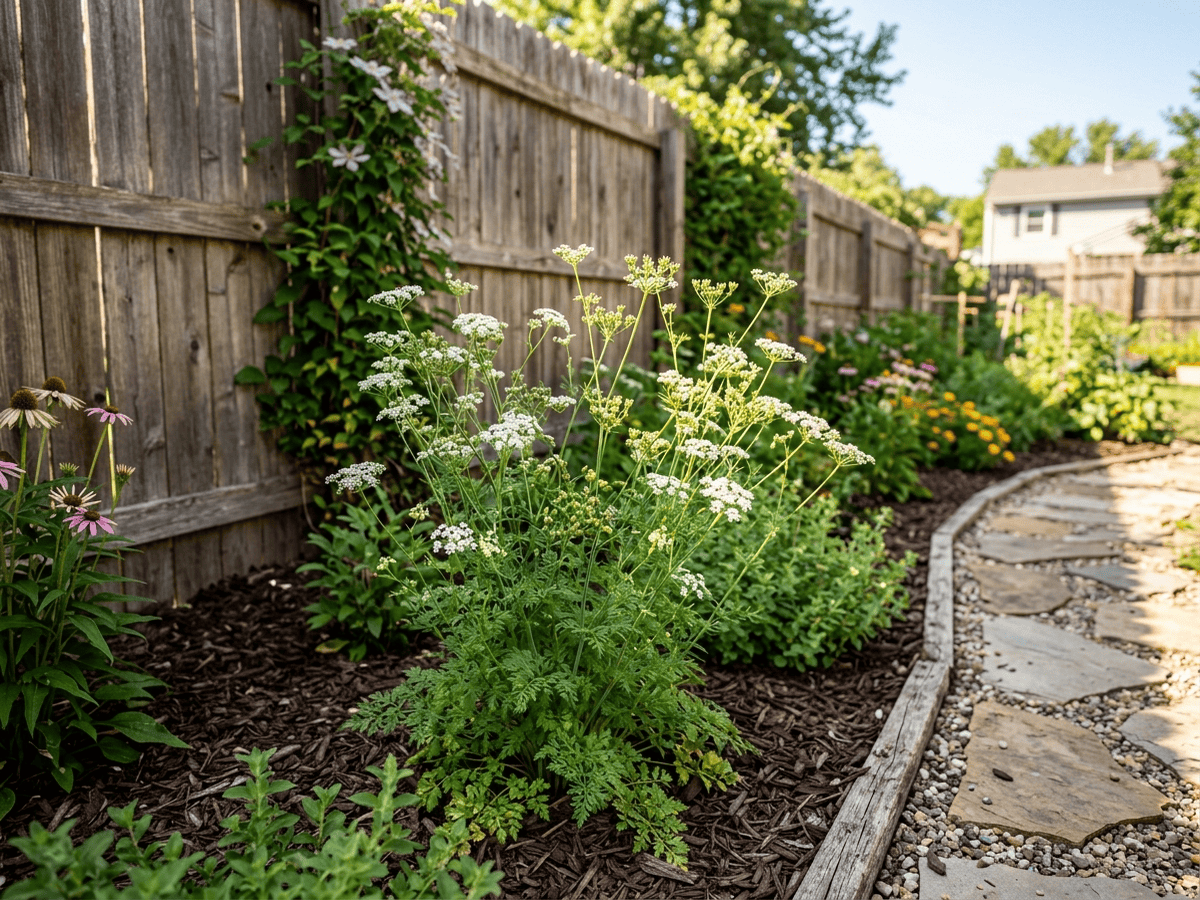
Anise is a Mediterranean annual herb reaching 18-24 inches tall, with finely divided bright-green foliage and lacy white flower umbels in summer. Cultivated for its sweet licorice-flavored seeds used in baking, candy, and liqueurs (ouzo, sambuca, anisette). Easy to grow from seed in American herb gardens, it requires a long warm growing season to ripen seeds properly. The flowers attract beneficial insects and small pollinators.
- Edible
- Fragrant
- Pollinator-friendly
How to care for Anise
Watering
- Springevery 3 days
- Summerevery 5 days
- Fallevery 7 days
- Winterpause watering
Soil · Rich & well-draining
- Top dressingCompost10%
- Main mixPotting soil + compost 3:180%
- DrainageGravel10%
Top up the compost layer each season.
FERTILIZER
Balanced Feed 14-14-14
An even feed covers all three needs at once, keeping leaves, roots and blooms moving together with nothing pushed out of balance.
- Nitrogen · Leaves
- Phosphorus · Roots + Blooms
- Potassium · Strength
- Springevery 30 days
- Summerevery 30 days
At a Glance
- NativeMediterranean
- Height1–2 ft (0.3–0.6 m)
- Spread0.5–1 ft (0.2–0.3 m)
- Flower colorWhite
- Foliage colorGreen
- Fruit colorBrown
- SoilLoamy, Well-drained
- LocationsYard · Balcony
Bloom time
BLOOM CYCLE
Peak bloom
Jun–Aug
Lacy white flower umbels in summer
Fragrance
STRONG FRAGRANCE
The foliage has a sweet licorice-like anethole aroma.
Toxicity
Pets Slight
anethole and estragole
Safe
EXPOSURE No exposure route is reported.
EFFECT No toxic effect is reported.
NOTE Listed as non-toxic for humans; avoid eating ornamental plants unless confirmed edible.
Slight
- Seed
- Ingestion
EXPOSURE Eating seeds.
EFFECT Gastrointestinal upset (large amounts).
NOTE Culinary spice; non-toxic at normal amounts. High doses of essential oil can cause estragole-related concerns.
Slight
- Seed
- Ingestion
EXPOSURE Eating seeds.
EFFECT Gastrointestinal upset.
NOTE Culinary spice; non-toxic at normal amounts. High doses of essential oil can cause estragole-related concerns.
Educational information, not medical or veterinary advice. If exposure is suspected, contact a doctor or veterinarian.
DISTRIBUTION

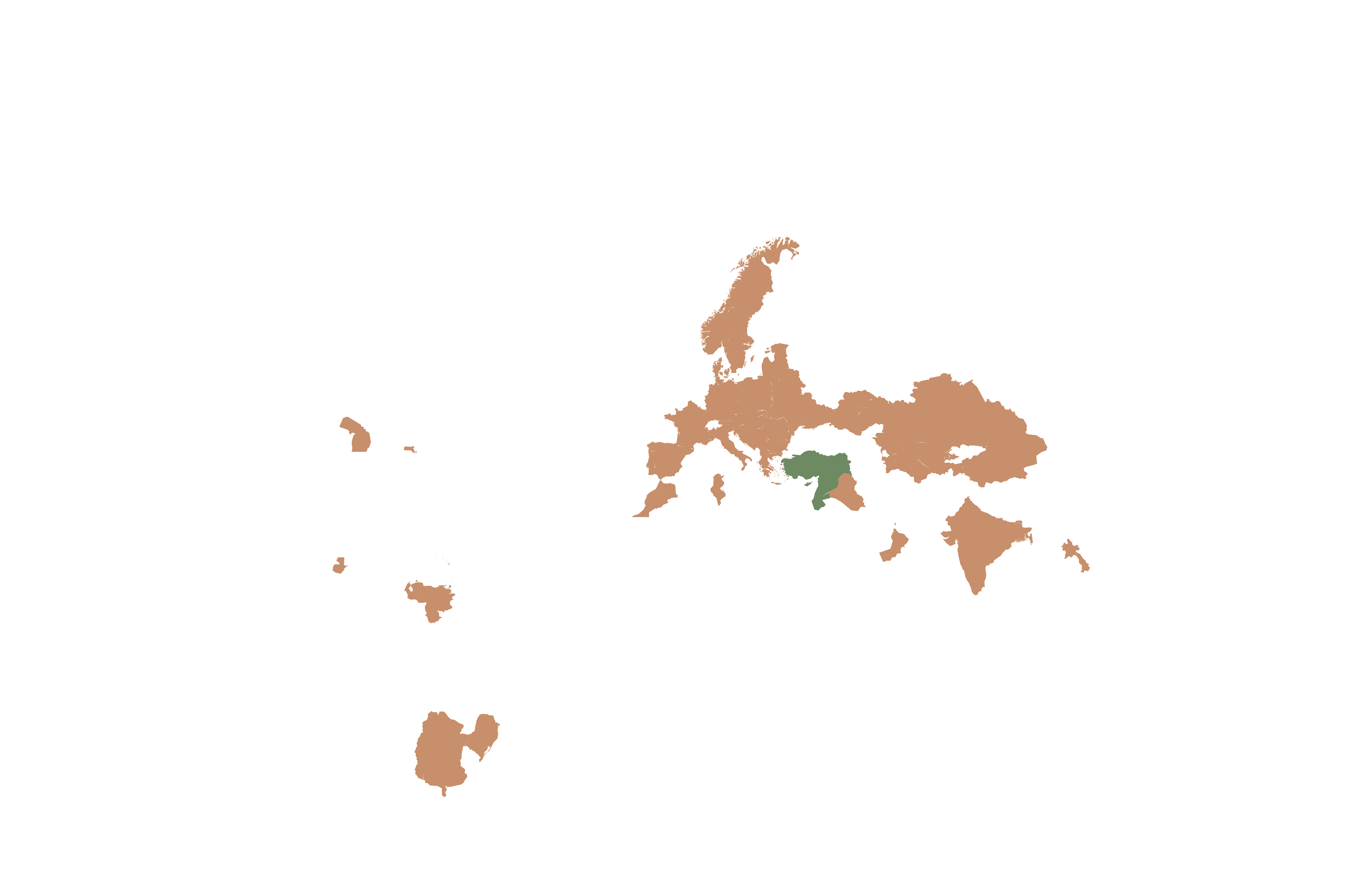
- Native
- Introduced
- Mediterranean
History

Pimpinella anisum, commonly called anise or aniseed, is a slender annual herb in the carrot family (Apiaceae) native to the eastern Mediterranean (Greece, Crete, Egypt) and the Levant. Carl Linnaeus described it in Species Plantarum in 1753. The species has been cultivated for at least 4000 years—mentioned in the Egyptian Ebers Papyrus (~1550 BCE), grown by Greeks, Romans, and throughout medieval Europe.
Roman author Pliny the Elder extolled its properties in Natural History, and the Romans baked moustaceum, an aniseed spice cake served at weddings, a tradition often considered the ancestor of modern wedding cake. Plants grow 60-90 cm tall with finely divided fern-like bright green leaves and delicate flat umbels of tiny white flowers in summer, followed by grayish-green oval ridged schizocarp seeds that carry the distinctive sweet licorice-like flavor of anethole essential oil. Anise seeds flavor ouzo, raki, arak, sambuca, anisette, aguardiente, pastis, and countless other liqueurs, plus German pfeffernüsse cookies, Italian biscotti, and Middle Eastern breads.
Distinct from Chinese star anise (Illicium verum). Cultivated since at least 1500 BCE in Egypt for use in mummification and as a spice. Essential ingredient in classic Mediterranean liqueurs (Greek ouzo, Italian sambuca, French anisette) and in baking traditions from biscotti to springerle.
Symbolism & meaning
What It Symbolizes
Anise carries sweetness across millennia, its licorice-scented seeds flavoring breads, liqueurs, and ritual cakes around the Mediterranean for at least three and a half thousand years. From Egyptian temples to Italian nonna's kitchens, its spice has woven through civilization's heritage of comfort food. In each tiny seed, an entire history of small, sweet pleasures is locked away.
- Sweetness — licorice fragrance evokes sweet treats
- Heritage — spice of Mediterranean civilization for 3,500 years
Where the Name Comes From
'Pimpinella' likely derives from a medieval term for the plant; 'anisum' from Greek 'anison'.
Uses & Fun Facts
- Sweet licorice-flavored seeds spice baking, candy, and liqueurs
- Foliage and seeds release classic Anise sweet aroma
- Lacy white umbels attract hoverflies, parasitic wasps, and bees
Related plants
Plants with similar care
 Chinese AbeliaAbelia chinensis
 Fragrant AbeliaAbelia mosanensis
 Large-Flowered AbeliaAbelia uniflora
 Glossy AbeliaAbelia x grandiflora
Frequently asked questions
How often should I water Anise?
Water about every 3 days during the growing season, and always let excess water drain away.
How much light does Anise need?
Full sun: 6+ hrs direct. Watch the leaves — scorching or stretching means the light needs adjusting.
Is Anise toxic to cats or dogs?
Pets Slight (Dogs Slight · Cats Slight) Educational information, not medical or veterinary advice. If exposure is suspected, contact a doctor or veterinarian.
Is Anise easy to grow?
Yes — it is considered an easy, beginner-friendly plant.
When does Anise bloom?
It typically blooms Jun–Aug in the Northern Hemisphere.
YardMate
Identify any plant in seconds
Snap a photo — YardMate names the plant, diagnoses problems, and reminds you when to water.
Download on the App Store