 YardMate


California Bay
Umbellularia californica
Medium · Some experienceAbout California Bay
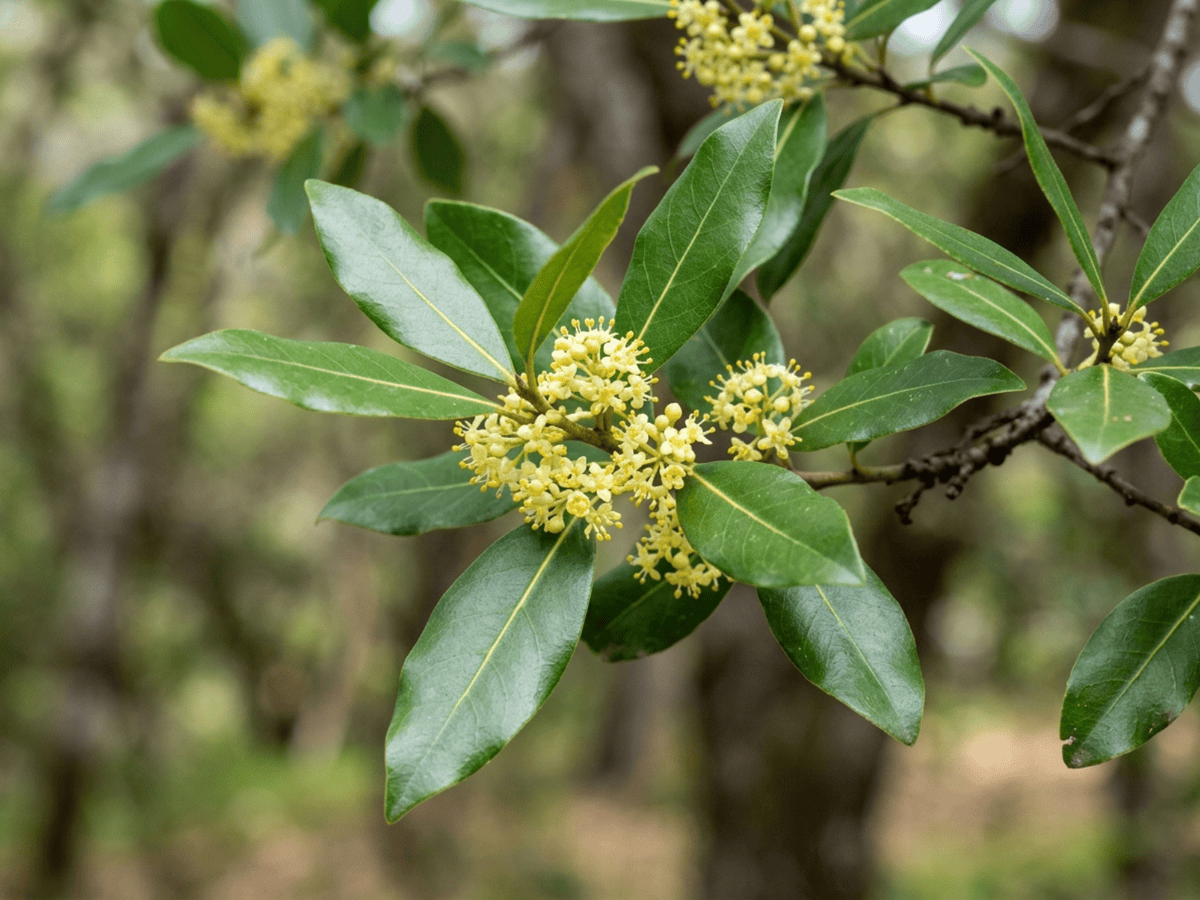
California Bay Laurel is an aromatic California and Oregon native evergreen tree reaching 20-80 feet with dense dark green lance-shaped leaves that have the most intensely pungent spicy scent of any culinary herb—far stronger than Mediterranean bay. Native throughout California's coastal mountains and Central Valley foothills, it is used as a substitute for bay laurel in cooking but with extreme restraint. The volatile oils are so powerful that crushing a leaf near the face can cause headaches and temporary loss of smell.
- Edible
- Fragrant
- Drought-tolerant
- Evergreen
How to care for California Bay
Watering
- Springevery 10 days
- Summerevery 14 days
- Fallevery 21 days
- Winterevery 30 days
Soil · Well-draining
- Top dressingPine bark mulch10%
- Main mixPotting soil + perlite 2:170%
- DrainageLECA / gravel20%
Never skip the drainage layer — standing water is the top cause of root rot.
FERTILIZER
This plant needs little to no feeding.
At a Glance
- NativeNorth America
- Height40–80 ft (12.2–24.4 m)
- Spread30–50 ft (9.1–15.2 m)
- Flower colorYellow, Green
- Foliage colorGreen
- Fruit colorPurple, Green
- SoilLoamy, Well-drained
- LocationsYard
Bloom time
BLOOM CYCLE
Peak bloom
Jan–Mar
Tiny yellow-green flowers January to March
Fragrance
STRONG FRAGRANCE
Intensely pungent camphor-laurel fragrance when crushed — stronger than Mediterranean bay.
Toxicity
Humans Slight · Pets Slight
umbellulone and safrole
Slight
- Leaf
- Inhalation
- Ingestion
EXPOSURE Inhaling leaves. Eating leaves.
EFFECT Umbellulone inhalation can trigger severe headache or migraine and culinary use in moderate quantity is safe.
NOTE Documented concern for humans: Umbellulone inhalation can trigger severe headache or migraine and culinary use in moderate quantity is safe.
Slight
- Leaf
- Ingestion
EXPOSURE Eating leaves.
EFFECT GI upset and essential oil toxicity with concentrated exposure.
NOTE Not prominently listed by ASPCA. Essential oil should not be applied to pets.
Slight
- Leaf
- Ingestion
EXPOSURE Eating leaves.
EFFECT Same as dogs.
NOTE Not prominently listed by ASPCA. Essential oil should not be applied to pets.
Educational information, not medical or veterinary advice. If exposure is suspected, contact a doctor or veterinarian.
DISTRIBUTION


- Native
- North America
History
Umbellularia californica is native to California and southwestern Oregon, growing in mixed-evergreen forests, oak woodland, redwood forests, and stream-canyon habitats from coastal northern Baja California north through the California coast and into southern Oregon as far north as Douglas County. It grows variably from a multi-trunked shrub on exposed coastal sites to a tall single-trunked tree 20-30 meters tall in sheltered forest habitat, with glossy elliptical leaves emitting an intensely pungent, camphor-like aromatic scent when crushed. The leaves have been used for centuries as a substitute for Mediterranean bay laurel (Laurus nobilis) in California and Oregon regional cuisine, though the California species' aroma is significantly stronger and more camphor-scented than Mediterranean bay — recipes typically use smaller quantities.
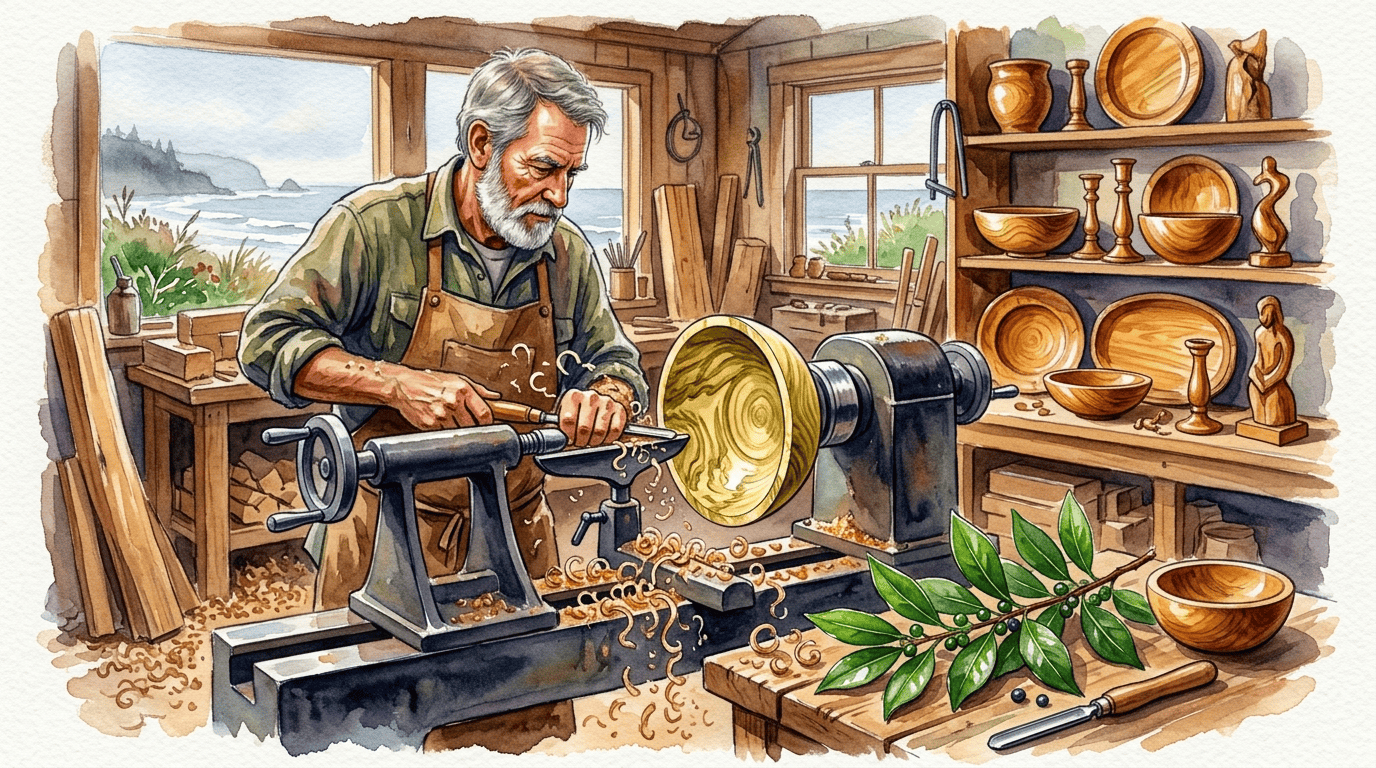
Inhaling the crushed leaves too deeply can cause a short-duration headache sometimes called "myrtlewood headache" or "umbellulone headache" (named for the volatile compound umbellulone responsible). The beautifully figured pale-yellow to olive-green wood is the exclusive raw material for the distinctive "myrtlewood" tourist-craft industry of the Oregon Coast — since the early 20th century, small family-run myrtlewood shops along the southern Oregon coast (particularly between Coos Bay and Gold Beach) have produced turned bowls, clocks, candlesticks, and souvenir items from harvested old-growth myrtlewood trees; the industry is a distinctive part of Oregon coast culture and identity.
Indigenous California peoples including the Pomo and Yuki used the leaves for various medicinal purposes. Hardy to approximately USDA zone 7-8.
Symbolism & meaning
What It Symbolizes
California Bay carries wisdom, a venerable tree associated with knowledge much like the classical laurel — the West Coast's own answer to the Mediterranean bay. Paired with power, its overwhelming aromatic scent commands respect and a certain restraint; one leaf is more than enough in a pot of soup. It is a tree whose meaning is potent, ancient, and not to be casually crossed.
- Wisdom — venerable tree associated with knowledge, like the classical laurel
- Power — overwhelming scent commands respect and restraint
Where the Name Comes From
The name California Bay points to California. 'Umbellularia' means 'small umbel', referring to its flower arrangement; 'californica' denotes its native range.
Uses & Fun Facts
- Pungent leaves used like bay leaf in California native cooking
- Traditional remedy for headaches via the strong volatile leaf oils
- Crushed leaves release intense camphor-eucalyptus headache-tree aroma
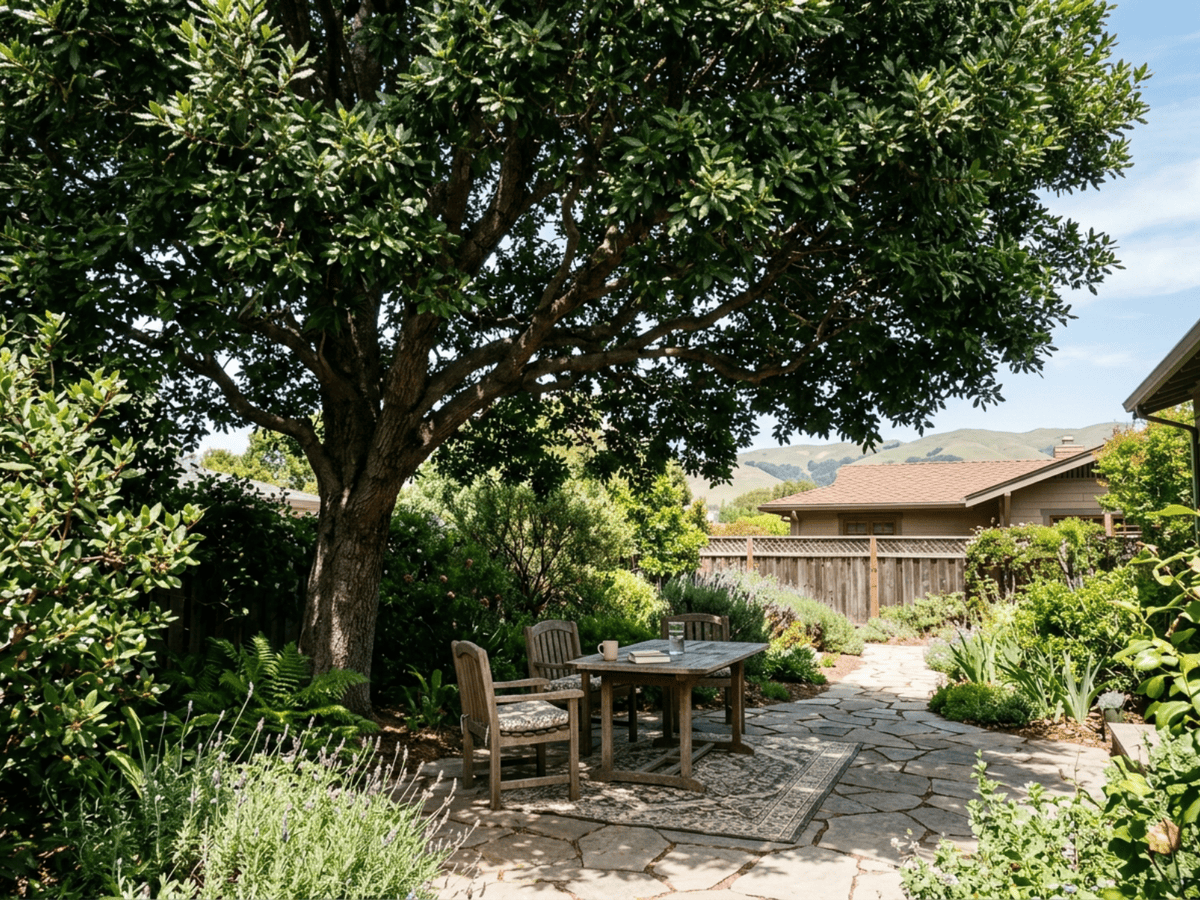
- Broad evergreen canopy casts deep shade in California gardens
Related plants
Plants with similar care
 Mexican AbeliaAbelia floribunda
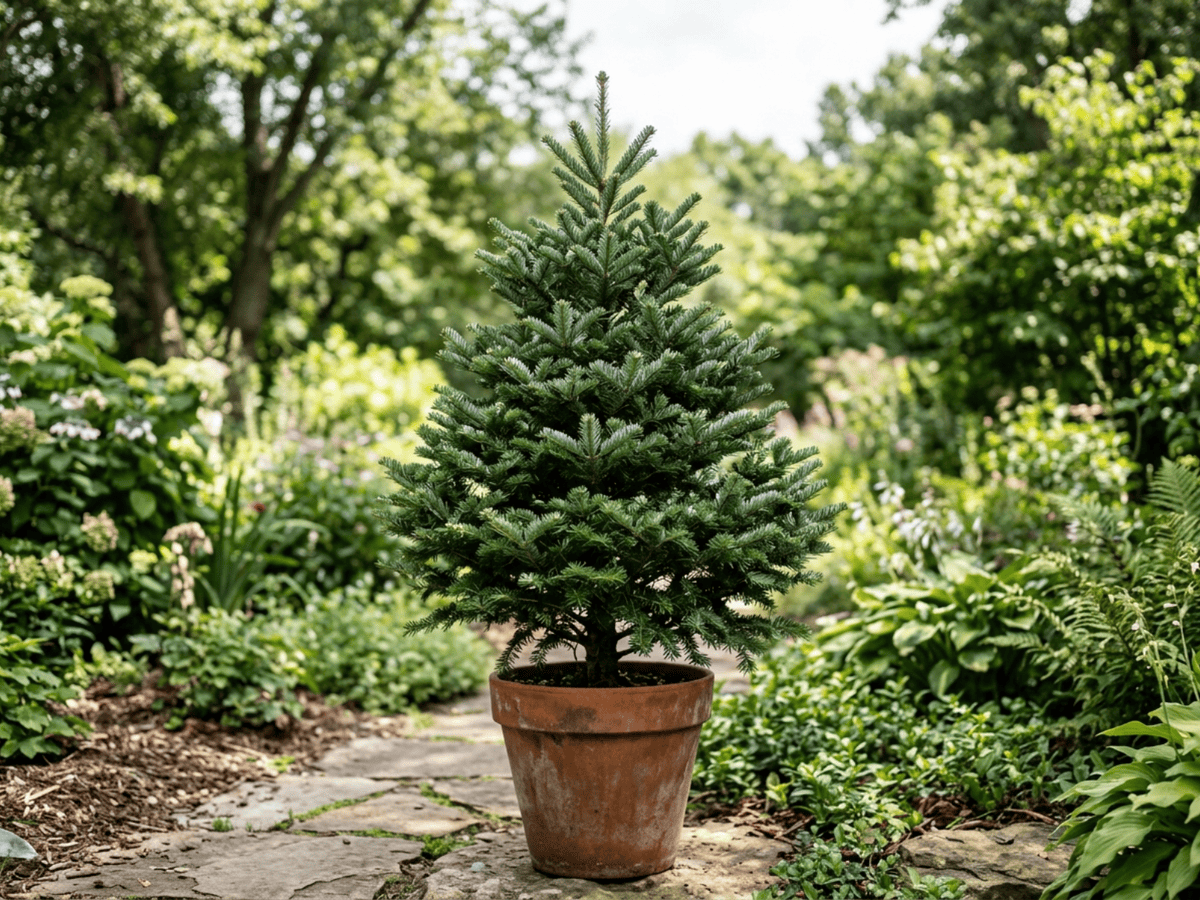 Fraser FirAbies fraseri
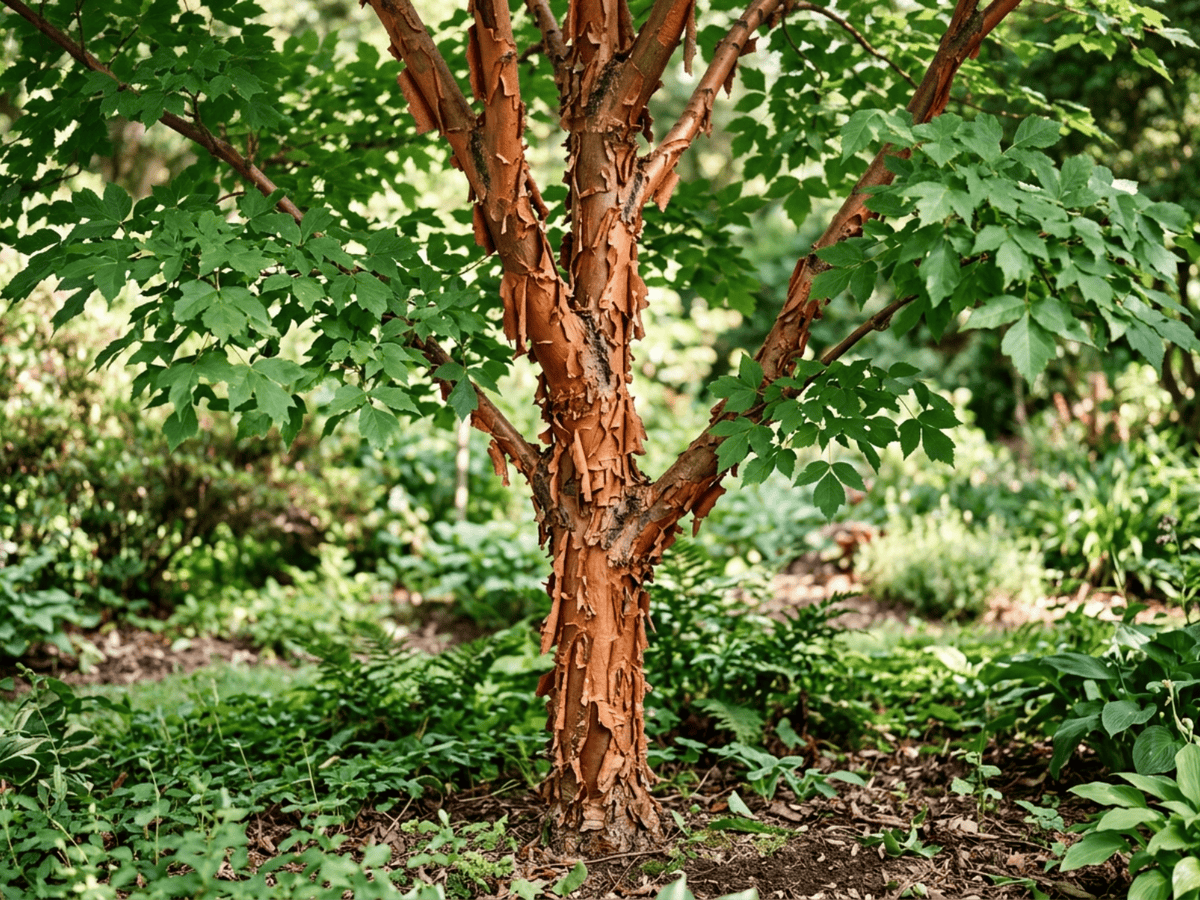 Paperbark MapleAcer griseum
 Sugar MapleAcer saccharum
Frequently asked questions
How often should I water California Bay?
In summer, water about every 14 days; in winter, about every 30 days. Adjust for heat, pot size and drainage.
How much light does California Bay need?
Full sun: 6+ hrs direct. Watch the leaves — scorching or stretching means the light needs adjusting.
Is California Bay toxic to cats or dogs?
Pets Slight (Dogs Slight · Cats Slight) Educational information, not medical or veterinary advice. If exposure is suspected, contact a doctor or veterinarian.
Is California Bay easy to grow?
It is moderately demanding: a good choice once you have a little experience.
When does California Bay bloom?
It typically blooms Jan–Mar in the Northern Hemisphere.
YardMate
Identify any plant in seconds
Snap a photo — YardMate names the plant, diagnoses problems, and reminds you when to water.
Download on the App Store