 YardMate


Prickly Lettuce
Lactuca serriola
Easy · Beginner friendlyAbout Prickly Lettuce
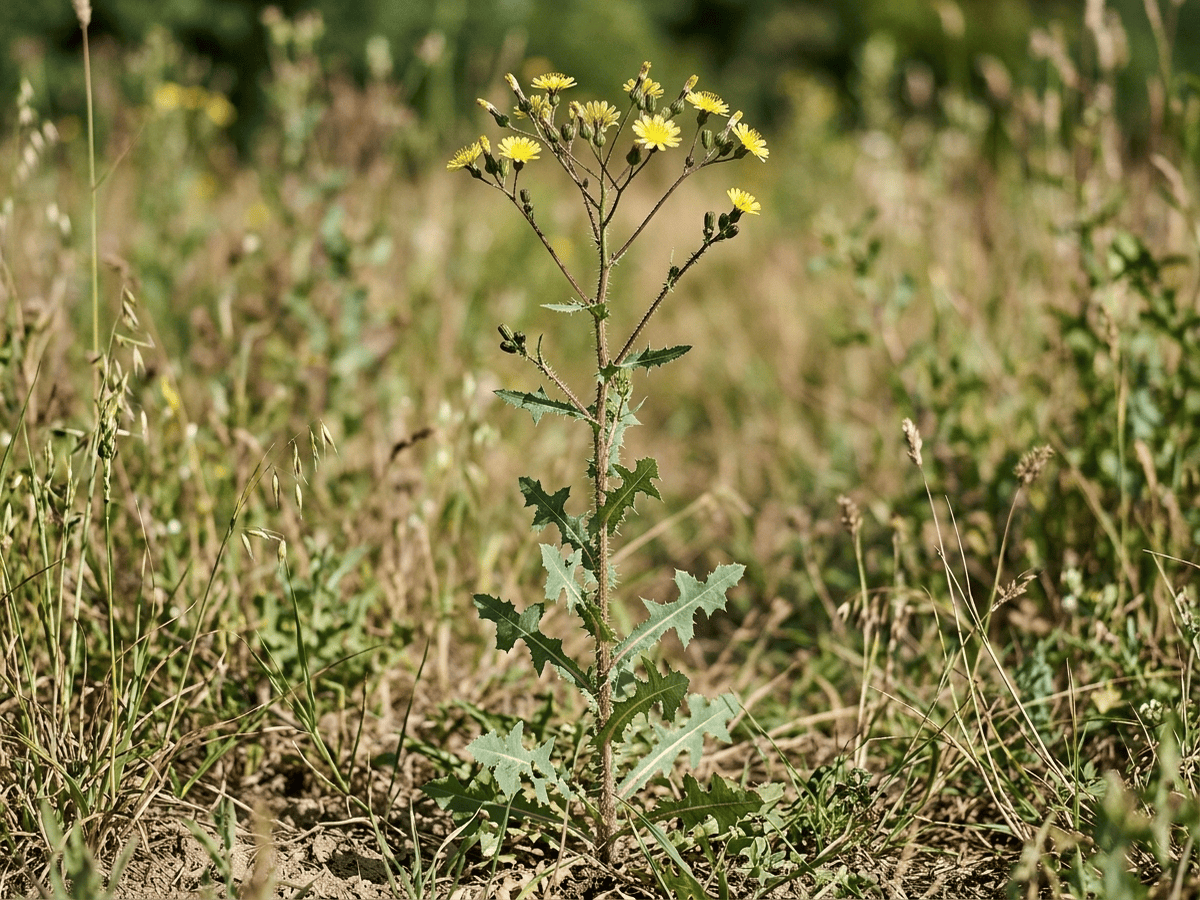
Prickly Lettuce is the wild European ancestor of cultivated lettuce, a tall annual or biennial weed naturalized throughout the US. Growing 2 to 7 feet tall with prickly-edged leaves that twist vertically to face north-south (earning the nickname Compass Plant), it produces small yellow flowers followed by fluffy dandelion-like seed heads. A noxious agricultural pest in western US grain fields and a common disturbed-ground weed coast to coast.
- Drought-tolerant
- Fast-growing
How to care for Prickly Lettuce
Watering
- Springevery 7 days
- Summerevery 5 days
- Fallevery 10 days
- Winterevery 21 days
Soil · Rich & well-draining
- Top dressingCompost10%
- Main mixPotting soil + compost 3:180%
- DrainageGravel10%
Top up the compost layer each season.
FERTILIZER
This plant needs little to no feeding.
At a Glance
- NativeMediterranean, Europe, Western Asia
- Height2–6 ft (0.6–1.8 m)
- Spread1–2 ft (0.3–0.6 m)
- Flower colorYellow
- Foliage colorGreen
- SoilLoamy, Well-drained
- LocationsYard
Bloom time
BLOOM CYCLE
Peak bloom
Jun–Nov
Tall panicles of small yellow flowers summer to fall
Toxicity
Humans Slight
lactucopicrin and lactucin
Slight
- Sap
- Ingestion
EXPOSURE Eating sap.
EFFECT Mild sedative effects in large doses.
NOTE Documented concern for humans: Mild sedative effects in large doses.
Not reported
EXPOSURE No exposure route is reported.
EFFECT No toxic effect is reported.
NOTE No toxicity is reported for dogs in this catalog; this is not evidence that the plant is edible or harmless.
Not reported
EXPOSURE No exposure route is reported.
EFFECT No toxic effect is reported.
NOTE No toxicity is reported for cats in this catalog; this is not evidence that the plant is edible or harmless.
Educational information, not medical or veterinary advice. If exposure is suspected, contact a doctor or veterinarian.
DISTRIBUTION

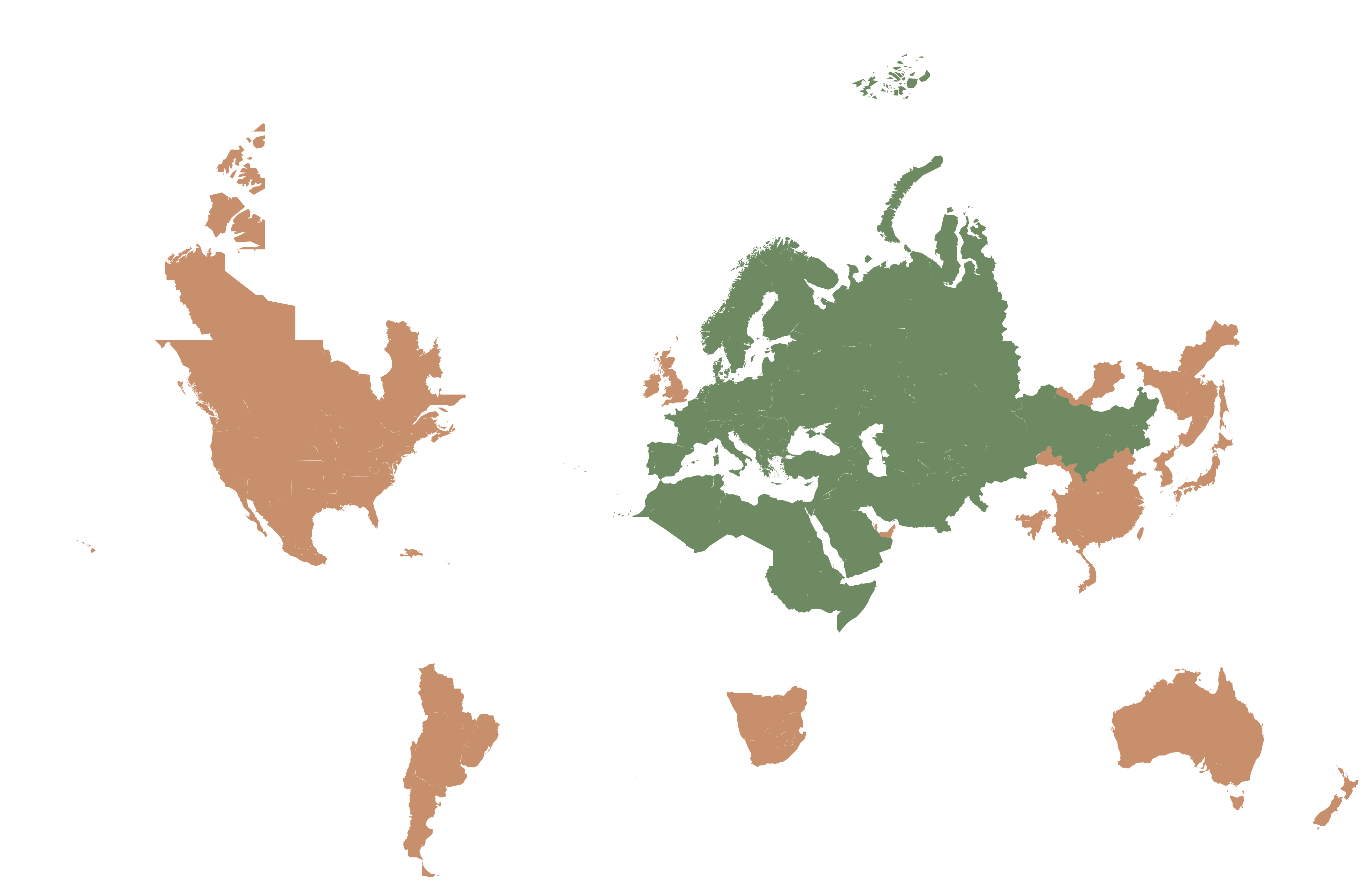
- Native
- Introduced
- Mediterranean
- Europe
- Western Asia
History
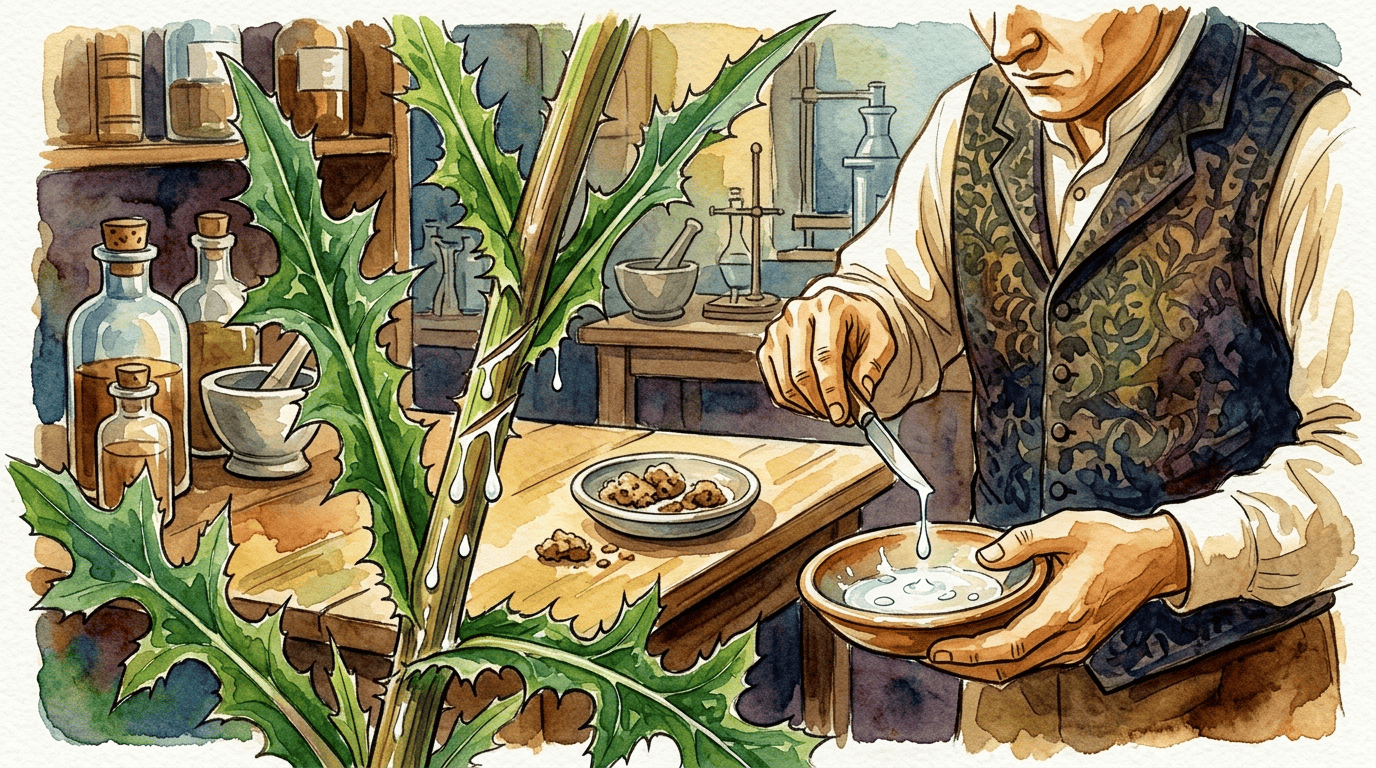
Lactuca serriola is the wild ancestor of cultivated lettuce (L. sativa), domesticated in ancient Egypt around 2500 BCE, where tomb paintings depict it associated with the fertility god Min. Linnaeus described the wild form in Centuria Plantarum II (1756). The bitter milky latex of the wild plant contains sesquiterpene lactones including lactucopicrin, a mild sedative with opioid-receptor activity; Greek, Roman, and medieval European physicians distilled the latex into 'lactucarium' or 'lettuce opium', used as a mild sleep aid and cough suppressant.
19th-century American pharmaceutical companies including Eli Lilly produced lactucarium commercially until the early 1900s. Modern plant breeders use L. serriola genes to introduce disease resistance into salad lettuce crops.
It is also notable as a 'compass plant' — leaves orient north-south to minimize midday sun exposure. Herbicide-resistant biotypes have emerged across the western US, making it a serious modern agricultural pest.
Symbolism & meaning
What It Symbolizes
Prickly Lettuce carries a wild heritage as the ancestral parent of every garden lettuce on the modern dinner plate. Its leaves often align north-south in bright sun, earning it the folk title 'compass plant' among rural travelers. This is the unruly forebear of every tender salad — bitter where its descendants are mild, prickly where they are soft, and a quiet reminder of the wildness from which our cultivated greens were drawn.
- Compass plant — leaves align north-south in bright sun
- Wild lettuce — ancestral parent of garden lettuce
Where the Name Comes From
'Lactuca' from Latin 'lac' meaning milk, for the white sap; 'serriola' refers to serrated leaves.
Uses & Fun Facts
- Wild progenitor of garden lettuce; young leaves eaten in lean times
- Milky sap historically used as mild sedative lactucarium
Related plants
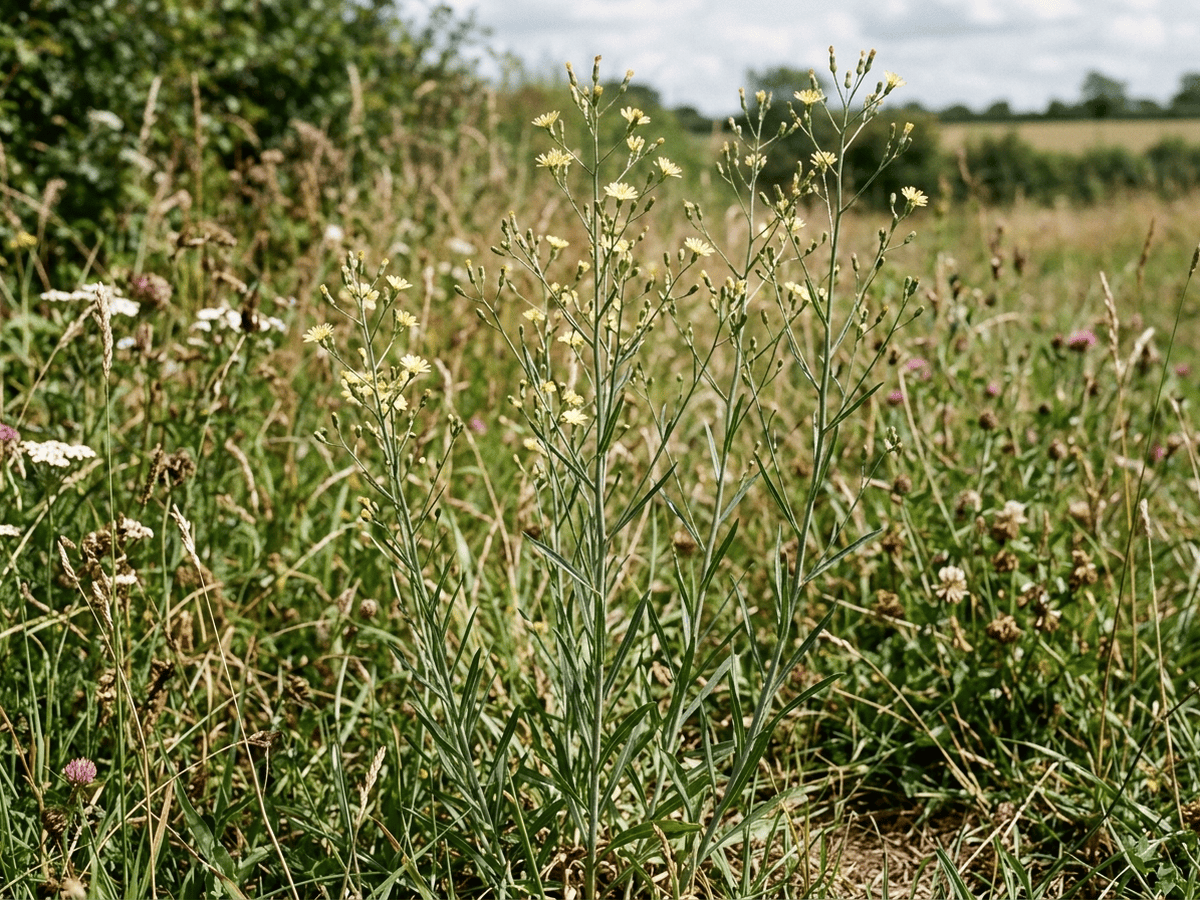
More Lactuca plants


Plants with similar care
 Chinese AbeliaAbelia chinensis
 Fragrant AbeliaAbelia mosanensis
 Large-Flowered AbeliaAbelia uniflora
 Glossy AbeliaAbelia x grandiflora
Frequently asked questions
How often should I water Prickly Lettuce?
In summer, water about every 5 days; in winter, about every 21 days. Adjust for heat, pot size and drainage.
How much light does Prickly Lettuce need?
Full sun: 6+ hrs direct. Watch the leaves — scorching or stretching means the light needs adjusting.
Is Prickly Lettuce toxic to cats or dogs?
Pets Not reported (Dogs Not reported · Cats Not reported) Educational information, not medical or veterinary advice. If exposure is suspected, contact a doctor or veterinarian.
Is Prickly Lettuce easy to grow?
Yes — it is considered an easy, beginner-friendly plant.
When does Prickly Lettuce bloom?
It typically blooms Jun–Nov in the Northern Hemisphere.
YardMate
Identify any plant in seconds
Snap a photo — YardMate names the plant, diagnoses problems, and reminds you when to water.
Download on the App Store