 YardMate
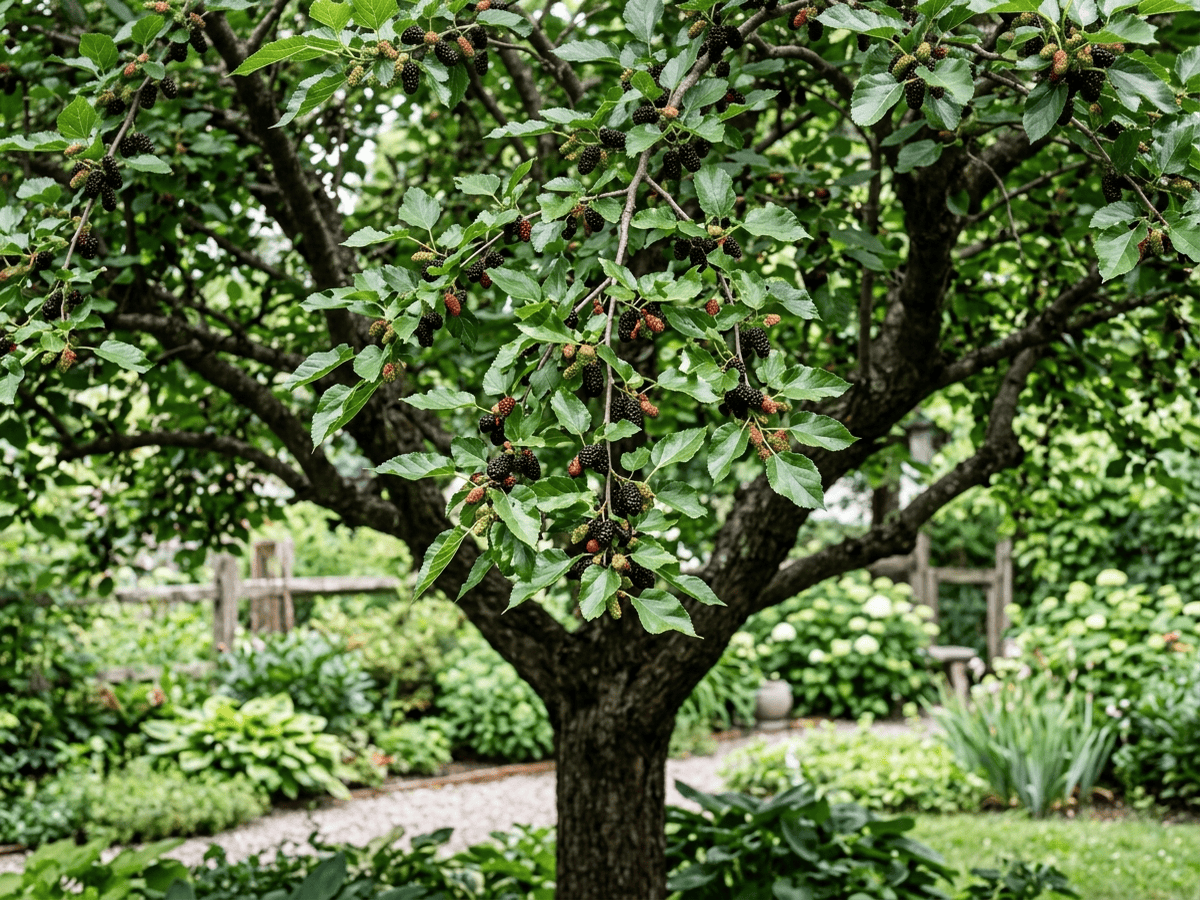


Black Mulberry
Morus nigra
Easy · Beginner friendlyAbout Black Mulberry
Black Mulberry is a Western Asian deciduous tree reaching 20-30 feet, with broad heart-shaped green leaves and produces large dark purple-black sweet-tart juicy berries in summer. Considered the finest-flavored mulberry, with rich complex flavor reminiscent of grape and raspberry. Long-lived (some trees reach 600+ years) and increasingly planted in California and Mid-Atlantic American backyard orchards as awareness of mulberries' superior fresh flavor spreads.
- Edible
How to care for Black Mulberry
Watering
- Springevery 10 days
- Summerevery 7 days
- Fallevery 14 days
- Winterevery 21 days
Soil · Well-draining
- Top dressingPine bark mulch10%
- Main mixPotting soil + perlite 2:170%
- DrainageLECA / gravel20%
Never skip the drainage layer — standing water is the top cause of root rot.
FERTILIZER
Balanced Feed 14-14-14
An even feed covers all three needs at once, keeping leaves, roots and blooms moving together with nothing pushed out of balance.
- Nitrogen · Leaves
- Phosphorus · Roots + Blooms
- Potassium · Strength
- Springevery 60 days
At a Glance
- NativeWestern Asia
- Height25–40 ft (7.6–12.2 m)
- Spread25–40 ft (7.6–12.2 m)
- Flower colorGreen
- Foliage colorGreen
- Fruit colorBlack, Purple
- SoilLoamy, Well-drained
- LocationsYard
Bloom time
BLOOM CYCLE
Peak bloom
Mar–May
Inconspicuous catkin flowers in spring
Fragrance
LIGHT FRAGRANCE
Ripe fruit has a light sweet aroma.
Toxicity
Humans Slight · Pets Slight
latex alkaloids (unripe fruit and sap)
Slight
- Fruit
- Ingestion
EXPOSURE Eating fruit.
EFFECT Unripe fruit and sap can cause mild stomach upset and hallucinations in sensitive individuals and ripe fruit is safe.
NOTE Ripe fruit is edible and widely consumed; avoid unripe fruit and white sap.
Slight
- Fruit
- Ingestion
EXPOSURE Eating fruit.
EFFECT Unripe fruit may cause GI upset and ripe fruit is generally non-toxic.
NOTE Ripe fruit is edible and widely consumed; avoid unripe fruit and white sap.
Slight
- Fruit
- Ingestion
EXPOSURE Eating fruit.
EFFECT Unripe fruit may cause GI upset.
NOTE Ripe fruit is edible and widely consumed; avoid unripe fruit and white sap.
Educational information, not medical or veterinary advice. If exposure is suspected, contact a doctor or veterinarian.
DISTRIBUTION


- Native
- Introduced
- Western Asia
History
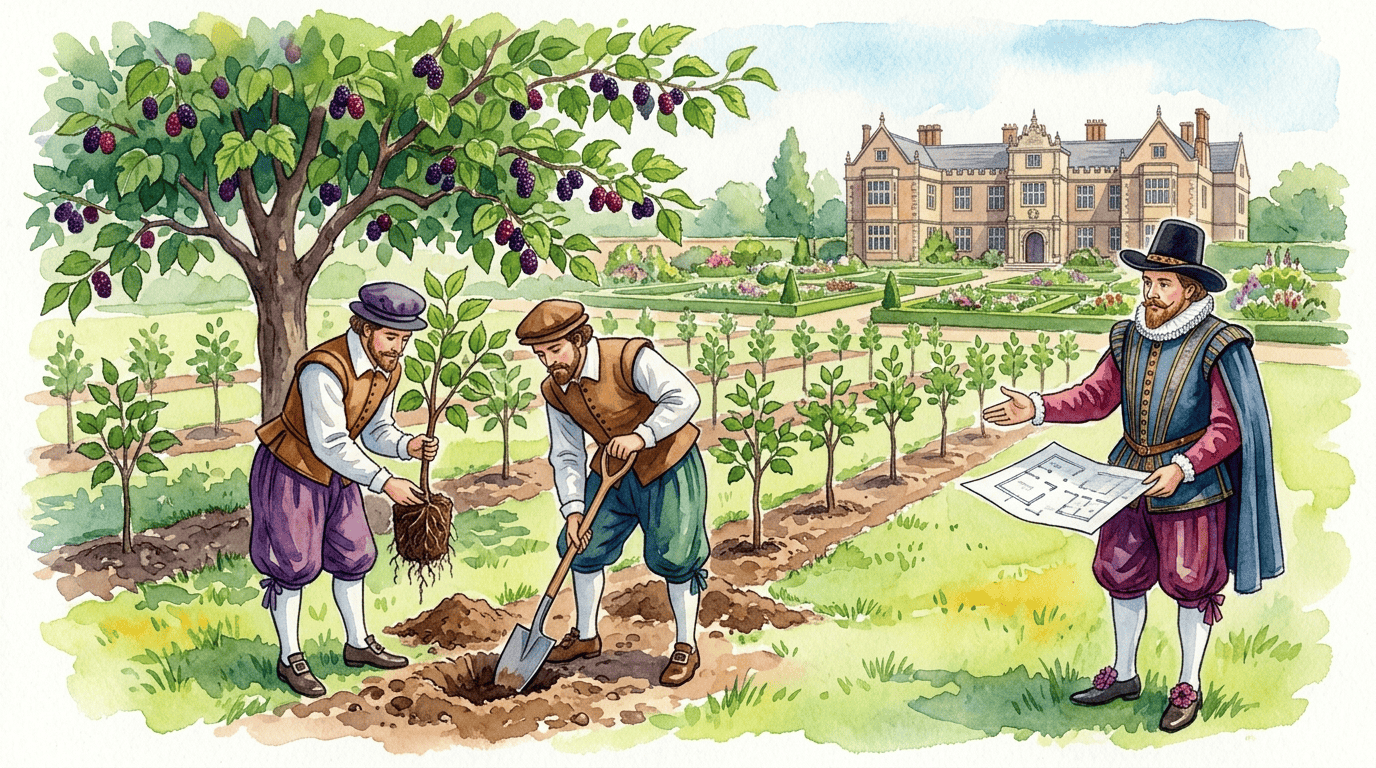
Morus nigra, the black mulberry, likely originated in the Caucasus and northern Iran, where it has been cultivated for fruit since at least 2000 BCE. Greek and Roman authors including Theophrastus, Virgil, and Pliny the Elder described its deep-purple fruit and medicinal uses. The tree spread through the Roman Empire into western Europe and reached England by the Middle Ages.
In 1608 James I of England ordered tens of thousands of mulberries planted to boost domestic silk production, but he mistakenly favored the wrong species since silkworms prefer the white mulberry Morus alba. The black mulberry nevertheless became a treasured dooryard tree, celebrated in folk song and cuisine. Ancient specimens survive at Syon House and other English estates, still bearing fruit.
Native to Western Asia, particularly Iran and Anatolia. Cultivated for over 4,000 years for both fruit and silkworm food. Some specimens in Iran and the UK are over 600 years old. Increasingly available in American specialty fruit nurseries as awareness of fresh mulberries' exceptional flavor spreads beyond the Asian-American community.
Symbolism & meaning
What It Symbolizes
The Black Mulberry holds wisdom in long-lived branches, an ancient Mediterranean tree that has shaded courtyards from Persia to Rome for thousands of years. Its dark, sweetly intense fruit is acknowledged as the finest of any mulberry species. To plant one is to expect great-grandchildren — the tree settles in for centuries and shares its sweetness with each generation that arrives.
- Wisdom — long-lived ancient tree of the Mediterranean
- Sweetness — finest-flavored mulberry species
Where the Name Comes From
'Morus' is the classical Latin name for mulberry; 'nigra' means black.
Uses & Fun Facts
- Sweet-tart purple-black berries eaten fresh, in pies and preserves
- Broad heart-shaped canopy provides backyard summer shade
- Ripe fruit attracts songbirds and small mammals to gardens
Related plants
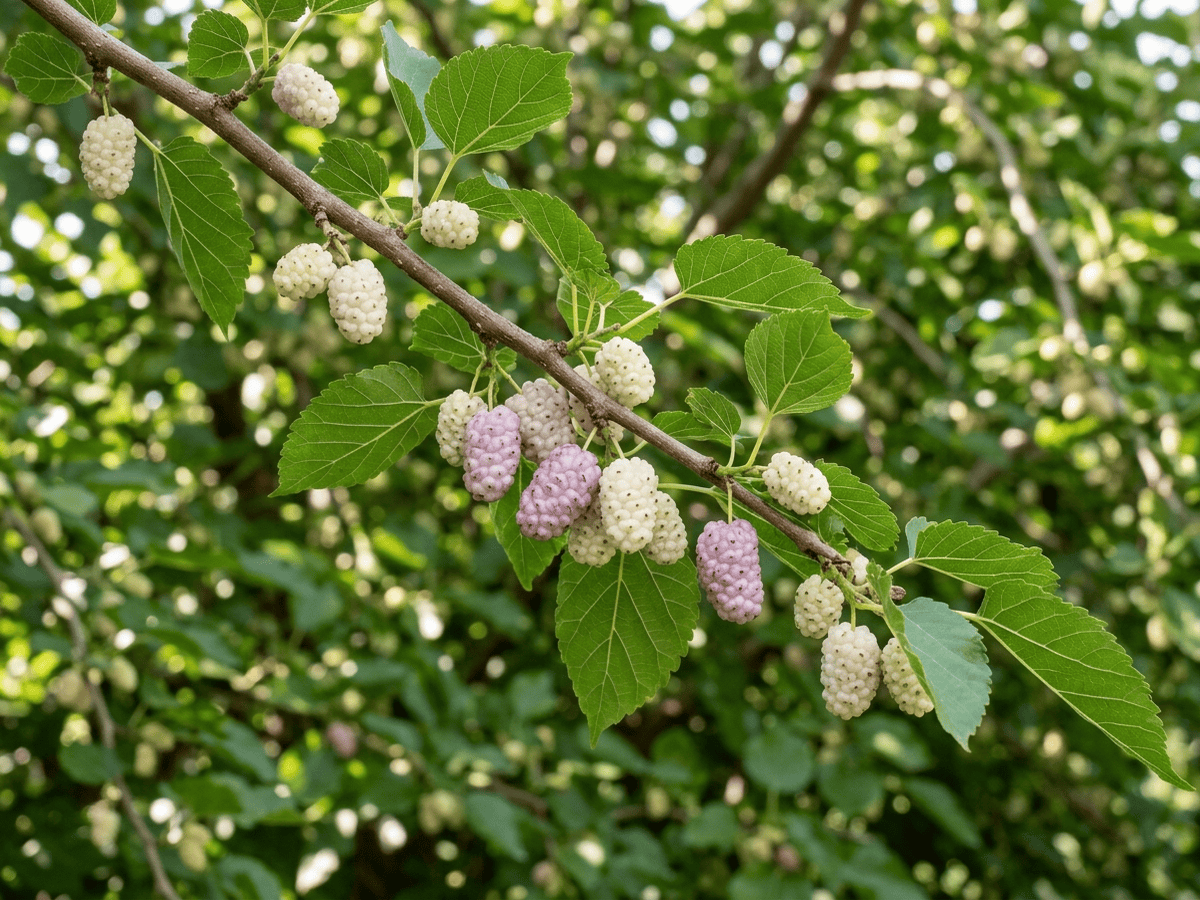
More Morus plants
Plants with similar care
 Chinese AbeliaAbelia chinensis
 Fragrant AbeliaAbelia mosanensis
 Large-Flowered AbeliaAbelia uniflora
 Glossy AbeliaAbelia x grandiflora
Frequently asked questions
How often should I water Black Mulberry?
In summer, water about every 7 days; in winter, about every 21 days. Adjust for heat, pot size and drainage.
How much light does Black Mulberry need?
Full sun: 6+ hrs direct. Watch the leaves — scorching or stretching means the light needs adjusting.
Is Black Mulberry toxic to cats or dogs?
Pets Slight (Dogs Slight · Cats Slight) Educational information, not medical or veterinary advice. If exposure is suspected, contact a doctor or veterinarian.
Is Black Mulberry easy to grow?
Yes — it is considered an easy, beginner-friendly plant.
When does Black Mulberry bloom?
It typically blooms Mar–May in the Northern Hemisphere.
YardMate
Identify any plant in seconds
Snap a photo — YardMate names the plant, diagnoses problems, and reminds you when to water.
Download on the App Store