 YardMate


Common Pear
Pyrus communis
Medium · Some experienceAbout Common Pear
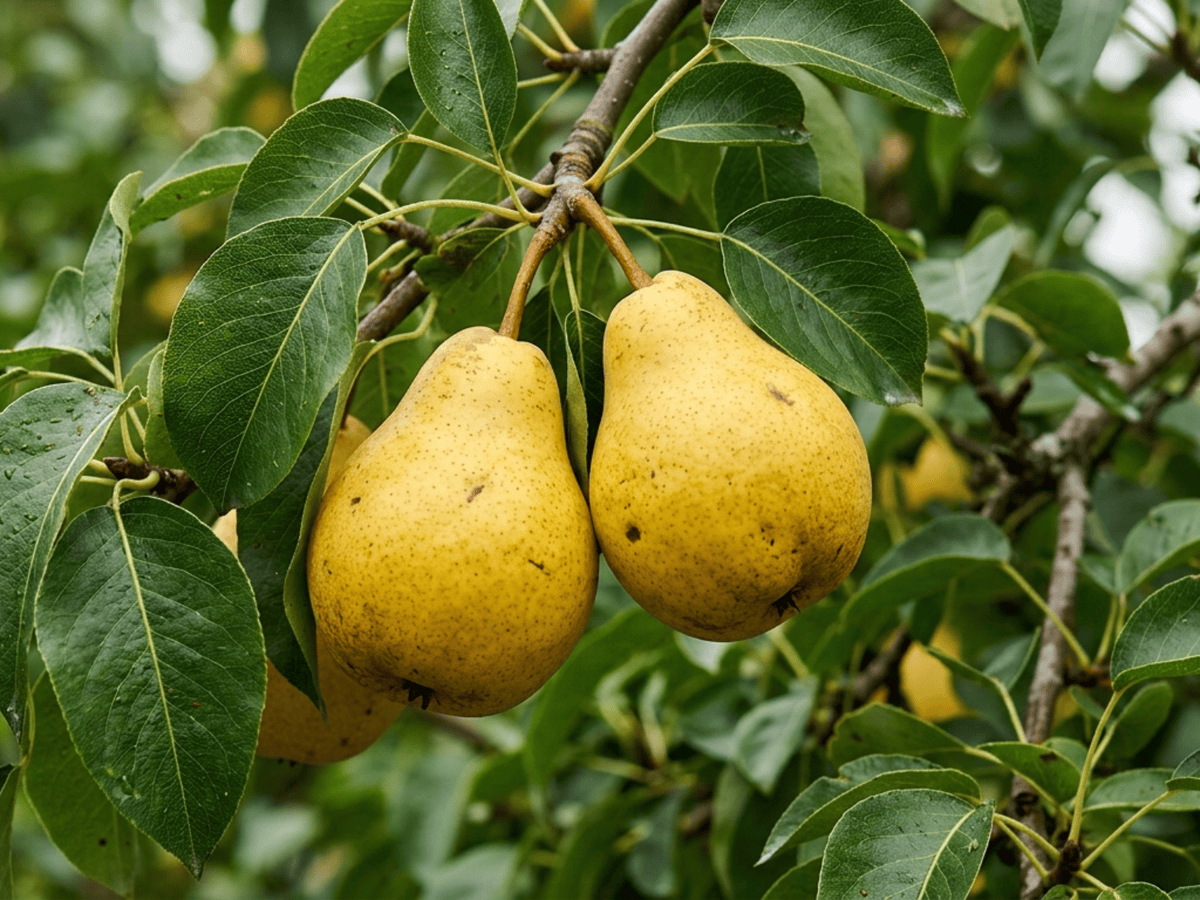
Pyrus communis, the European pear, is a deciduous tree in the Rosaceae family native to western Europe and the Caucasus. Growing 8–15 m on standard rootstock (3–5 m on dwarfing types), pears produce white spring blossoms and the familiar pyriform (pear-shaped) fruit with butter-smooth flesh. The trees can live for several centuries—some of Europe's oldest fruit trees are pears.
Pears thrive in USDA zones 4–8, requiring full sun, well-drained soil, and a different cultivar nearby for cross-pollination. They need fewer chill hours than apples, making them suitable for warmer temperate regions. Fire blight is the most serious disease threat. Pear trees are slower to establish than apples but eventually become very productive and long-lived.
Unlike most fruit, pears ripen best off the tree—harvested when mature but still firm, then ripened at room temperature. A ripe pear eaten at the perfect moment of buttery softness is one of the great fruit experiences. Varieties range from the juicy Bartlett (Williams) to the complex Comice to the crisp, gritty Asian-influenced Bosc. Pears are lower in allergens than most fruits and are often the first fruit given to babies. Perry (pear cider) is experiencing a renaissance in England and Normandy.
- Edible
- Cold-hardy
- Pollinator-friendly
How to care for Common Pear
Watering
- Springevery 7 days
- Summerevery 5 days
- Fallevery 10 days
- Winterevery 21 days
Soil · Well-draining
- Top dressingPine bark mulch10%
- Main mixPotting soil + perlite 2:170%
- DrainageLECA / gravel20%
Never skip the drainage layer — standing water is the top cause of root rot.
FERTILIZER
Balanced Feed 14-14-14
An even feed covers all three needs at once, keeping leaves, roots and blooms moving together with nothing pushed out of balance.
- Nitrogen · Leaves
- Phosphorus · Roots + Blooms
- Potassium · Strength
- Springevery 30 days
- Summerevery 30 days
- Fallevery 45 days
At a Glance
- NativeWestern Asia
- Height20–40 ft (6.1–12.2 m)
- Spread15–25 ft (4.6–7.6 m)
- Flower colorWhite
- Foliage colorGreen
- Fruit colorGreen
- SoilLoamy, Well-drained
- LocationsYard
Bloom time
BLOOM CYCLE
Peak bloom
Mar–Apr
White blossoms in early spring; cross-pollination with a different variety essential for fruit set.
Fragrance
MODERATE FRAGRANCE
Sweet floral blossom scent; ripe fruit with distinctive pear aroma.
Toxicity
Humans Slight · Pets Slight
amygdalin (seeds)
Slight
- Seed
- Ingestion
EXPOSURE Eating seeds.
EFFECT Seeds contain amygdalin and flesh safe.
NOTE Flesh safe; avoid seeds.
Slight
- Seed
- Ingestion
EXPOSURE Eating seeds.
EFFECT Seeds cyanogenic and flesh safe in moderation.
NOTE Flesh safe; avoid seeds.
Slight
- Seed
- Ingestion
EXPOSURE Eating seeds.
EFFECT Seeds cyanogenic and flesh safe in moderation.
NOTE Flesh safe; avoid seeds.
Educational information, not medical or veterinary advice. If exposure is suspected, contact a doctor or veterinarian.
DISTRIBUTION

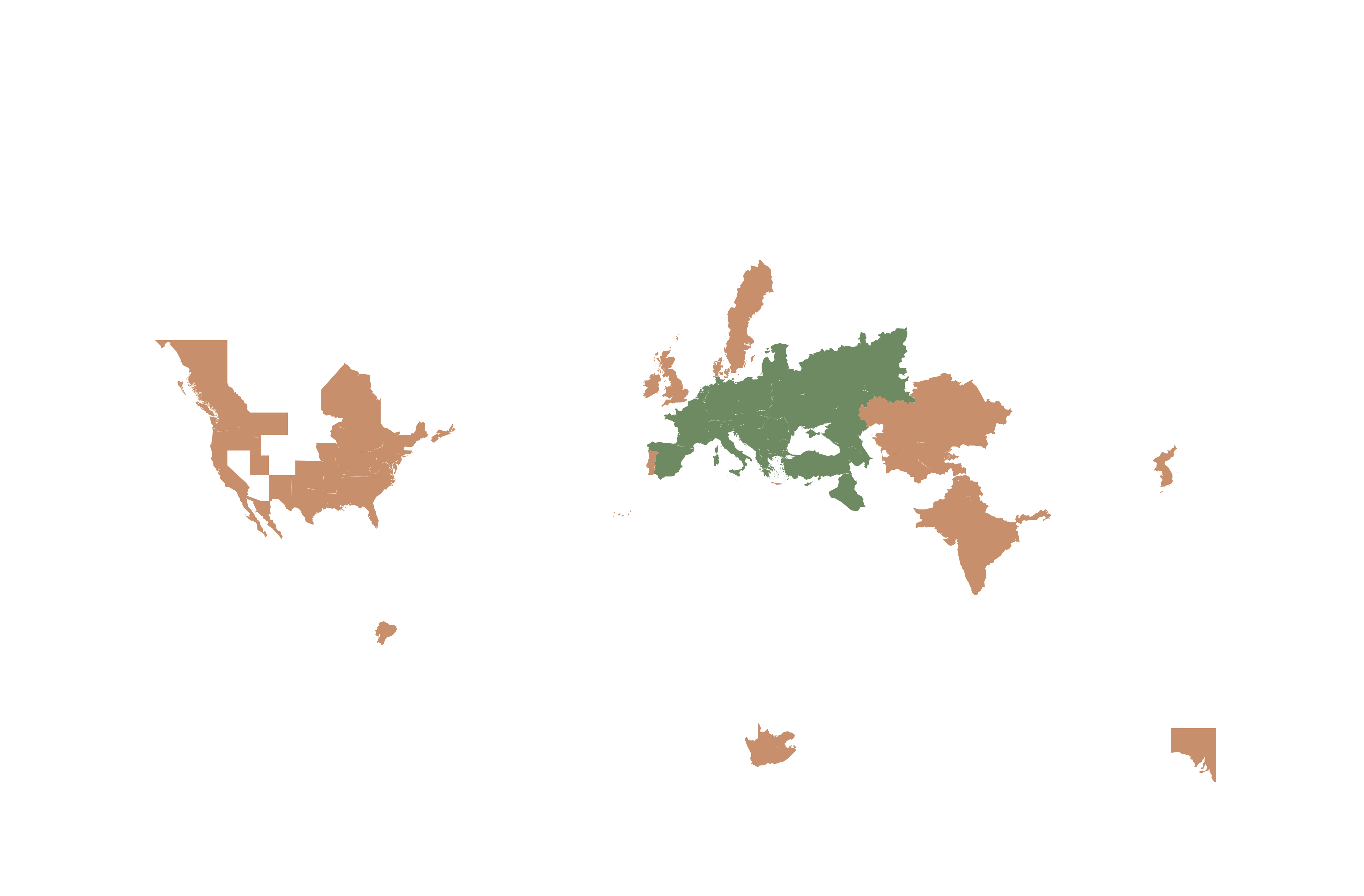
- Native
- Introduced
- Western Asia
History
Pyrus communis descends from wild Pyrus pyraster and Pyrus caucasica, native to western Asia and the Caucasus, with domestication spanning thousands of years. Ancient Greeks and Romans cultivated pears extensively — Homer's Odyssey describes pear trees as "a gift from the gods," and the Roman agronomist Columella listed 35 pear cultivars in the 1st century CE. Roman expansion carried pear cultivation across Europe, and medieval monasteries preserved and developed varieties, particularly in France and Belgium.
A transformative breeding era began in 19th-century Belgium under Nicolas Hardenpont (1705-1774), Jean-Baptiste Van Mons (1765-1842), and their successors, who focused on producing "buttery" (melting-fleshed) pears — a textural revolution over the gritty flesh of earlier varieties. Most modern commercial pears including Bosc, Anjou, Comice, and Bartlett derive from this Belgian breeding tradition (Bartlett is the English-American name for the original French "Williams' Bon Chrétien," brought to America in the early 19th century). China is now the largest global pear producer, though most Chinese production is the Asian pear (Pyrus pyrifolia), a different species.
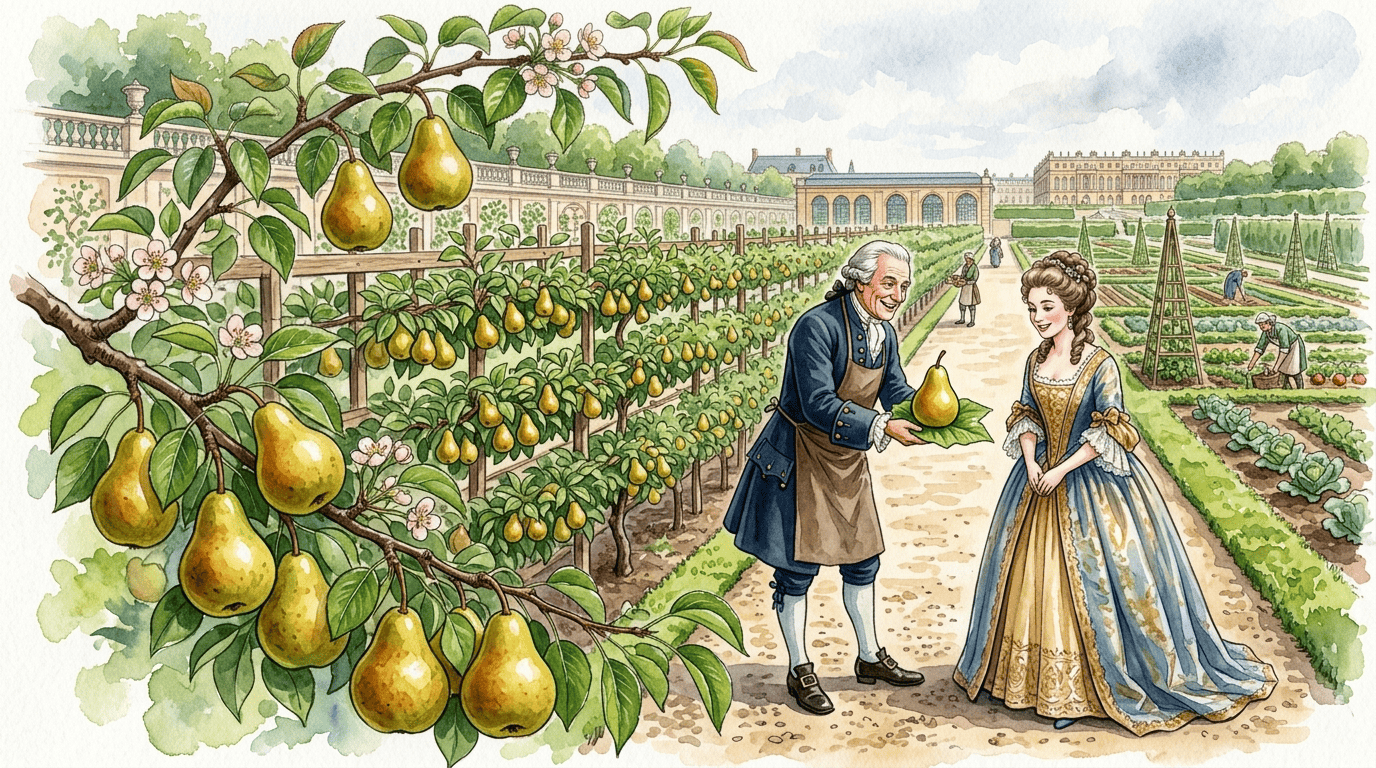
Louis XIV's gardener at Versailles, Jean-Baptiste de La Quintinie, was obsessed with pears, growing over 500 varieties. Belgium and France developed many classic dessert pears in the 18th–19th centuries. The Bartlett pear (known as Williams outside North America) is the world's most widely grown variety.
Symbolism & meaning
What It Symbolizes
The Common Pear is comfort in butter-smooth flesh — the gentle, yielding sweetness of a perfectly ripened fruit, a quiet kindness on the tongue. Pear trees are also famous for their longevity, often outliving the orchards and cottages around them by centuries, witnessing generations come and go. It is the tree whose fruit comforts in the moment and whose presence quietly measures lifetimes.
- Comfort — The butter-smooth, gentle flesh of a ripe pear symbolizes soothing comfort and nourishment
- Longevity — Pear trees living for centuries represent lasting value and the passage of generations
Where the Name Comes From
Pyrus from Latin for pear tree; 'communis' means common. The English 'pear' comes through Old English from Latin 'pirum.'
Uses & Fun Facts
- Buttery fresh fruit eaten raw, poached, or fermented to perry
- White spring blossoms feed orchard mason bees and honeybees
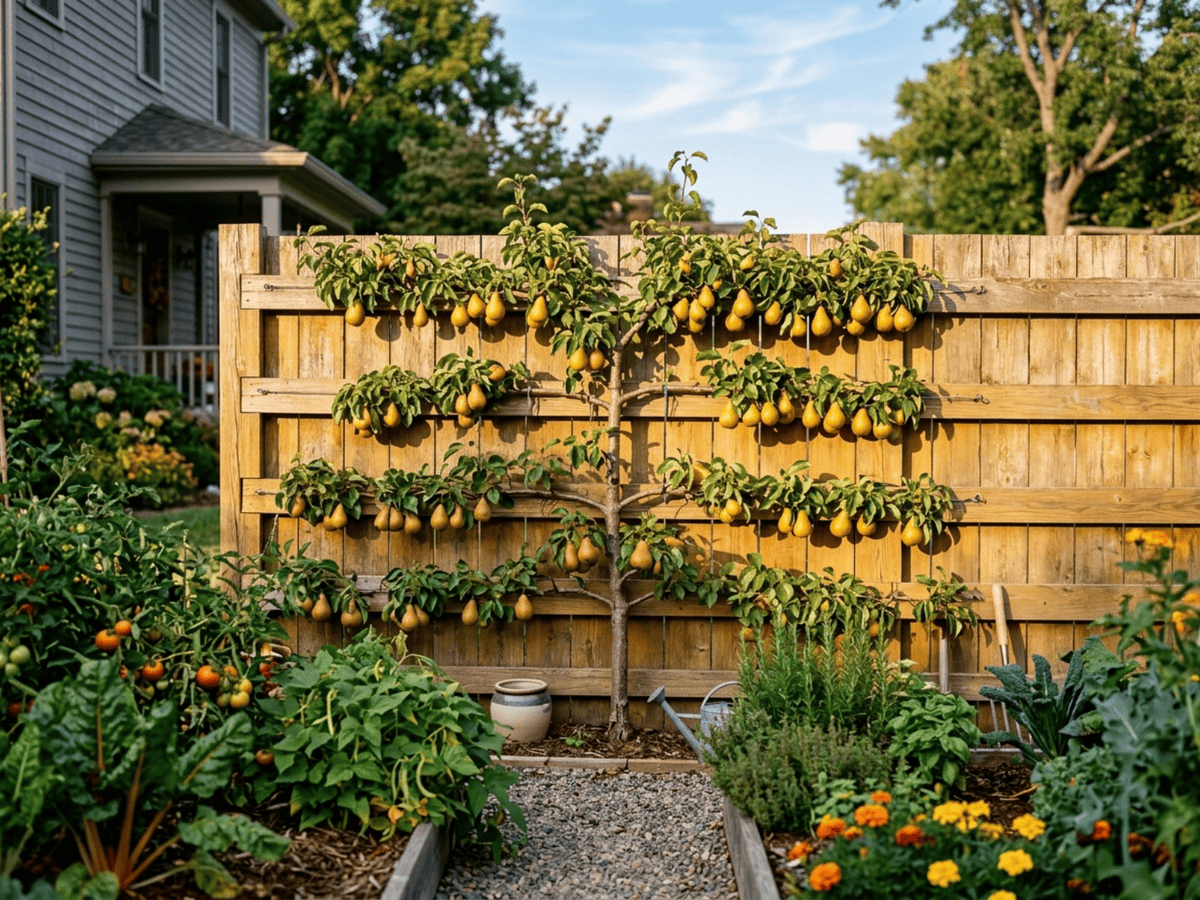
- Cold-hardy fruit tree for backyard orchards and espaliers
Related plants
Plants with similar care
 Mexican AbeliaAbelia floribunda
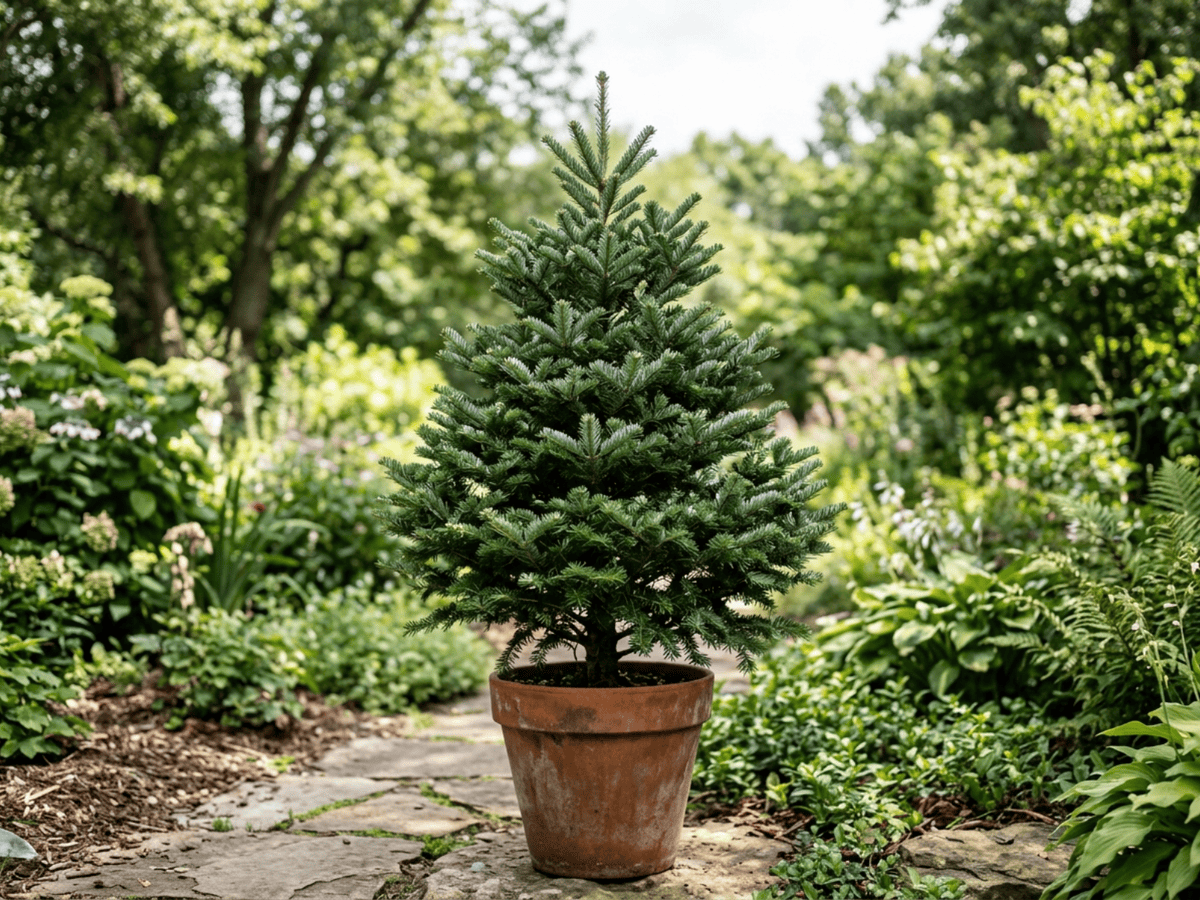 Fraser FirAbies fraseri
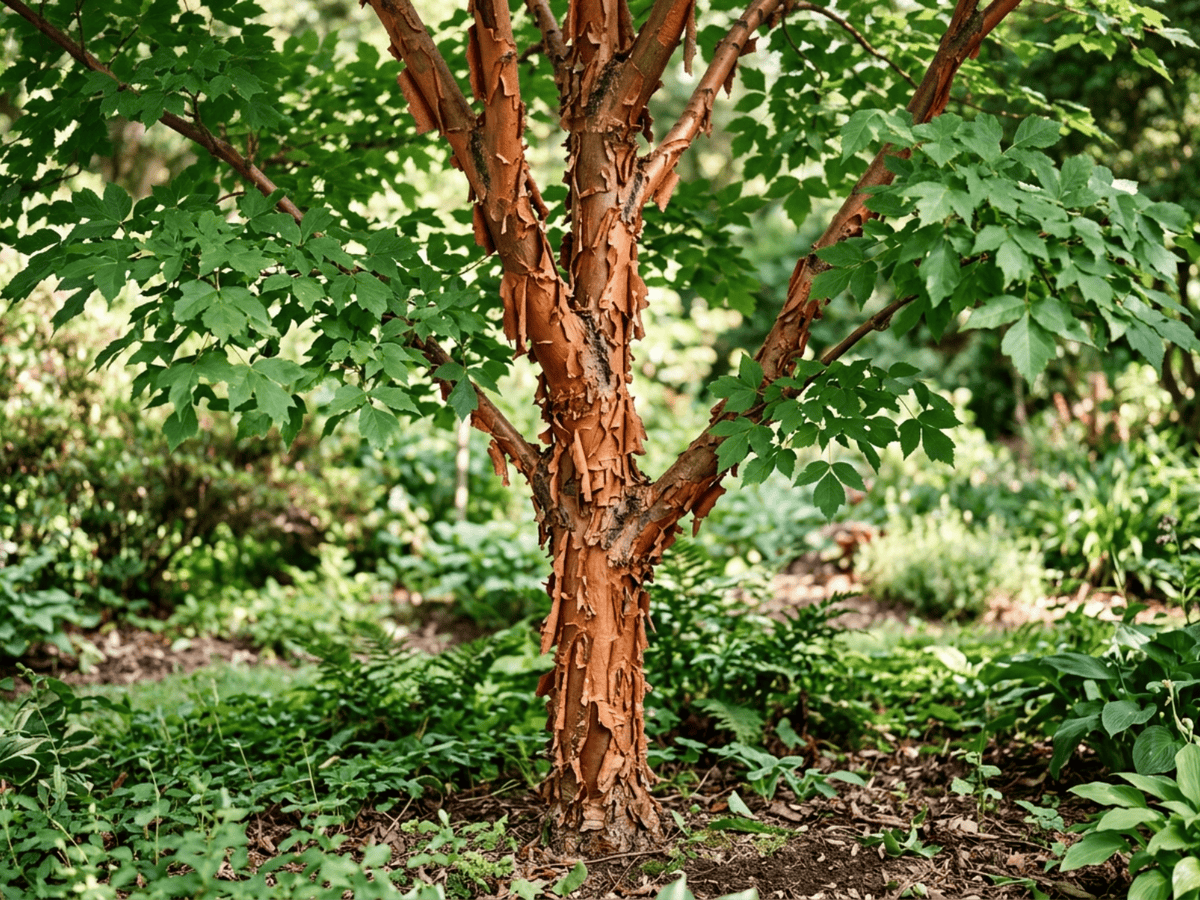 Paperbark MapleAcer griseum
 Sugar MapleAcer saccharum
Frequently asked questions
How often should I water Common Pear?
In summer, water about every 5 days; in winter, about every 21 days. Adjust for heat, pot size and drainage.
How much light does Common Pear need?
Full sun: 6+ hrs direct. Watch the leaves — scorching or stretching means the light needs adjusting.
Is Common Pear toxic to cats or dogs?
Pets Slight (Dogs Slight · Cats Slight) Educational information, not medical or veterinary advice. If exposure is suspected, contact a doctor or veterinarian.
Is Common Pear easy to grow?
It is moderately demanding: a good choice once you have a little experience.
When does Common Pear bloom?
It typically blooms Mar–Apr in the Northern Hemisphere.
YardMate
Identify any plant in seconds
Snap a photo — YardMate names the plant, diagnoses problems, and reminds you when to water.
Download on the App Store