 YardMate


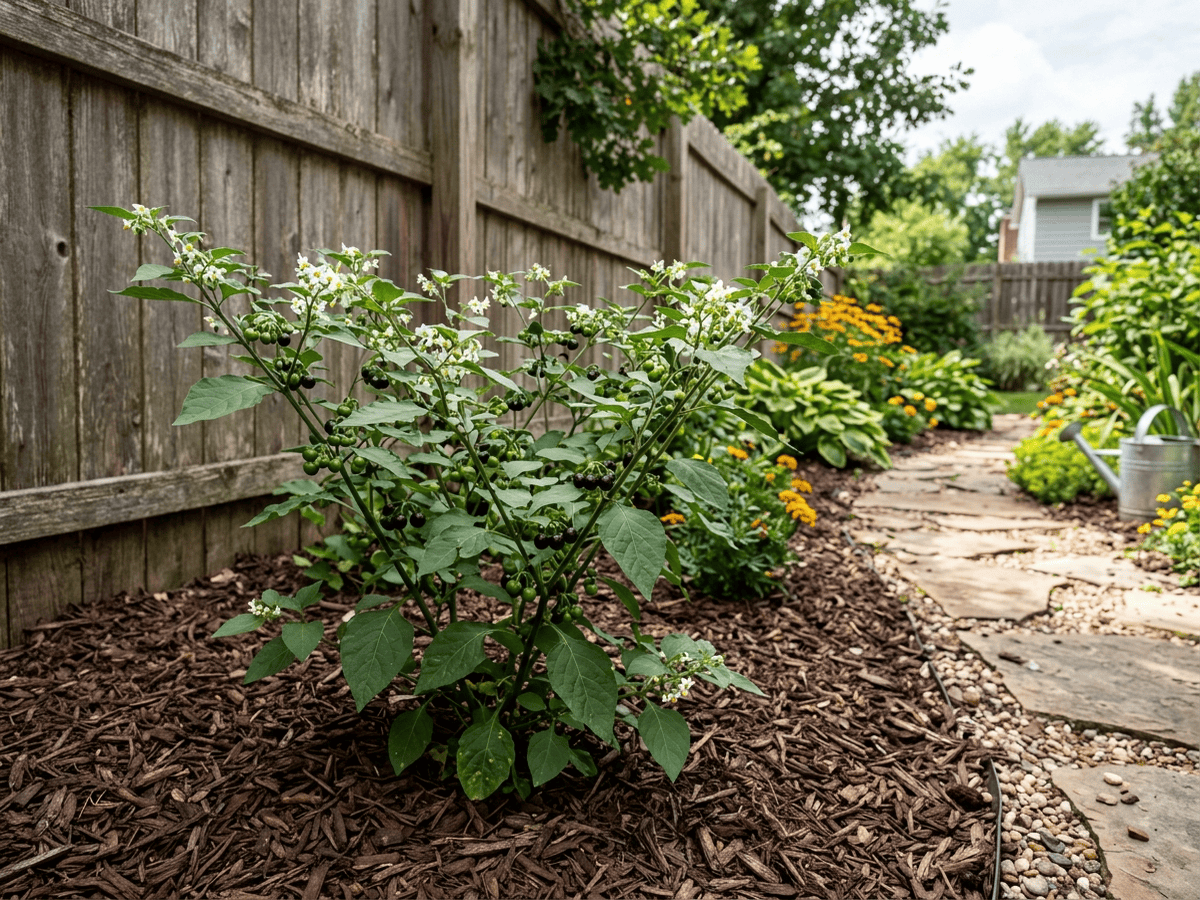
Black Nightshade
Solanum nigrum
Easy · Beginner friendlyAbout Black Nightshade
Black Nightshade is a Eurasian annual weed naturalized throughout the US, common in gardens, cropland, and waste ground. Growing 1 to 3 feet tall with dark green oval leaves, small white star-shaped flowers, and clusters of glossy black berries, it is a persistent pest in American vegetable gardens and row crops. Berries and foliage contain variable levels of toxic solanine alkaloids.
- Shade-tolerant
How to care for Black Nightshade
Watering
- Springevery 7 days
- Summerevery 5 days
- Fallevery 10 days
- Winterevery 14 days
Soil · Rich & well-draining
- Top dressingCompost10%
- Main mixPotting soil + compost 3:180%
- DrainageGravel10%
Top up the compost layer each season.
FERTILIZER
This plant needs little to no feeding.
At a Glance
- NativeEast Asia
- Height1–3 ft (0.3–0.9 m)
- Spread1–2 ft (0.3–0.6 m)
- Flower colorWhite
- Foliage colorGreen
- Fruit colorBlack
- SoilLoamy, Well-drained
- LocationsYard
Bloom time
BLOOM CYCLE
Peak bloom
Jun–Nov
Small white star flowers summer to fall, followed by black berries
Toxicity
Humans Moderate · Pets Moderate
solanine, solasodine, and glycoalkaloids
Moderate
- Unripe fruit
- Leaf
- Ingestion
EXPOSURE Eating unripe fruit and leaves.
EFFECT Vomiting, diarrhea, neurological effects, and cardiac arrhythmia.
NOTE Documented concern for humans: Vomiting, diarrhea, neurological effects, and cardiac arrhythmia.
Moderate
- Unripe fruit
- Leaf
- Ingestion
EXPOSURE Eating unripe fruit and leaves.
EFFECT Vomiting, diarrhea, lethargy, and dilated pupils.
NOTE ASPCA lists Solanum as toxic to pets. Ripe fruit eaten in traditional cuisine worldwide but unripe berries and foliage are dangerous.
Moderate
- Unripe fruit
- Leaf
- Ingestion
EXPOSURE Eating unripe fruit and leaves.
EFFECT Vomiting, diarrhea, lethargy, and dilated pupils.
NOTE ASPCA lists Solanum as toxic to pets. Ripe fruit eaten in traditional cuisine worldwide but unripe berries and foliage are dangerous.
Educational information, not medical or veterinary advice. If exposure is suspected, contact a doctor or veterinarian.
DISTRIBUTION

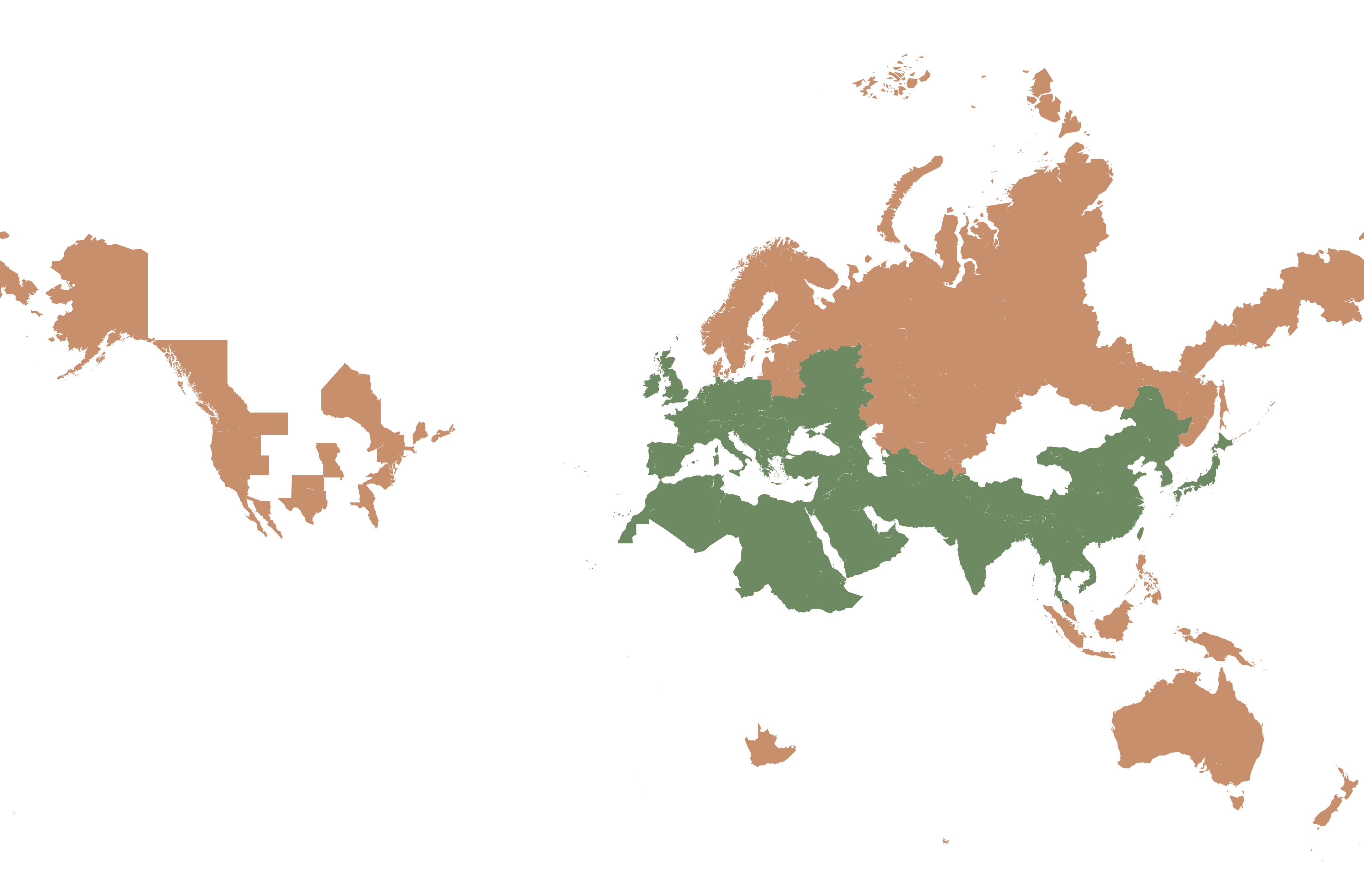
- Native
- Introduced
- East Asia
History
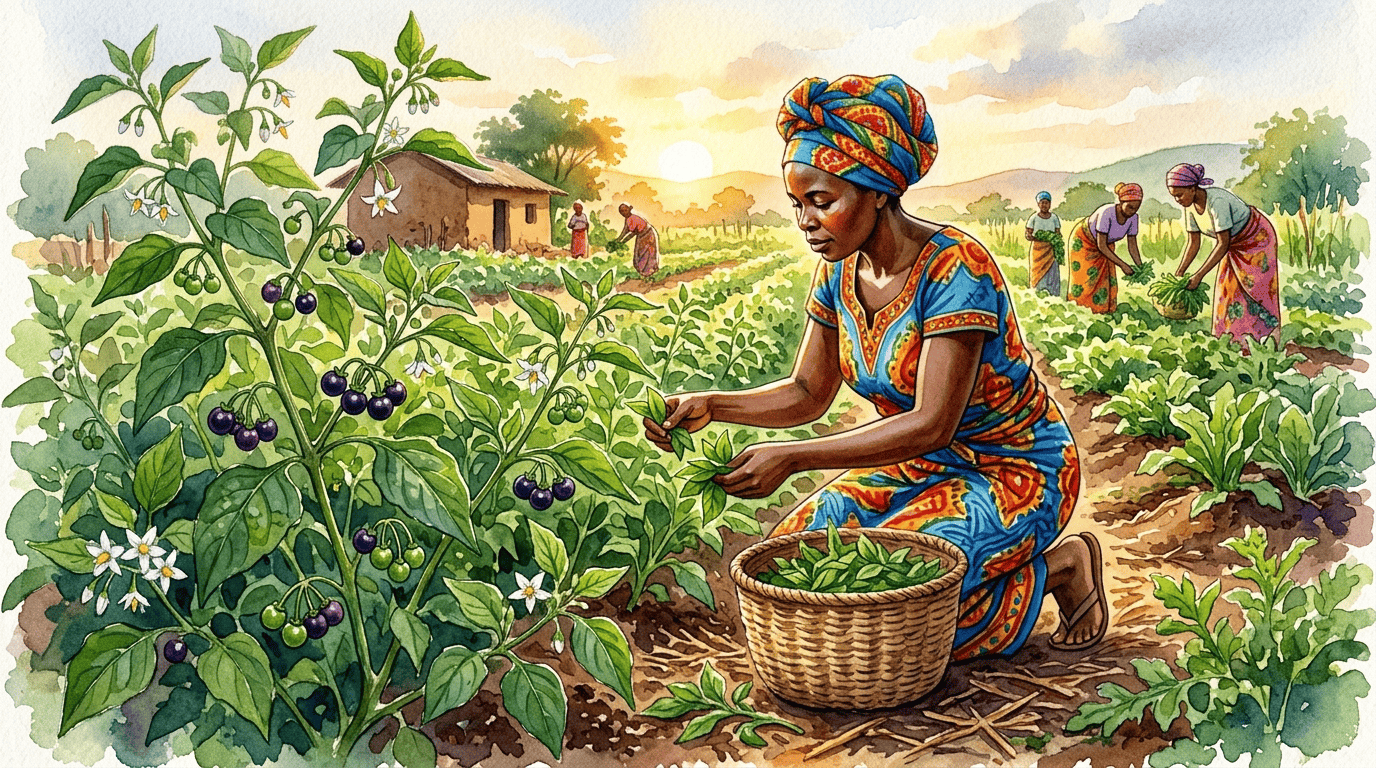
Solanum nigrum is a taxonomically complex aggregate of forms native to Eurasia and now spread worldwide. Linnaeus described it in Species Plantarum (1753). Its reputation is strikingly dual: the unripe green berries and foliage contain significant solanine and solasodine alkaloids that can cause serious poisoning, while fully ripe purple-black berries from most populations are eaten safely across continents.
In India it is called makoi; in Ethiopia and East Africa the young leaves (called managu in Kenya, nakati in Uganda) are a traditional cooked vegetable with market demand far exceeding supply; in Italy's Sicily and Calabria it is eaten as a summer green called vrocculi or marugiu. Traditional European folk medicine used poultices for skin inflammation.
Historically used as a cooked green (morelle) in parts of southern Europe and Africa, but the variable alkaloid content has made such use discouraged in modern American contexts. Caution remains essential because alkaloid content varies dramatically with population, soil, and ripeness.
Symbolism & meaning
What It Symbolizes
Black Nightshade is ambiguity in berry form. In some places carefully prepared leaves or ripe fruit belong to food traditions; in others, relatives and lookalikes make the plant a caution. Its symbolism is discernment: the need to know exactly what one is seeing before deciding what it means.
- Hidden danger — berries attractive to children but toxic
- Nightshade family — related to tomato and potato
Where the Name Comes From
'Solanum' may derive from Latin 'solamen' meaning comfort, an old herbal reference; 'nigrum' means black, for the ripe berry color.
Uses & Fun Facts
- Fully ripe black berries cooked into traditional African and Indian dishes
Related plants
More Solanum plants
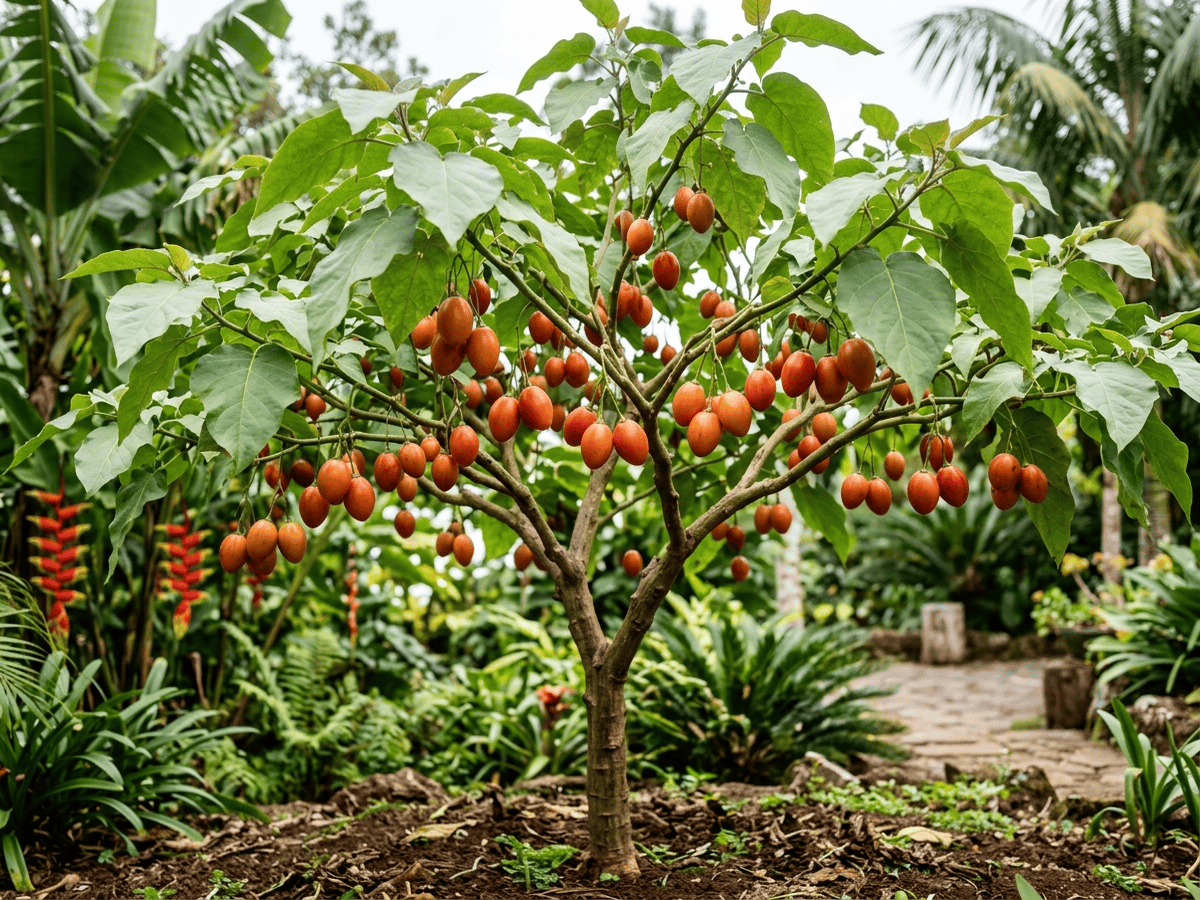 TamarilloSolanum betaceum
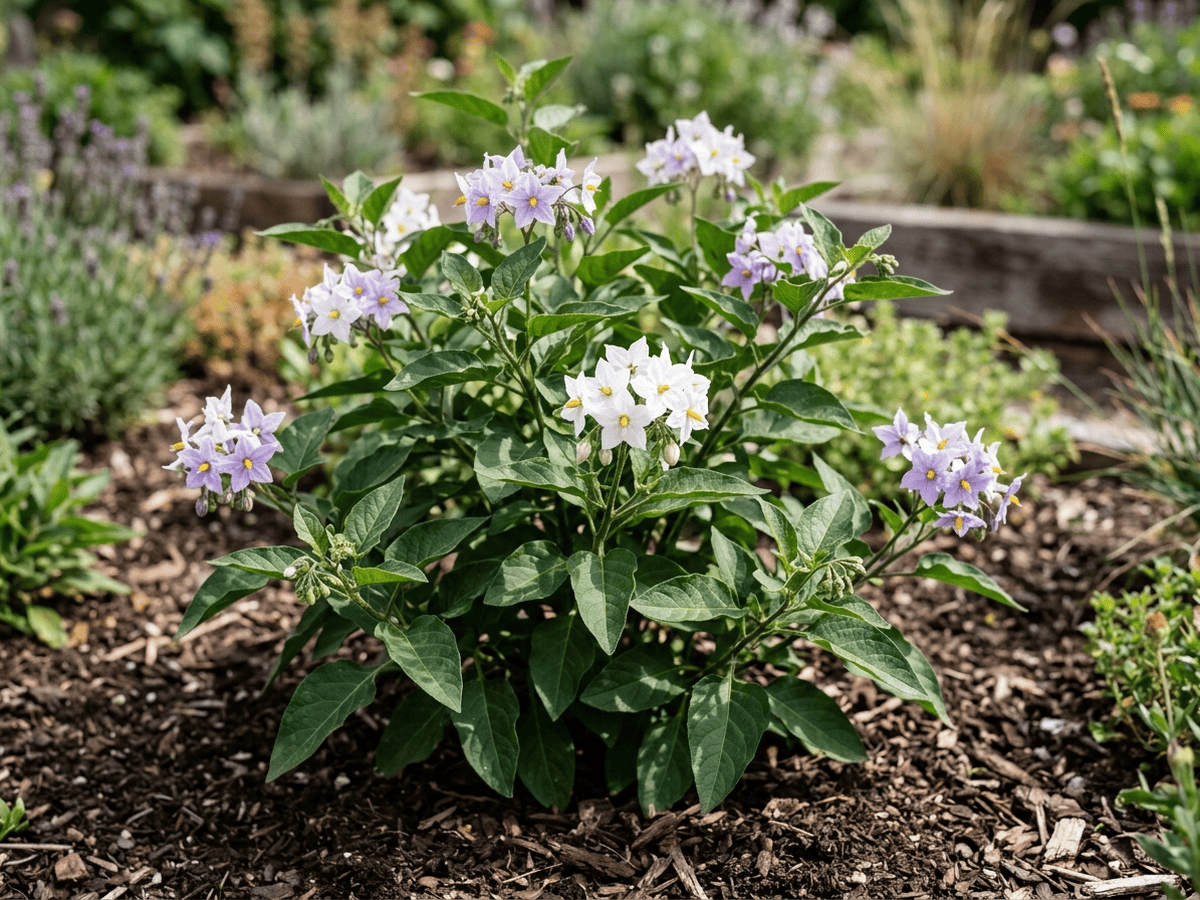 Buenos Aires NightshadeSolanum bonariense
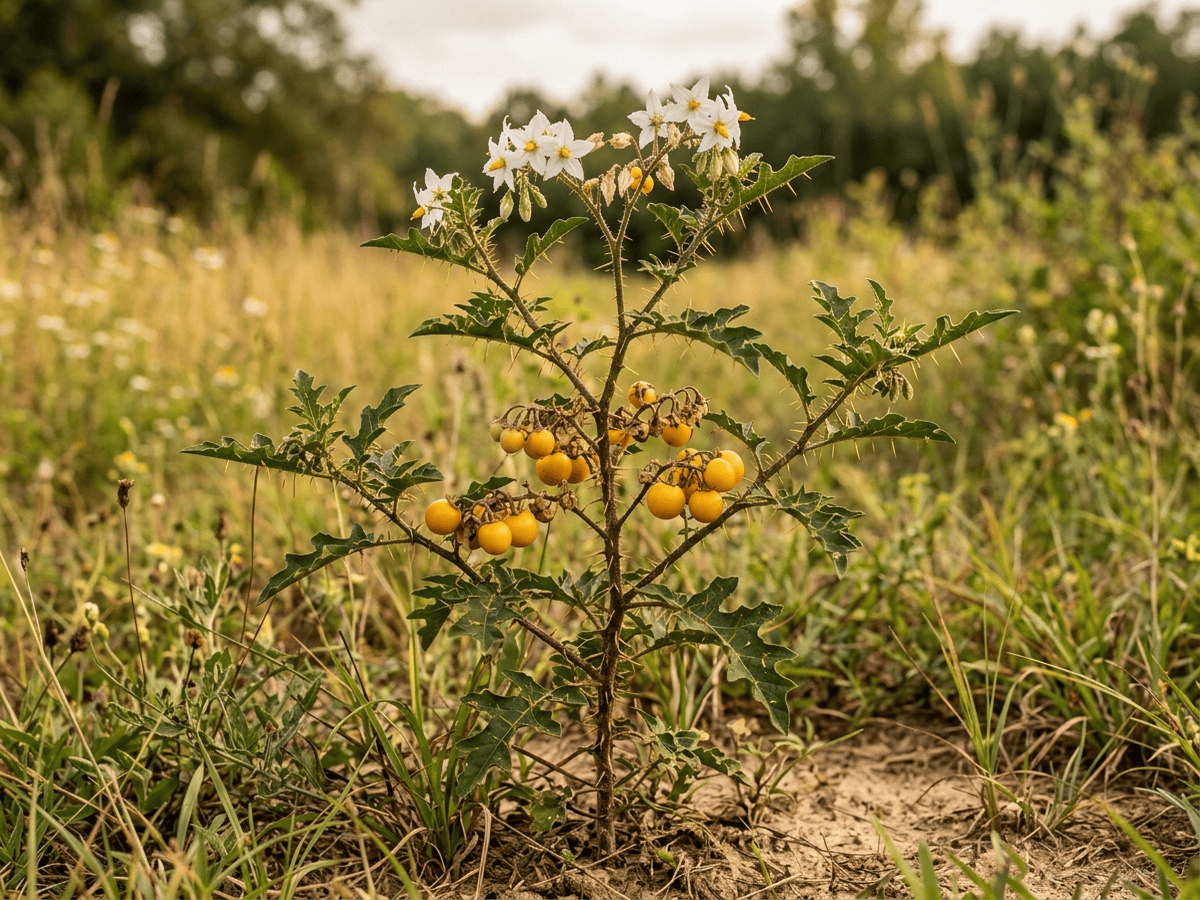 Carolina HorsenettleSolanum carolinense
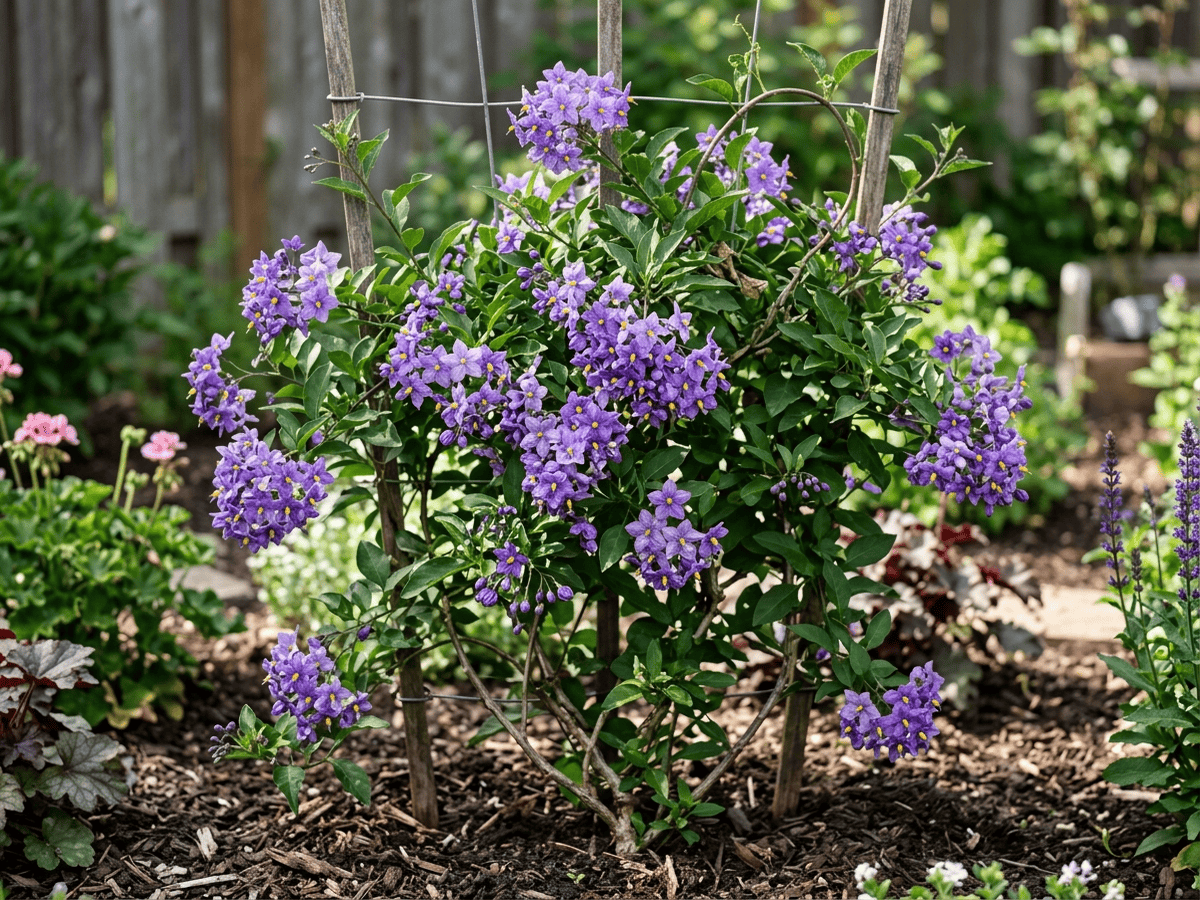 Chilean Potato VineSolanum crispum
Plants with similar care
 Chinese AbeliaAbelia chinensis
 Fragrant AbeliaAbelia mosanensis
 Large-Flowered AbeliaAbelia uniflora
 Glossy AbeliaAbelia x grandiflora
Frequently asked questions
How often should I water Black Nightshade?
In summer, water about every 5 days; in winter, about every 14 days. Adjust for heat, pot size and drainage.
How much light does Black Nightshade need?
Full sun: 6+ hrs direct. Watch the leaves — scorching or stretching means the light needs adjusting.
Is Black Nightshade toxic to cats or dogs?
Pets Moderate (Dogs Moderate · Cats Moderate) Educational information, not medical or veterinary advice. If exposure is suspected, contact a doctor or veterinarian.
Is Black Nightshade easy to grow?
Yes — it is considered an easy, beginner-friendly plant.
When does Black Nightshade bloom?
It typically blooms Jun–Nov in the Northern Hemisphere.
YardMate
Identify any plant in seconds
Snap a photo — YardMate names the plant, diagnoses problems, and reminds you when to water.
Download on the App Store