 YardMate

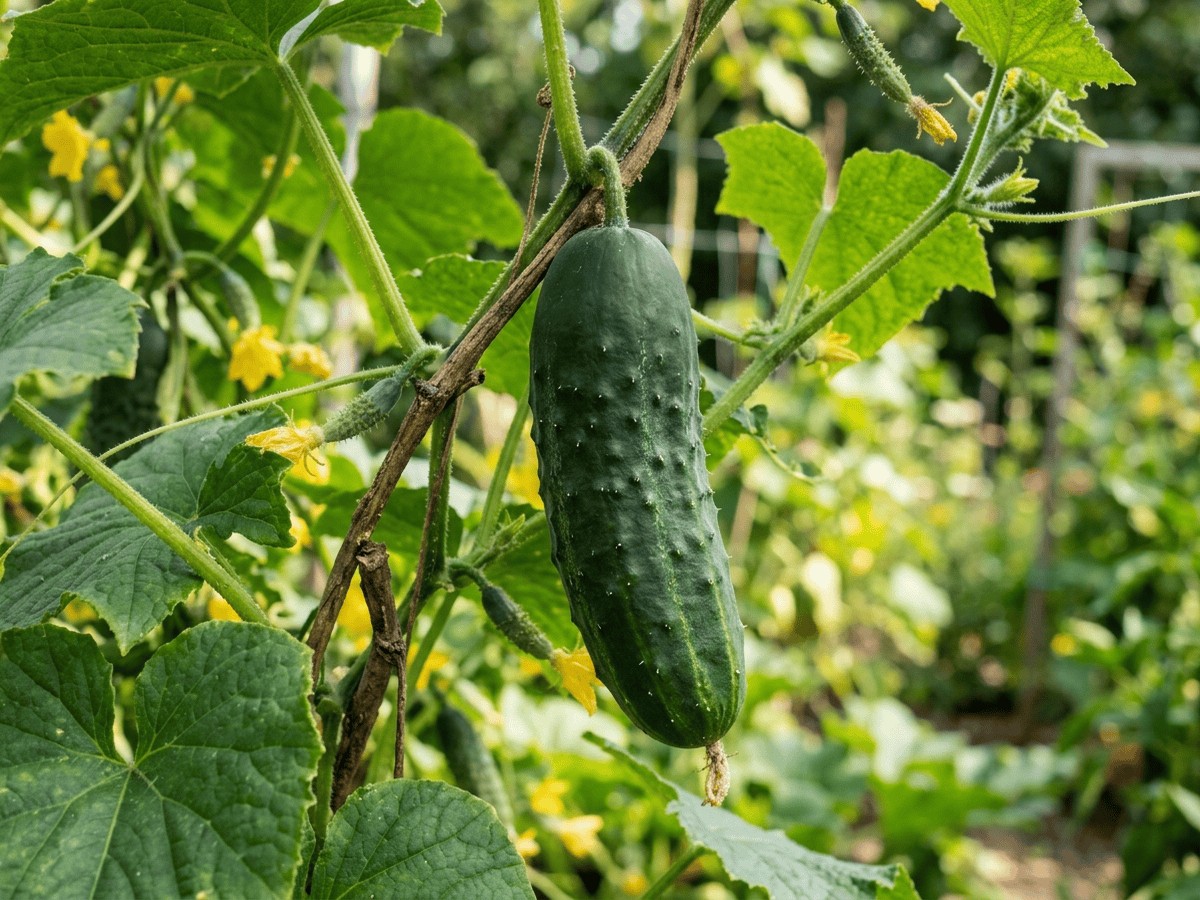


Cucumber
Cucumis sativus
Easy · Beginner friendlyAbout Cucumber
Cucumis sativus, the cucumber, is one of the world's most consumed vegetables — cool, crisp, and 95% water. Native to India, where it has been cultivated for at least 3,000 years, it is a vining or bushy plant that produces fruit rapidly in warm conditions. Slicing, pickling, and Asian varieties offer different sizes and textures. Cucumbers need warm soil, consistent moisture, and support for climbing. They are monoecious, with separate male and female flowers on the same plant. Modern greenhouse varieties are all-female (gynoecious) for seedless fruit.
- Edible
- Fast-growing
- Climbing
How to care for Cucumber
Watering
- Springevery 2 days
- Summerevery 1 days
- Fallevery 3 days
- Winterevery 5 days
Soil · Rich & well-draining
- Top dressingCompost10%
- Main mixPotting soil + compost 3:180%
- DrainageGravel10%
Top up the compost layer each season.
FERTILIZER
Balanced Feed 14-14-14
An even feed covers all three needs at once, keeping leaves, roots and blooms moving together with nothing pushed out of balance.
- Nitrogen · Leaves
- Phosphorus · Roots + Blooms
- Potassium · Strength
- Springevery 10 days
- Summerevery 10 days
- Fallevery 14 days
At a Glance
- NativeSouth Asia
- Height1–2 ft (0.3–0.6 m)
- Spread3–6 ft (0.9–1.8 m)
- Flower colorYellow
- Foliage colorGreen
- Fruit colorGreen
- SoilLoamy, Well-drained, Rich
- LocationsYard · Balcony
Bloom time
BLOOM CYCLE
Peak bloom
Jun–Aug
Yellow flowers; pick frequently for continuous production; train on trellis for straighter fruit
Fragrance
LIGHT FRAGRANCE
The foliage has a fresh green aroma.
Toxicity
Humans Safe · Pets Safe
cucurbitacins (trace in modern cultivars)
Safe
EXPOSURE No exposure route is reported.
EFFECT Widely consumed and cucurbitacin in some wild or stressed cultivars produces bitter taste and mild GI upset.
NOTE Listed as non-toxic for humans; avoid eating ornamental plants unless confirmed edible.
Safe
EXPOSURE No exposure route is reported.
EFFECT Not listed as toxic and often used as low-calorie treat.
NOTE Listed as non-toxic for dogs; avoid eating ornamental plants unless confirmed edible.
Safe
EXPOSURE No exposure route is reported.
EFFECT Not listed as toxic.
NOTE Listed as non-toxic for cats; avoid eating ornamental plants unless confirmed edible.
Educational information, not medical or veterinary advice. If exposure is suspected, contact a doctor or veterinarian.
DISTRIBUTION


- Native
- Introduced
- South Asia
History

Cucumis sativus is native to South Asia, with its wild ancestor Cucumis sativus var. hardwickii growing in the Himalayan foothills of northern India. It was domesticated at least 3,000 years ago and spread west via trade routes. Greeks cultivated it by the 6th century BCE. Roman Emperor Tiberius (1st century CE) was so devoted to cucumbers that Pliny the Elder records the imperial gardeners growing them year-round under transparent mica sheets — among the earliest documented "greenhouse" cultivation in history.
Cucumbers spread to China by the 2nd century CE and to Europe by the early Middle Ages. Christopher Columbus introduced them to the New World in 1494. Modern cultivars include slicing cucumbers, pickling cucumbers (for dill and sweet pickles), the narrow elongated Persian and English cucumbers, and the Asian yellow-ripening "lemon cucumber."
China is now the overwhelming largest global producer, with nearly three-quarters of the world's production. Cucumbers were cultivated in India's Ganges Valley at least 3,000 years ago. Roman Emperor Tiberius demanded fresh cucumbers daily year-round, requiring portable greenhouses (specularia) moved to follow the sun — possibly the first greenhouse technology. The phrase 'cool as a cucumber' is literally true — the interior can be up to 20°F (11°C) cooler than the ambient temperature. Kirby cucumbers (pickling) are named after the Kirby family farm in New Jersey. China produces 80% of the world's cucumbers — over 80 million tonnes annually.
Symbolism & meaning
What It Symbolizes
The Cucumber marks renewal, its cool, hydrating flesh offering refreshment in the hottest summer days. Few vegetables grow so quickly or so enthusiastically, leaping along their trellis as if eager to be of use. From ancient Egyptian gardens to modern kitchen plots, the cucumber has stood for the simple, restorative pleasure of cool water made edible — a humble fruit that quietly renews body and spirit.
- Renewal — Its cool, hydrating nature and rapid growth represent refreshment and rejuvenation
Where the Name Comes From
Cucumis from Latin for cucumber. Sativus means 'cultivated.'
Uses & Fun Facts
- Crisp fruits sliced fresh into salads or preserved as pickles
- Climbing vines save space on sturdy supports and keep fruits cleaner
Related plants
Plants with similar care
 Chinese AbeliaAbelia chinensis
 Fragrant AbeliaAbelia mosanensis
 Large-Flowered AbeliaAbelia uniflora
 Glossy AbeliaAbelia x grandiflora
Frequently asked questions
How often should I water Cucumber?
In summer, water about every 1 days; in winter, about every 5 days. Adjust for heat, pot size and drainage.
How much light does Cucumber need?
Full sun: 6+ hrs direct. Watch the leaves — scorching or stretching means the light needs adjusting.
Is Cucumber toxic to cats or dogs?
Pets Safe (Dogs Safe · Cats Safe) Educational information, not medical or veterinary advice. If exposure is suspected, contact a doctor or veterinarian.
Is Cucumber easy to grow?
Yes — it is considered an easy, beginner-friendly plant.
When does Cucumber bloom?
It typically blooms Jun–Aug in the Northern Hemisphere.
YardMate
Identify any plant in seconds
Snap a photo — YardMate names the plant, diagnoses problems, and reminds you when to water.
Download on the App Store