 YardMate


Strawberry
Fragaria x ananassa
Easy · Beginner friendlyAbout Strawberry
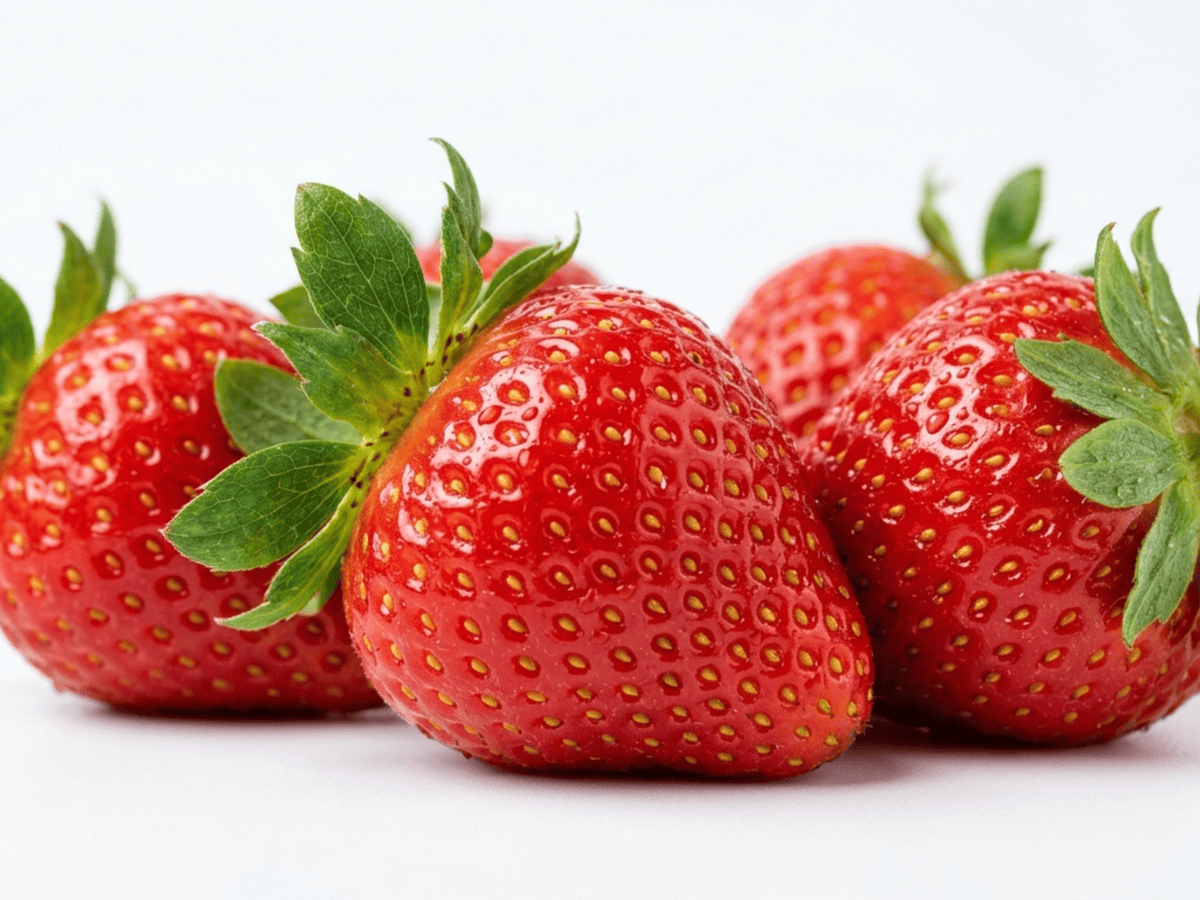
Fragaria × ananassa, the garden strawberry, is a hybrid perennial in the Rosaceae family created in 18th-century France from a cross between the North American F. virginiana and the South American F. chiloensis. It is the world's most popular berry, grown in every temperate and subtropical region. Plants form low rosettes of trifoliate leaves, sending out runners (stolons) that root to create new plants.
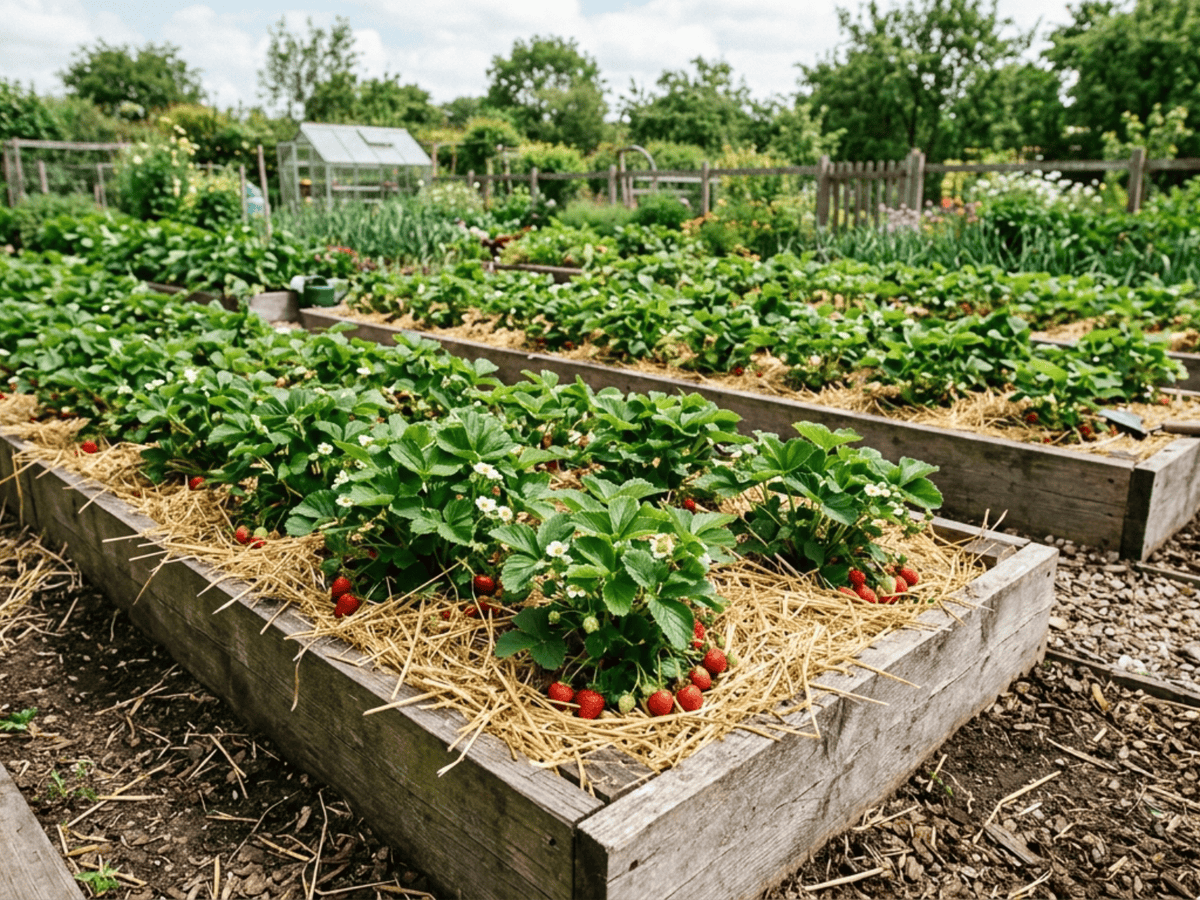
Strawberries thrive in USDA zones 3–10 in full sun and well-drained, slightly acidic soil (pH 5.5–6.5). Three main types exist: June-bearing (one large early-summer crop), everbearing (two crops per season), and day-neutral (continuous production). Raised beds and containers prevent soil-borne diseases. Runners must be managed—remove them for larger fruit, or allow them to establish a matted row for higher total yield.
Nothing in gardening matches the flavour of a sun-warmed, vine-ripe strawberry—commercial varieties, bred for shipping durability, sacrifice flavour dramatically. Strawberries are rich in vitamin C (more per serving than oranges), manganese, and anthocyanins. They feature in desserts worldwide: shortcake, pavlova, jam, ice cream, and the iconic Wimbledon strawberries and cream. The 'fruit' is actually a swollen receptacle; the true fruits are the tiny 'seeds' (achenes) on the surface.
- Edible
- Fast-growing
How to care for Strawberry
Watering
- Springevery 2 days
- Summerevery 2 days
- Fallevery 3 days
- Winterevery 5 days
Soil · Rich & well-draining
- Top dressingCompost10%
- Main mixPotting soil + compost 3:180%
- DrainageGravel10%
Top up the compost layer each season.
FERTILIZER
Bloom Booster 10-52-10
A phosphorus-forward feed fuels abundant blooms, with just enough nitrogen and potassium to keep foliage and roots steady.
- Nitrogen · Leaves
- Phosphorus · Roots + Blooms
- Potassium · Strength
- Springevery 14 days
- Summerevery 14 days
- Fallevery 21 days
At a Glance
- Height0.5–1 ft (0.2–0.3 m)
- Spread1–1.5 ft (0.3–0.5 m)
- Flower colorWhite, Pink
- Foliage colorGreen
- Fruit colorRed
- SoilAcidic, Well-drained, Rich
- LocationsYard · Balcony
Bloom time
BLOOM CYCLE
Peak bloom
Jun
Remove flowers the first year on June-bearers for stronger plants; day-neutrals can fruit the first year.
Fragrance
MODERATE FRAGRANCE
Distinctive sweet strawberry aroma from furaneol and other volatiles.
Toxicity
Humans Safe · Pets Safe
None reported
Safe
EXPOSURE No exposure route is reported.
EFFECT Widely consumed and strawberry is a common allergen causing oral allergy syndrome in sensitized individuals.
NOTE Listed as non-toxic for humans; avoid eating ornamental plants unless confirmed edible.
Safe
EXPOSURE No exposure route is reported.
EFFECT Not listed as toxic and excessive consumption may cause GI upset.
NOTE Listed as non-toxic for dogs; avoid eating ornamental plants unless confirmed edible.
Safe
EXPOSURE No exposure route is reported.
EFFECT Not listed as toxic.
NOTE Listed as non-toxic for cats; avoid eating ornamental plants unless confirmed edible.
Educational information, not medical or veterinary advice. If exposure is suspected, contact a doctor or veterinarian.
DISTRIBUTION


- Native
- Introduced
History
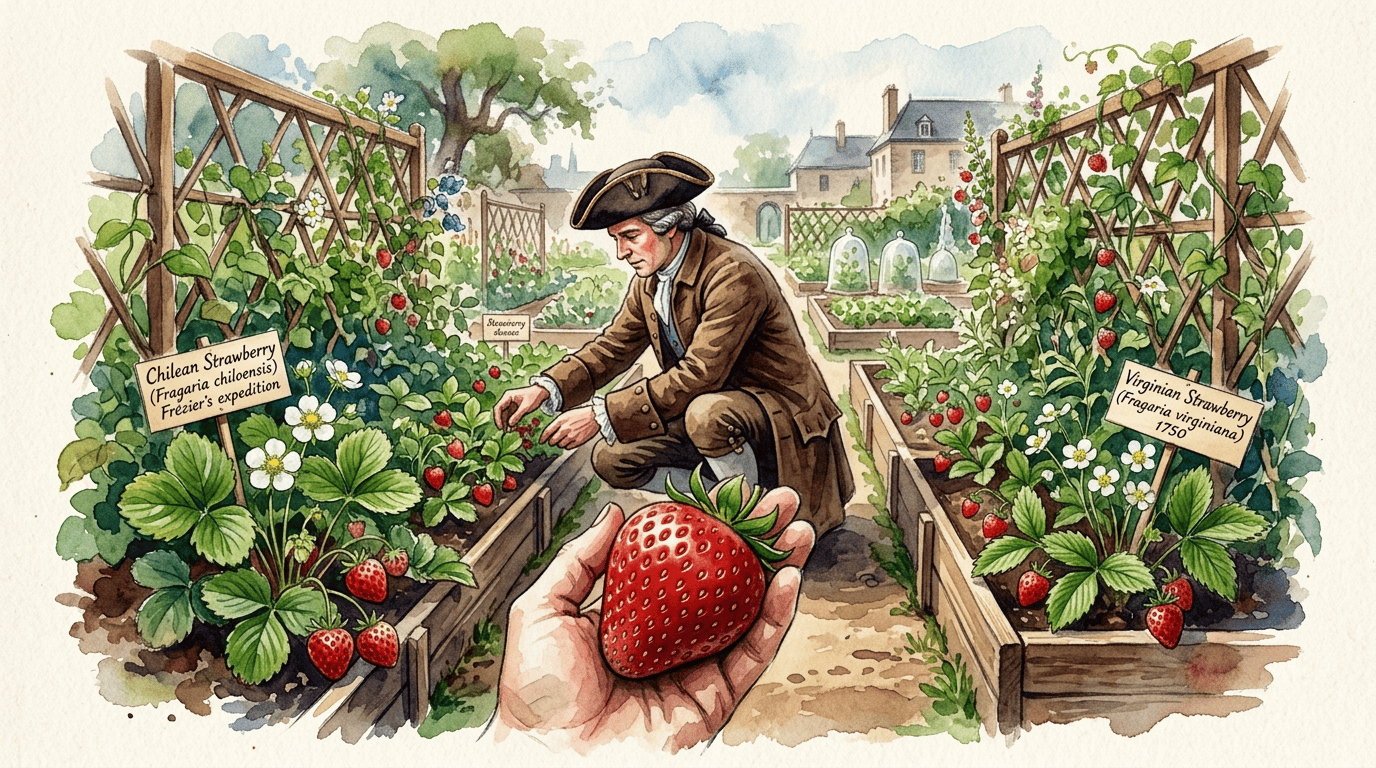
Fragaria x ananassa is a hybrid of two American Fragaria species that first crossed in Europe, not in the Americas. The Virginian strawberry (F. virginiana) had been brought to Europe from North America in the early 17th century. The Chilean strawberry (F. chiloensis) reached France in 1714 thanks to Amédée-François Frézier, a French military engineer returning from a two-year Chilean spying mission; he brought five F. chiloensis plants.
Planted adjacent to Virginian strawberries in the royal botanical garden at Brest, the two species spontaneously hybridized around 1750, producing the first F. x ananassa — with larger fruit than either parent and improved flavor. French and Dutch breeders developed this hybrid through the 19th century, and it displaced wild and alpine strawberries (F. vesca) as the commercial standard. Strawberry fruit is a false fruit (aggregate accessory fruit) — the "seeds" on the outside are actually the true fruits, achenes, each containing a seed.
Modern production centers in California, Spain, Mexico, Egypt, Turkey, and Japan; California alone produces roughly 85% of US strawberries. The garden strawberry was accidentally created around 1750 in Brittany, France, when F. chiloensis (from Chile) was planted near F. The resulting hybrid combined large fruit size with great flavor. Medieval Europeans used wild strawberries medicinally. Wimbledon has served strawberries and cream since 1877, consuming about 28,000 kg during each tournament.
Symbolism & meaning
What It Symbolizes
The Strawberry is sweetness given form — the quintessential berry of summer joy, gathered into pies, bowls, and the first fruit of childhood gardens. Its heart shape and jewel-like ripeness lent it a Victorian meaning of perfection: something complete, beautiful, and small enough to hold. Above all, it is the taste of innocent pleasure, romance ripened by sun and offered freely from the vine.
- Sweetness — The quintessential sweet berry symbolizes innocent pleasure, romance, and summer joy
- Perfection — Its heart shape and jewel-like appearance represent something beautiful and complete
Where the Name Comes From
Fragaria from Latin 'fragare' (to emit fragrance); the hybrid epithet 'ananassa' means pineapple-like, from the fruit's aroma. 'Strawberry' possibly from Old English 'streaw-berige' (strewn berry), as the fruit lies scattered on the ground.
Uses & Fun Facts
- Sweet red berries eaten fresh in jams and desserts
- Runners form low fruiting carpet in sunny garden beds
- Compact plants thrive in Strawberry jars and balcony pots
Related plants
Plants with similar care
 Chinese AbeliaAbelia chinensis
 Fragrant AbeliaAbelia mosanensis
 Large-Flowered AbeliaAbelia uniflora
 Glossy AbeliaAbelia x grandiflora
Frequently asked questions
How often should I water Strawberry?
In summer, water about every 2 days; in winter, about every 5 days. Adjust for heat, pot size and drainage.
How much light does Strawberry need?
Full sun: 6+ hrs direct. Watch the leaves — scorching or stretching means the light needs adjusting.
Is Strawberry toxic to cats or dogs?
Pets Safe (Dogs Safe · Cats Safe) Educational information, not medical or veterinary advice. If exposure is suspected, contact a doctor or veterinarian.
Is Strawberry easy to grow?
Yes — it is considered an easy, beginner-friendly plant.
When does Strawberry bloom?
It typically blooms Jun in the Northern Hemisphere.
YardMate
Identify any plant in seconds
Snap a photo — YardMate names the plant, diagnoses problems, and reminds you when to water.
Download on the App Store