 YardMate


Common Pea
Pisum sativum
Easy · Beginner friendlyAbout Common Pea
Pisum sativum, the garden pea, is a cool-season annual climbing legume in the Fabaceae family, believed to have been domesticated in the Near East around 10,000 years ago. It is one of humanity's oldest cultivated crops, with archaeological remains found at sites from the Fertile Crescent to Switzerland. Modern types include shelling peas, snap peas (edible pod), and snow peas (flat, edible pod).
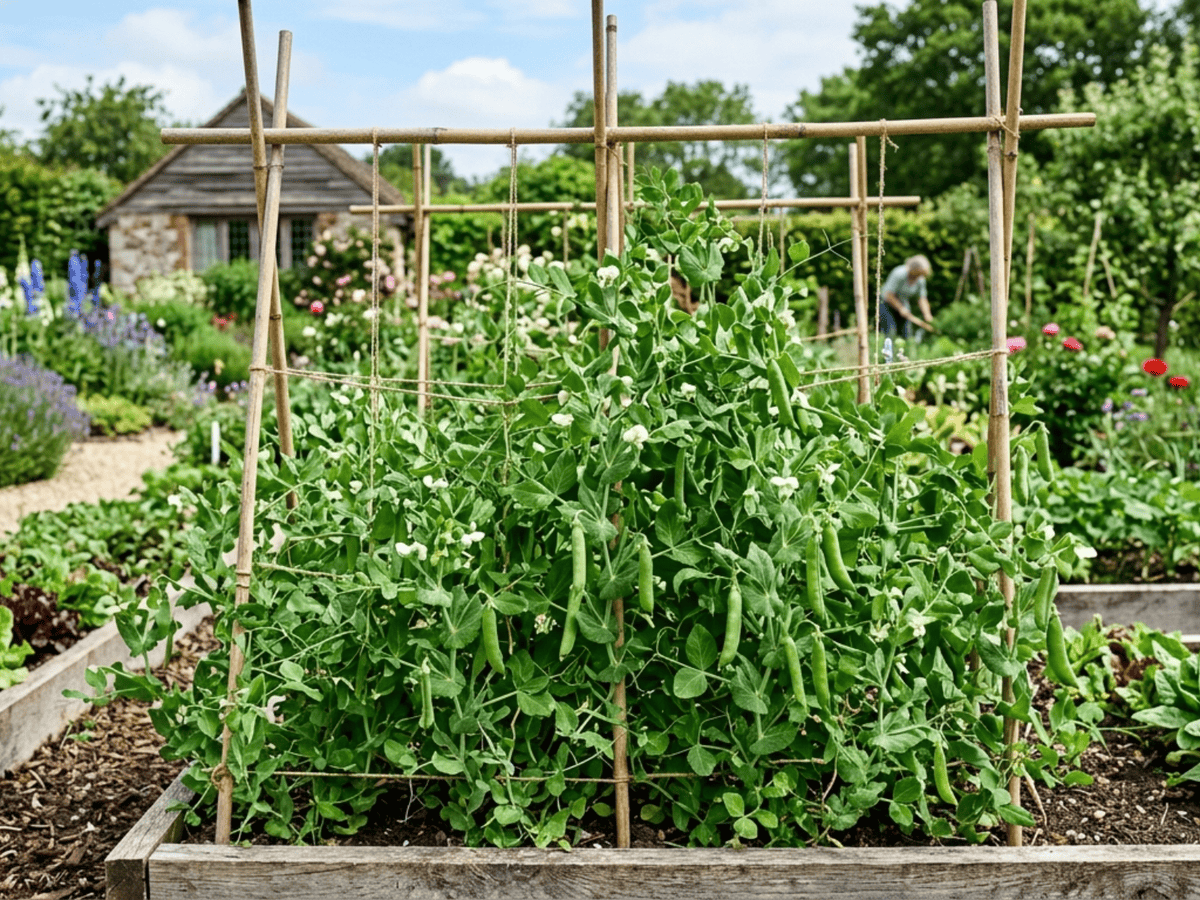
Peas thrive in cool weather (10–20°C), making them ideal for early spring and autumn gardens in USDA zones 2–11. They germinate in cool soil (as low as 4°C) and can tolerate light frost. Tall varieties climb 1.5–2 m using curling tendrils and need trellising, while dwarf bush types stay under 60 cm. Like all legumes, peas fix nitrogen, improving soil fertility.
Peas are famously sweet when freshly picked—sugars convert to starch within hours of harvest, which is why garden peas taste vastly superior to store-bought. Gregor Mendel's experiments with pea plants in the 1860s established the foundations of modern genetics—perhaps the most important scientific work ever done with a garden vegetable. In the kitchen, peas are endlessly versatile: fresh, frozen, dried, in soups, risottos, pasta, Indian dishes, and the classic British mushy peas.
- Edible
- Fast-growing
How to care for Common Pea
Watering
- Springevery 3 days
- Summerevery 2 days
- Fallevery 4 days
- Winterevery 7 days
Soil · Rich & well-draining
- Top dressingCompost10%
- Main mixPotting soil + compost 3:180%
- DrainageGravel10%
Top up the compost layer each season.
FERTILIZER
Balanced Feed 14-14-14
An even feed covers all three needs at once, keeping leaves, roots and blooms moving together with nothing pushed out of balance.
- Nitrogen · Leaves
- Phosphorus · Roots + Blooms
- Potassium · Strength
- Springevery 21 days
- Summerevery 21 days
At a Glance
- NativeMediterranean
- Height2–6 ft (0.6–1.8 m)
- Spread0.5–1 ft (0.2–0.3 m)
- Flower colorWhite, Pink, Purple
- Foliage colorGreen, Blue-green
- SoilLoamy, Well-drained, Rich
- LocationsYard · Indoor · Balcony
Bloom time
BLOOM CYCLE
Peak bloom
Jun–Aug
White or purple flowers are self-pollinating; succession-sow every 2 weeks for extended harvest.
Fragrance
LIGHT FRAGRANCE
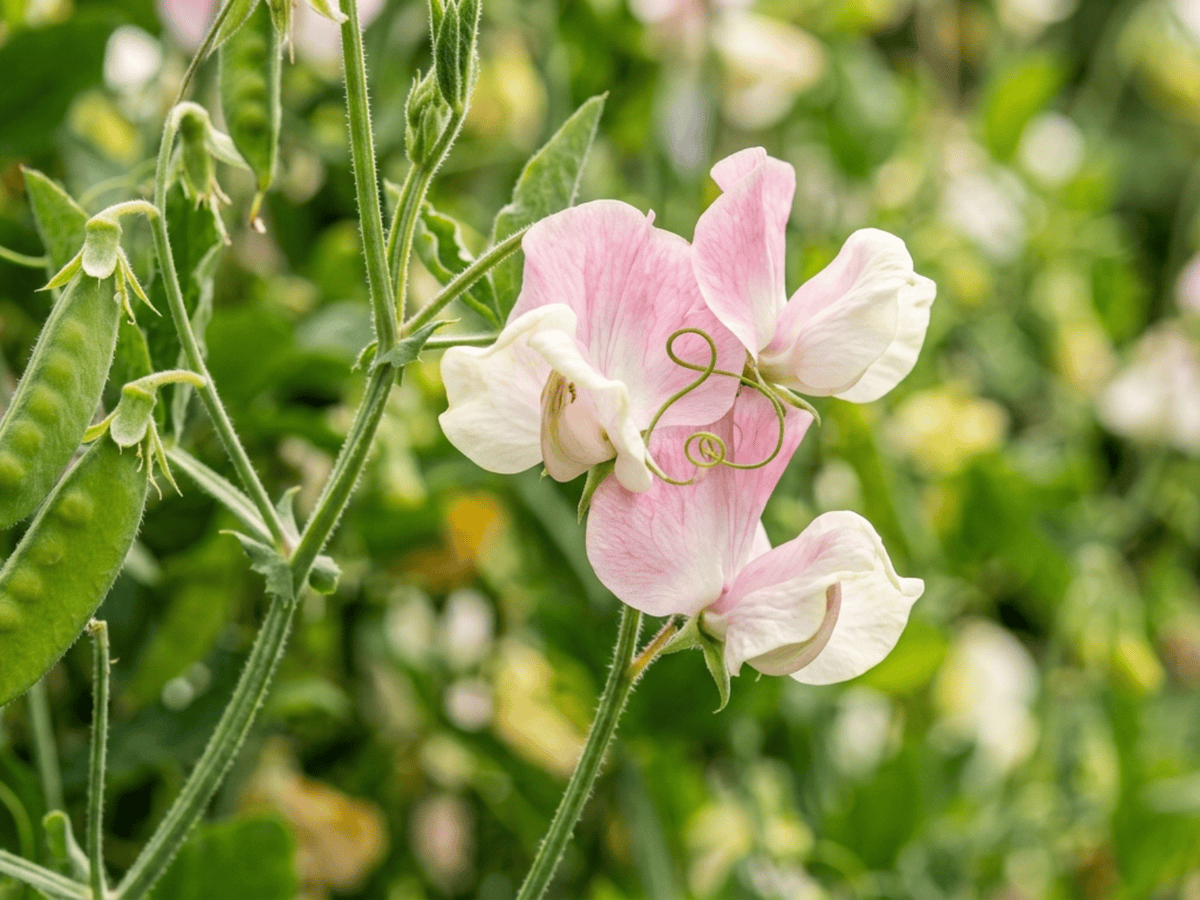
Mild sweet pea fragrance (stronger in sweet pea Lathyrus odoratus, an unrelated species).
Toxicity
Humans Safe · Pets Safe
None reported
Safe
EXPOSURE No exposure route is reported.
EFFECT Widely consumed and raw seeds digestible in small amounts.
NOTE Listed as non-toxic for humans; avoid eating ornamental plants unless confirmed edible.
Safe
EXPOSURE No exposure route is reported.
EFFECT Not listed as toxic.
NOTE Listed as non-toxic for dogs; avoid eating ornamental plants unless confirmed edible.
Safe
EXPOSURE No exposure route is reported.
EFFECT Not listed as toxic.
NOTE Listed as non-toxic for cats; avoid eating ornamental plants unless confirmed edible.
Educational information, not medical or veterinary advice. If exposure is suspected, contact a doctor or veterinarian.
DISTRIBUTION

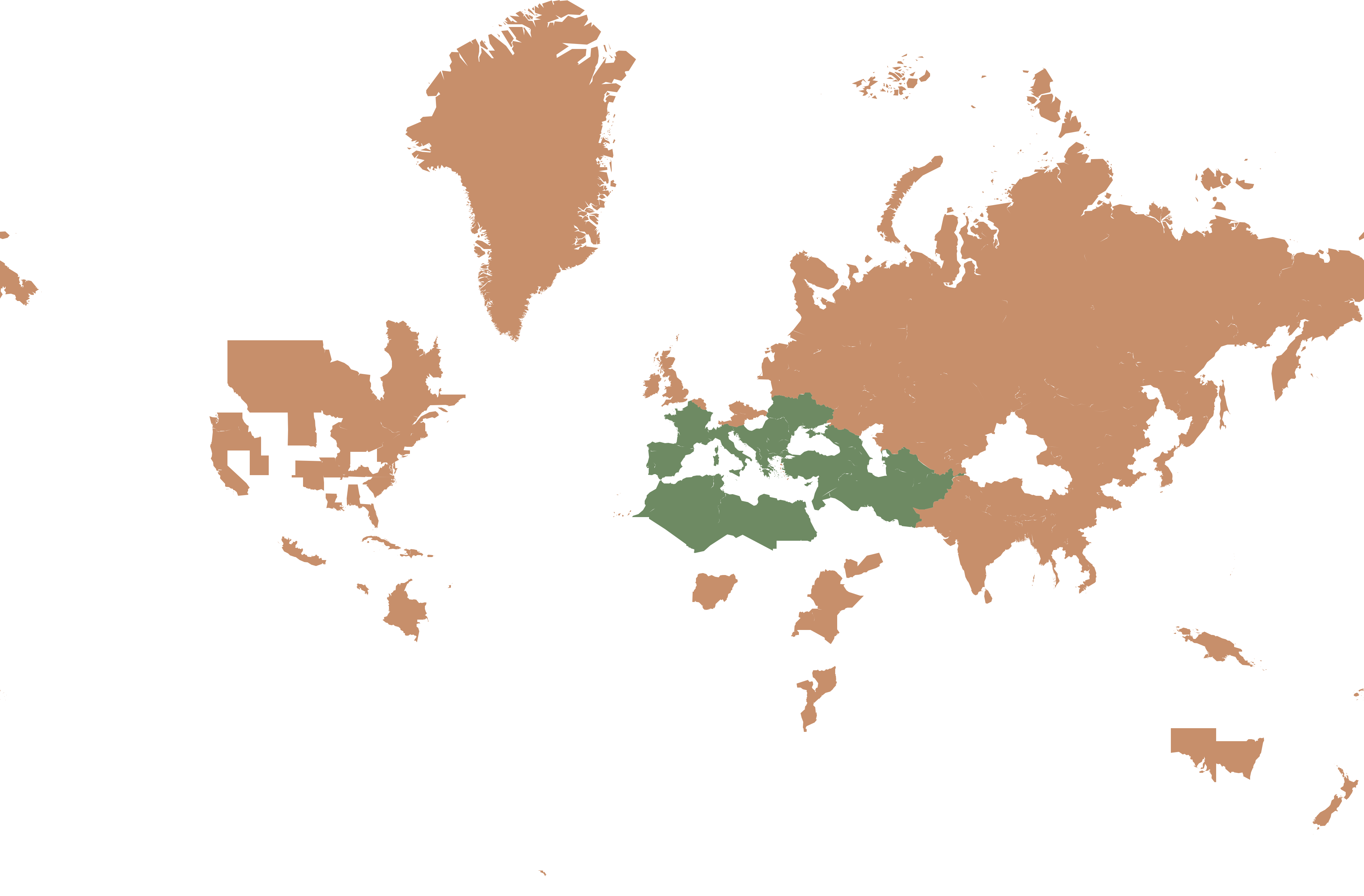
- Native
- Introduced
- Mediterranean
History

Pisum sativum is native to the Mediterranean and the Near East, with its wild ancestor P. sativum subsp. elatius. It was among the earliest crops domesticated during the Neolithic revolution of the Fertile Crescent, approximately 10,000 years ago, and dry peas were a dietary staple across Europe, the Middle East, and India through the Middle Ages. The modern eating of fresh green peas emerged in 17th-century France — peas à la Française served at Louis XIV's court became a fashionable novelty.
The crop achieved its greatest scientific importance in 1856-1863 when Augustinian friar Gregor Mendel conducted his pea-hybridization experiments at St. Thomas' Abbey in Brno (then Austrian Empire, now Czech Republic). Mendel tracked seven discrete traits — round/wrinkled seeds, yellow/green cotyledons, purple/white flowers, etc. — across thousands of plants, formulating the laws of inheritance.
His 1866 paper went largely ignored until 1900, when three independent researchers (de Vries, Correns, and von Tschermak) rediscovered it and launched modern genetics. Among the oldest cultivated crops (c. 8000 BC in the Near East). Dried peas sustained armies and navies for millennia. The frozen pea, introduced by Clarence Birdseye in the 1920s, revolutionised vegetable preservation.
Symbolism & meaning
What It Symbolizes
The Common Pea carries promise, its early spring shoots emerging from cold soil as a small sturdy sign of new beginnings every gardening year. It also expresses discovery, for it was through its that Mendel first uncovered the laws of genetic inheritance, making it humble pods the cradle of modern biology. It is often read as a flower of patient observation, a vegetable whose meaning is that the largest revolutions in understanding can come from quietly watching what an ordinary plant is doing.
- Promise — Early spring peas emerging from cold soil symbolize the promise of new beginnings
- Discovery — Mendel's pea experiments represent the power of patient observation and scientific breakthrough
Where the Name Comes From
Pisum from Latin/Greek 'pisos' (pea); 'sativum' means cultivated, distinguishing it from wild species.
Uses & Fun Facts
- Pods and seeds eaten fresh, frozen, or as split-pea soup
- Cool-season climbing legume on trellises and netting
- Fixes nitrogen and feeds bees in crop rotations
Related plants
Plants with similar care
 Chinese AbeliaAbelia chinensis
 Fragrant AbeliaAbelia mosanensis
 Large-Flowered AbeliaAbelia uniflora
 Glossy AbeliaAbelia x grandiflora
Frequently asked questions
How often should I water Common Pea?
In summer, water about every 2 days; in winter, about every 7 days. Adjust for heat, pot size and drainage.
How much light does Common Pea need?
Full sun: 6+ hrs direct. Watch the leaves — scorching or stretching means the light needs adjusting.
Is Common Pea toxic to cats or dogs?
Pets Safe (Dogs Safe · Cats Safe) Educational information, not medical or veterinary advice. If exposure is suspected, contact a doctor or veterinarian.
Is Common Pea easy to grow?
Yes — it is considered an easy, beginner-friendly plant.
Can Common Pea be grown indoors?
Yes, it adapts well to indoor growing given the right light.
When does Common Pea bloom?
It typically blooms Jun–Aug in the Northern Hemisphere.
YardMate
Identify any plant in seconds
Snap a photo — YardMate names the plant, diagnoses problems, and reminds you when to water.
Download on the App Store