 YardMate
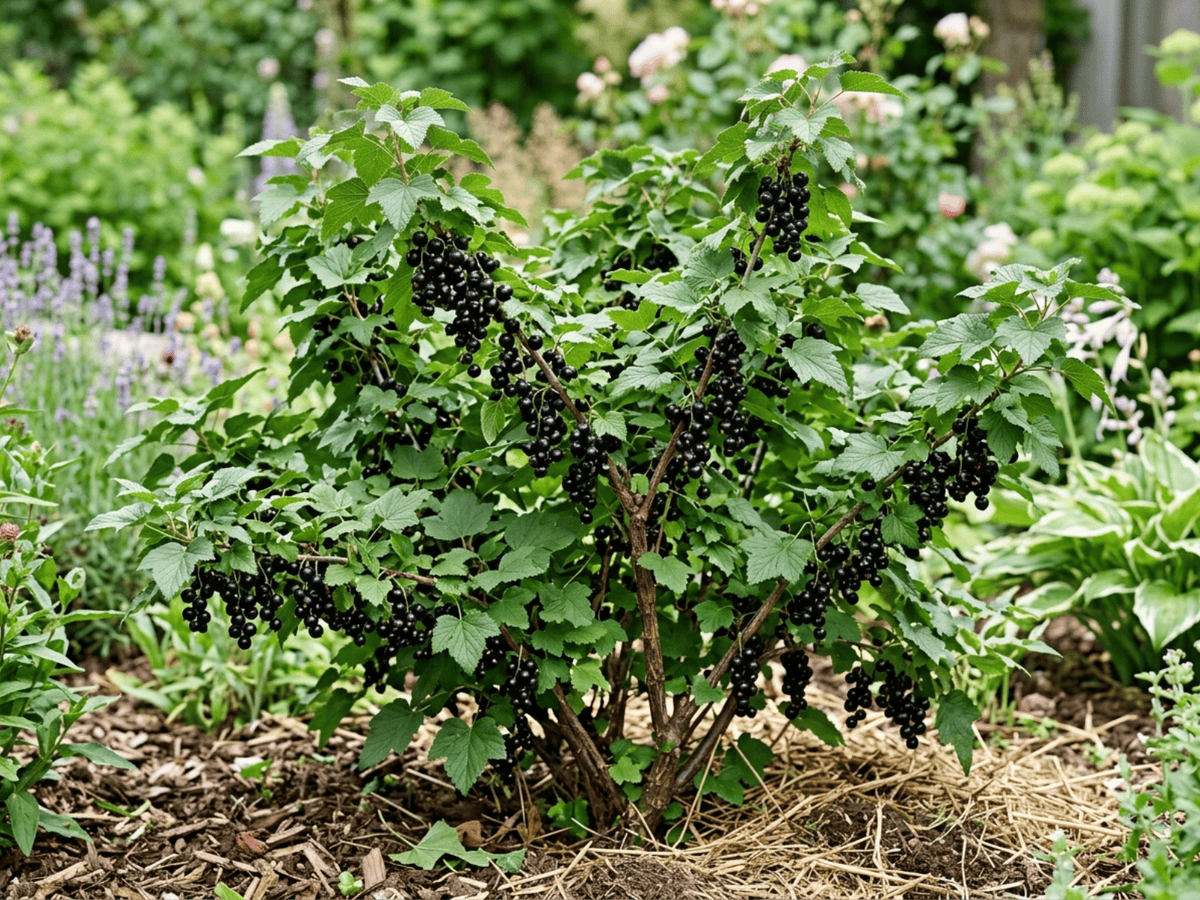


Blackcurrant
Ribes nigrum
Easy · Beginner friendlyAbout Blackcurrant
Ribes nigrum, blackcurrant, is a cold-hardy deciduous shrub of northern Europe and Asia, grown for intensely aromatic dark berries. Plants reach 1-2 meters and prefer cool summers, moist fertile soil, and sun to partial shade. The berries, buds, and leaves all carry a distinctive resinous fragrance that people tend to either love immediately or learn to love through jam. Fruit forms best on young wood, so annual renewal pruning keeps shrubs productive for a decade or more. Blackcurrants are rich in vitamin C and anthocyanin pigments, which helped make them especially important in Britain during World War II when citrus was scarce. Their tart depth becomes magnificent in cassis, syrups, sorbets, sauces, and the blackcurrant drink Ribena.
- Edible
- Cold-hardy
How to care for Blackcurrant
Watering
- Springevery 4 days
- Summerevery 3 days
- Fallevery 5 days
- Winterevery 10 days
Soil · Rich & well-draining
- Top dressingCompost10%
- Main mixPotting soil + compost 3:180%
- DrainageGravel10%
Top up the compost layer each season.
FERTILIZER
Balanced Feed 14-14-14
An even feed covers all three needs at once, keeping leaves, roots and blooms moving together with nothing pushed out of balance.
- Nitrogen · Leaves
- Phosphorus · Roots + Blooms
- Potassium · Strength
- Springevery 30 days
- Summerevery 30 days
- Fallevery 45 days
At a Glance
- NativeEurope, East Asia
- Height4–6 ft (1.2–1.8 m)
- Spread4–6 ft (1.2–1.8 m)
- Flower colorGreen, Yellow, Pink
- Foliage colorGreen
- Fruit colorBlack
- SoilRich, Moisture-retentive, Well-drained
- LocationsYard
Bloom time
BLOOM CYCLE
Peak bloom
Mar–May
Small, drooping bell-shaped flowers in spring; reliable self-pollination.
Fragrance
MODERATE FRAGRANCE
Distinctive pungent musky cassis aroma from leaves and fruit.
Toxicity
Pets Slight
anthocyanins and vitamin C (very high)
Not reported
EXPOSURE No exposure route is reported.
EFFECT Widely consumed and exceptionally high vitamin C content.
NOTE No toxicity is reported for humans in this catalog; this is not evidence that the plant is edible or harmless.
Slight
- Fruit
- Ingestion
EXPOSURE Eating fruit.
EFFECT Moderate intake concerns apply.
NOTE Ripe fruit safe for humans.
Slight
- Fruit
- Ingestion
EXPOSURE Eating fruit.
EFFECT Moderate intake concerns apply.
NOTE Ripe fruit safe for humans.
Educational information, not medical or veterinary advice. If exposure is suspected, contact a doctor or veterinarian.
DISTRIBUTION


- Native
- Introduced
- Europe
- East Asia
History
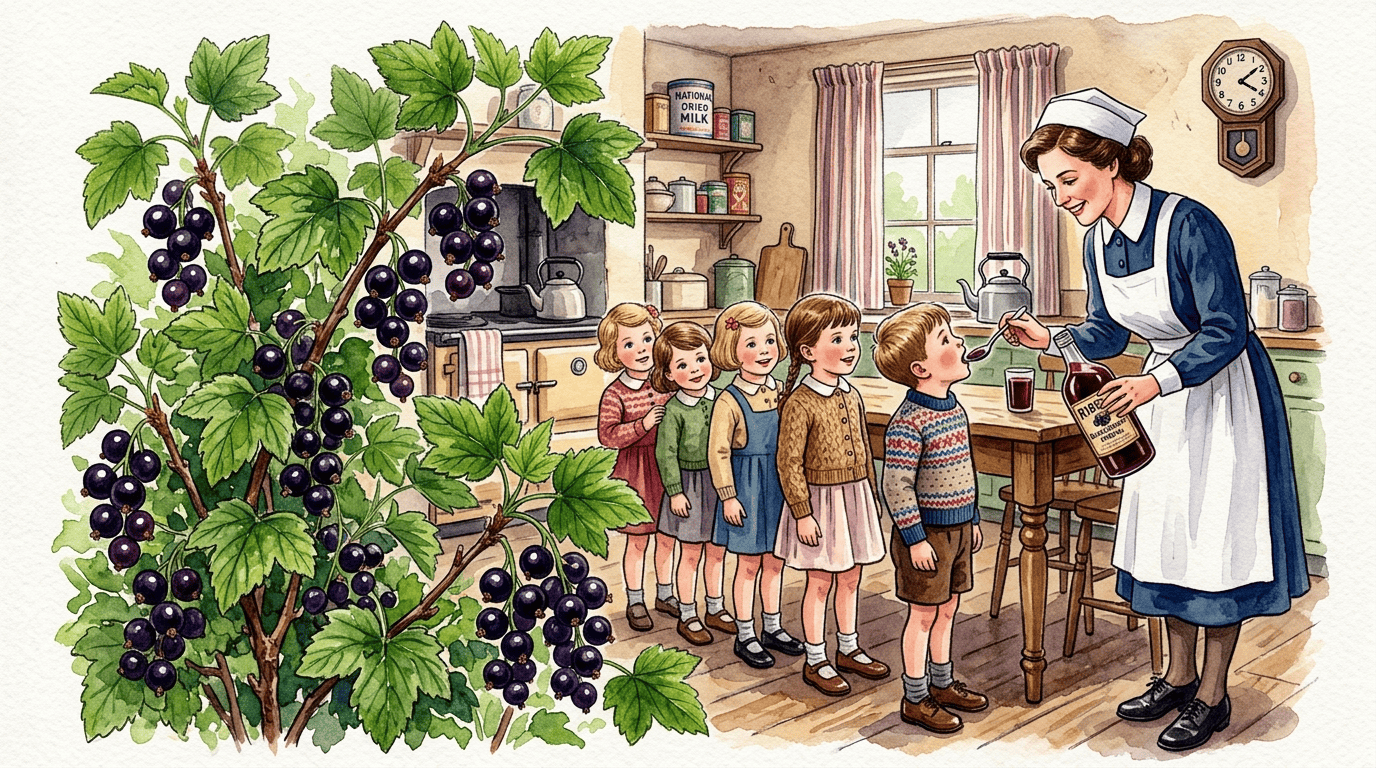
Ribes nigrum is native to central and northern Europe and northern Asia, growing wild in damp woods and along stream margins. It entered cultivation in 16th-17th century Russia, Poland, and England. A pivotal moment in its commercial history came during World War II, when German submarine warfare cut off British citrus imports.
The British government recognized that blackcurrant, with its exceptionally high vitamin C content, could maintain children's vitamin C. Commercial cultivation expanded under government contract, and blackcurrant cordial — particularly the brand Ribena, launched in 1938 — became a wartime staple distributed free to children. The "blackcurrant generation" of British children grew up with the distinctive cordial flavor, giving blackcurrant a uniquely strong position in UK flavor identity. In the United States, blackcurrant cultivation was banned during much of the 20th century because Ribes species are alternate hosts for Cronartium ribicola, white-pine blister rust, a devastating disease of commercial pine lumber.
Most states repealed bans by 2000s; blackcurrant is slowly returning to US cultivation. Modern production centers on Poland, Russia, Ukraine, and the UK. Cultivated in Russia since the 11th century. French monks popularised cassis liqueur in the 16th century. During WWII, the British government gave free blackcurrant syrup (Ribena) to all children under 2 as a vitamin C replacement when citrus was unavailable. This wartime measure made blackcurrant the dominant berry flavor in British confectionery.
Symbolism & meaning
What It Symbolizes
Blackcurrant carries richness in every concentrated berry — its intense, complex flavor and deep purple-black color symbolize depth, abundance, and the sweet density of northern summers. Resilience is woven through its history: thriving in harsh climates, it provided vital vitamin C across wartime Britain when citrus could not be imported. Its meaning binds nourishment and toughness, a fruit whose flavor carries both luxury and survival.
- Richness — The intense, complex flavor and deep color symbolize depth, concentration, and abundance
- Resilience — Thriving in harsh northern climates and providing vital nutrition in wartime represents toughness and provision
Where the Name Comes From
The common name highlights its dark coloring. Ribes from Arabic 'ribas'; 'nigrum' means black in Latin, describing the dark berries.
Uses & Fun Facts
- Tart black berries flavor jams, cordials, syrups, and baked goods
- Aromatic foliage releases distinctive musky-sweet scent
Related plants
More Ribes plants

Plants with similar care
 Chinese AbeliaAbelia chinensis
 Fragrant AbeliaAbelia mosanensis
 Large-Flowered AbeliaAbelia uniflora
 Glossy AbeliaAbelia x grandiflora
Frequently asked questions
How often should I water Blackcurrant?
In summer, water about every 3 days; in winter, about every 10 days. Adjust for heat, pot size and drainage.
How much light does Blackcurrant need?
Full sun: 6+ hrs direct. Watch the leaves — scorching or stretching means the light needs adjusting.
Is Blackcurrant toxic to cats or dogs?
Pets Slight (Dogs Slight · Cats Slight) Educational information, not medical or veterinary advice. If exposure is suspected, contact a doctor or veterinarian.
Is Blackcurrant easy to grow?
Yes — it is considered an easy, beginner-friendly plant.
When does Blackcurrant bloom?
It typically blooms Mar–May in the Northern Hemisphere.
YardMate
Identify any plant in seconds
Snap a photo — YardMate names the plant, diagnoses problems, and reminds you when to water.
Download on the App Store