 YardMate

Spinach
Spinacia oleracea
Easy · Beginner friendlyAbout Spinach
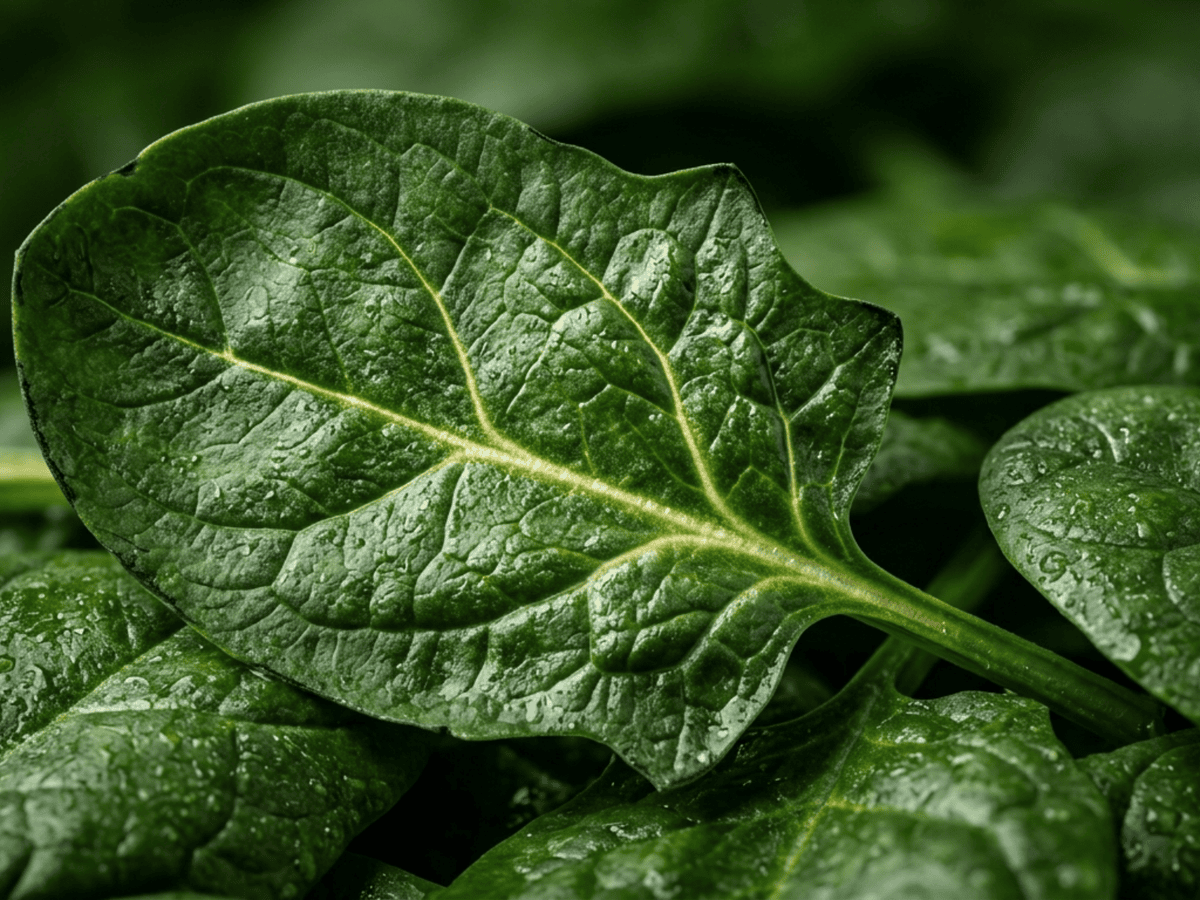
Spinacia oleracea, spinach, is a fast-growing annual leaf vegetable in the Amaranthaceae family, native to central and western Asia. Growing 15–30 cm tall with rosettes of dark green, smooth or crinkled (savoy) leaves, spinach is one of the most nutrient-dense vegetables available, packed with iron, calcium, vitamins A, C, and K, and folate.
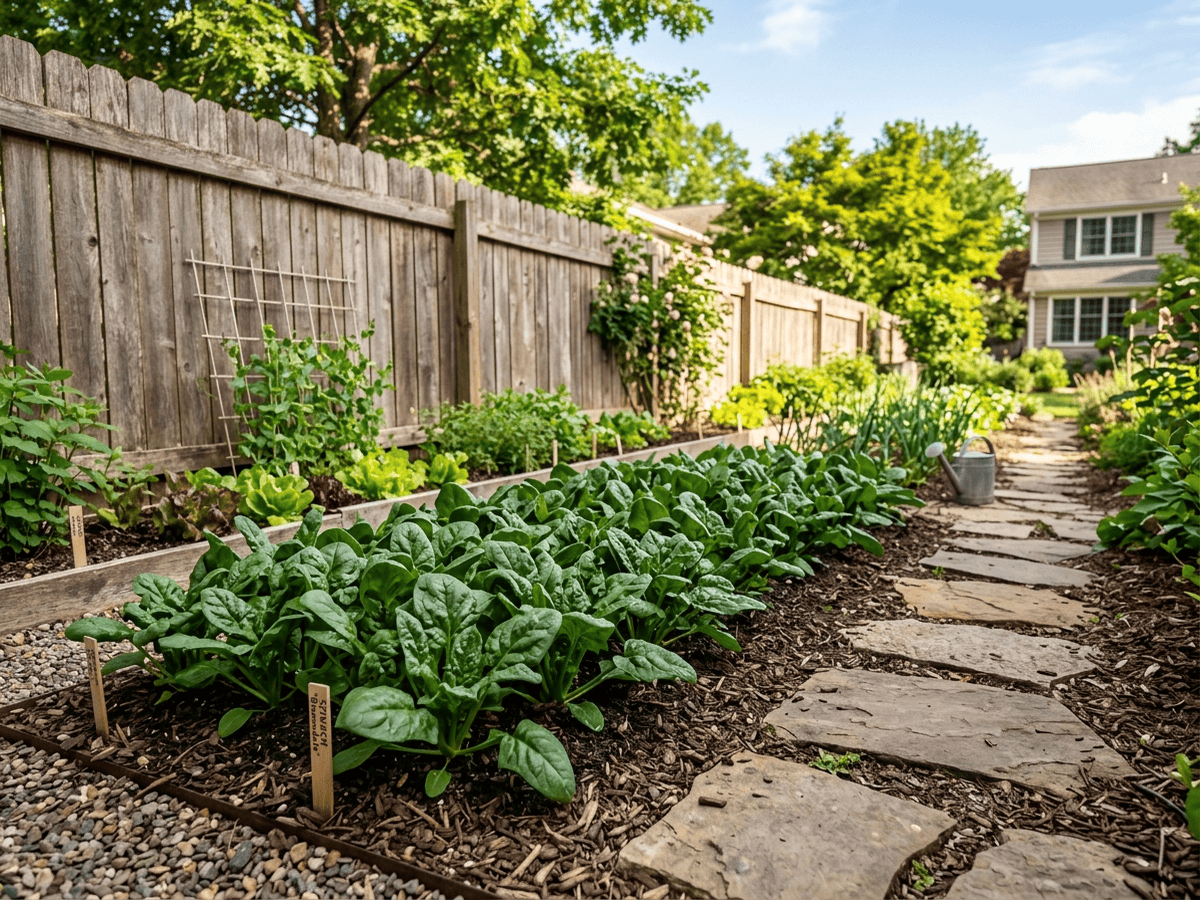
Spinach is a cool-season crop that bolts rapidly when days lengthen and temperatures exceed 24°C. It thrives in USDA zones 2–11 during spring and autumn, in full sun to partial shade and fertile, moisture-retentive soil with a slightly alkaline pH (6.5–7.5). Seeds germinate at low temperatures (5°C), making spinach one of the earliest plantable spring crops. Fast-maturing varieties are ready in 35–45 days.
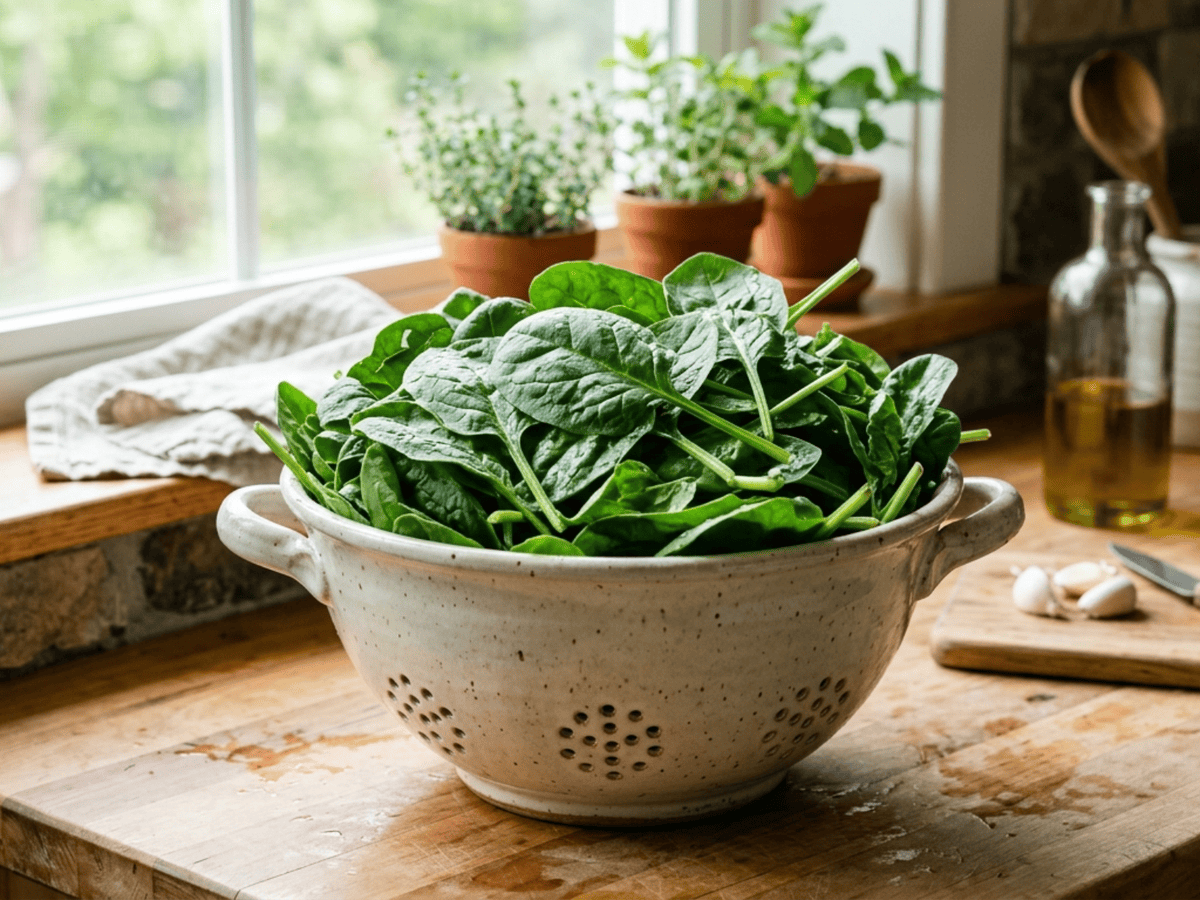
The plant's reputation as a superfood was famously—and apocryphally—boosted by Popeye the Sailor Man cartoons from 1929, though a decimal point error in an 1870 German iron-content study also contributed to its legend. Regardless, spinach truly is nutritionally exceptional. It is used raw in salads, wilted as a side, blended into smoothies, and features prominently in Indian (palak paneer), Middle Eastern (fatayer), Italian (ravioli fillings), and Japanese (ohitashi) cuisines. Oxalic acid in spinach can inhibit calcium absorption, but cooking reduces it significantly.
- Edible
- Fast-growing
How to care for Spinach
Watering
- Springevery 2 days
- Summerevery 1 days
- Fallevery 3 days
- Winterevery 5 days
Soil · Rich & well-draining
- Top dressingCompost10%
- Main mixPotting soil + compost 3:180%
- DrainageGravel10%
Top up the compost layer each season.
FERTILIZER
Balanced Feed 14-14-14
An even feed covers all three needs at once, keeping leaves, roots and blooms moving together with nothing pushed out of balance.
- Nitrogen · Leaves
- Phosphorus · Roots + Blooms
- Potassium · Strength
- Springevery 14 days
- Summerevery 14 days
- Fallevery 14 days
At a Glance
- NativeWestern Asia
- Height0.5–1 ft (0.2–0.3 m)
- Spread0.5–1 ft (0.2–0.3 m)
- Flower colorGreen, Yellow
- Foliage colorGreen
- SoilRich, Loamy, Well-drained
- LocationsYard · Indoor · Balcony
Bloom time
BLOOM CYCLE
Peak bloom
Mar, Apr, May, Sep, Oct, Nov
Bolt-prone in long days; use bolt-resistant varieties for spring planting. Autumn crops are more reliable.
Fragrance
NO FRAGRANCE
No notable fragrance.
Toxicity
Humans Slight · Pets Slight
oxalic acid
Slight
- Leaf
- Ingestion
EXPOSURE Eating leaves.
EFFECT Contains oxalic acid and large habitual consumption can contribute to kidney stones and reduce mineral absorption.
NOTE Safe in normal dietary amounts; avoid extreme consumption.
Slight
- Leaf
- Ingestion
EXPOSURE Eating leaves.
EFFECT Oxalate content and avoid large quantities especially in dogs with kidney issues.
NOTE Safe in normal dietary amounts; avoid extreme consumption.
Slight
- Leaf
- Ingestion
EXPOSURE Eating leaves.
EFFECT Oxalate content and moderate amounts only.
NOTE Safe in normal dietary amounts; avoid extreme consumption.
Educational information, not medical or veterinary advice. If exposure is suspected, contact a doctor or veterinarian.
DISTRIBUTION

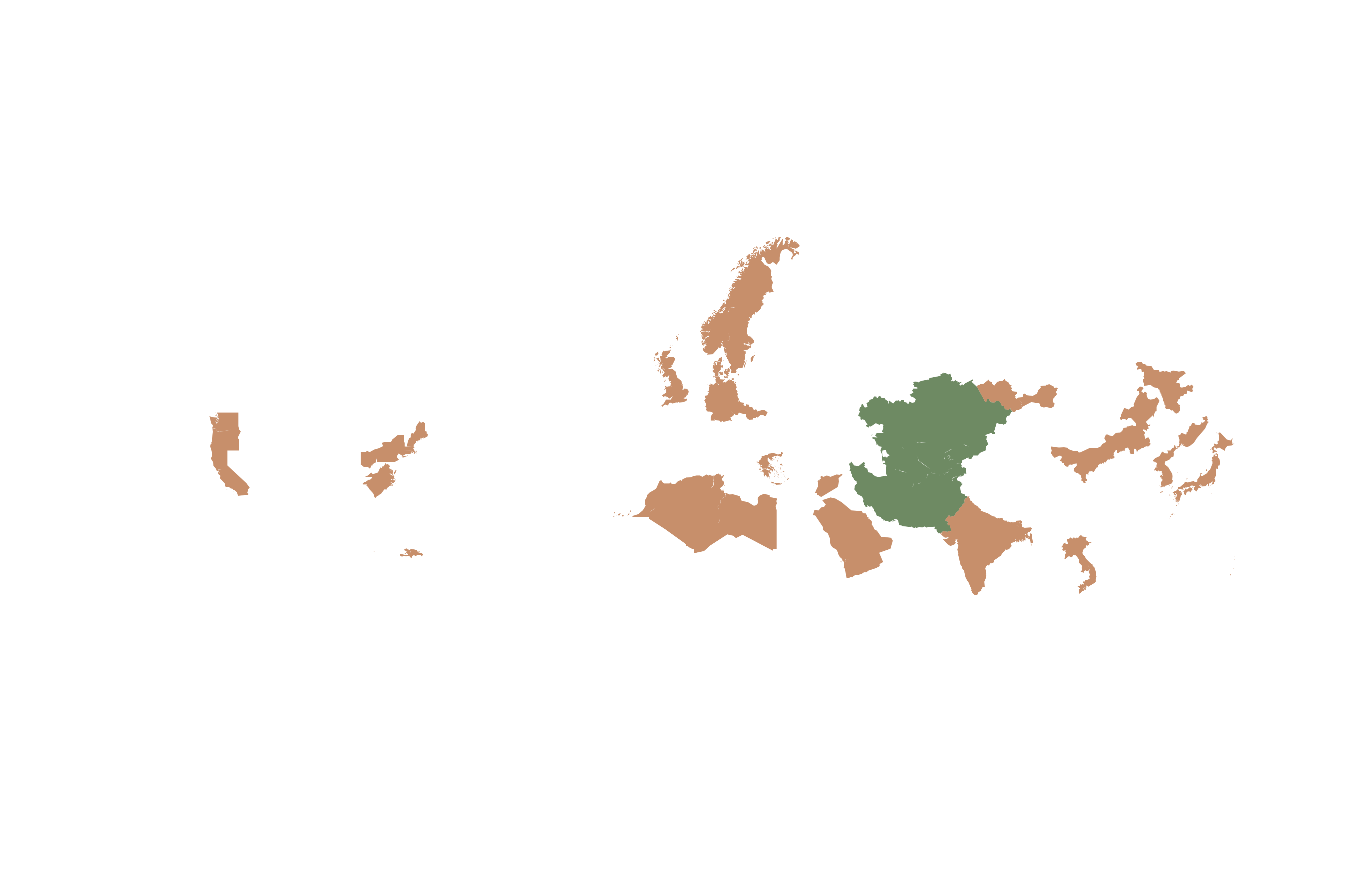
- Native
- Introduced
- Western Asia
History

Spinacia oleracea is native to Persia (modern Iran) and was first cultivated there. It reached Tang dynasty China via the Silk Road in the 7th century CE — Chinese references from 647 CE record it as "Persian vegetable," the name retained in modern Mandarin (bocai, from Persian "aspanakh"). It reached Moorish Spain by the 12th century via Arab agricultural introductions, and spread across medieval Europe. Catherine de Medici of Florence, when she married King Henry II of France in 1533, brought her own spinach-loving cooks to the French court; dishes featuring spinach became associated with her native city, and "à la Florentine" still means "served with spinach" in French cuisine.
The American spinach myth was shaped by Popeye the Sailor, a 1929 comic character given super-strength through canned spinach. The cartoon boosted American spinach consumption by a third in the 1930s. Spinach genuinely is nutrient-dense, though the specific "iron myth" — a claim that spinach has exceptionally high iron — was based partly on a decimal-point error in 19th-century analyses, as well as the fact that oxalic acid in spinach actually reduces iron bioavailability.
Originated in Persia (modern Iran), where it was called 'espanaj.' Arab traders brought it to India and China by the 7th century. Catherine de' Medici loved spinach so much that dishes served on a bed of spinach are still called 'Florentine.' Popeye cartoons boosted US spinach consumption by 33% in the 1930s.
Symbolism & meaning
What It Symbolizes
Spinach expresses vitality — nutrient-dense, fast-growing, and an enduring symbol of green-living health and energy. Strength is its second association, cemented permanently by Popeye, whose bulging forearms made spinach the pop-culture shorthand for physical power. Its meaning bridges kitchen and cartoon: a quiet leaf that became, against all expectation, one of the world's most recognizable emblems of being well-fed and ready for anything.
- Vitality — Nutrient-dense and fast-growing, spinach symbolizes health, energy, and green living
- Strength — Popeye cemented spinach as the pop-culture symbol of physical power
Where the Name Comes From
Spinacia from Latin 'spina' (thorn), referring to the prickly seed coat of some varieties; 'oleracea' means 'of the vegetable garden.'
Uses & Fun Facts
- Tender leaves eaten raw in salads or cooked as greens
Related plants
Plants with similar care
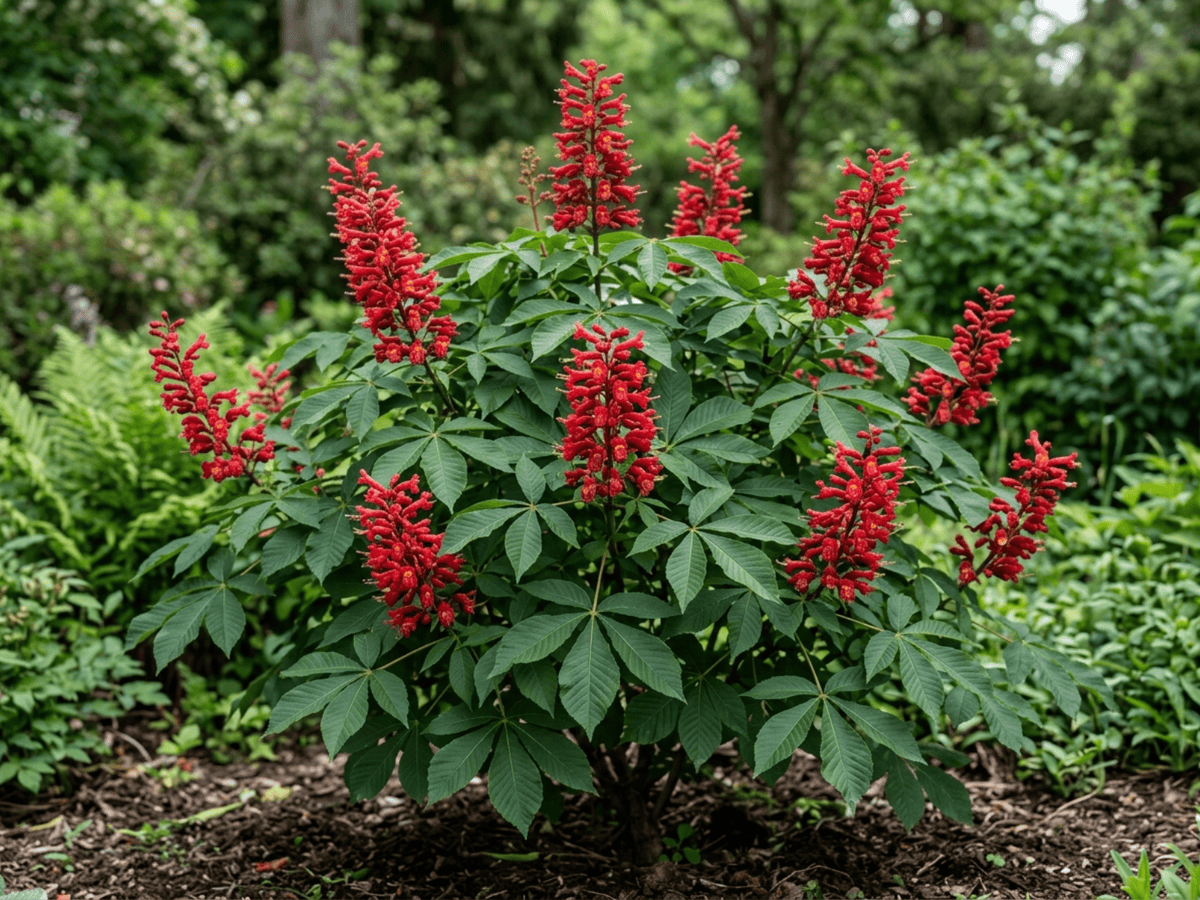 Red BuckeyeAesculus pavia
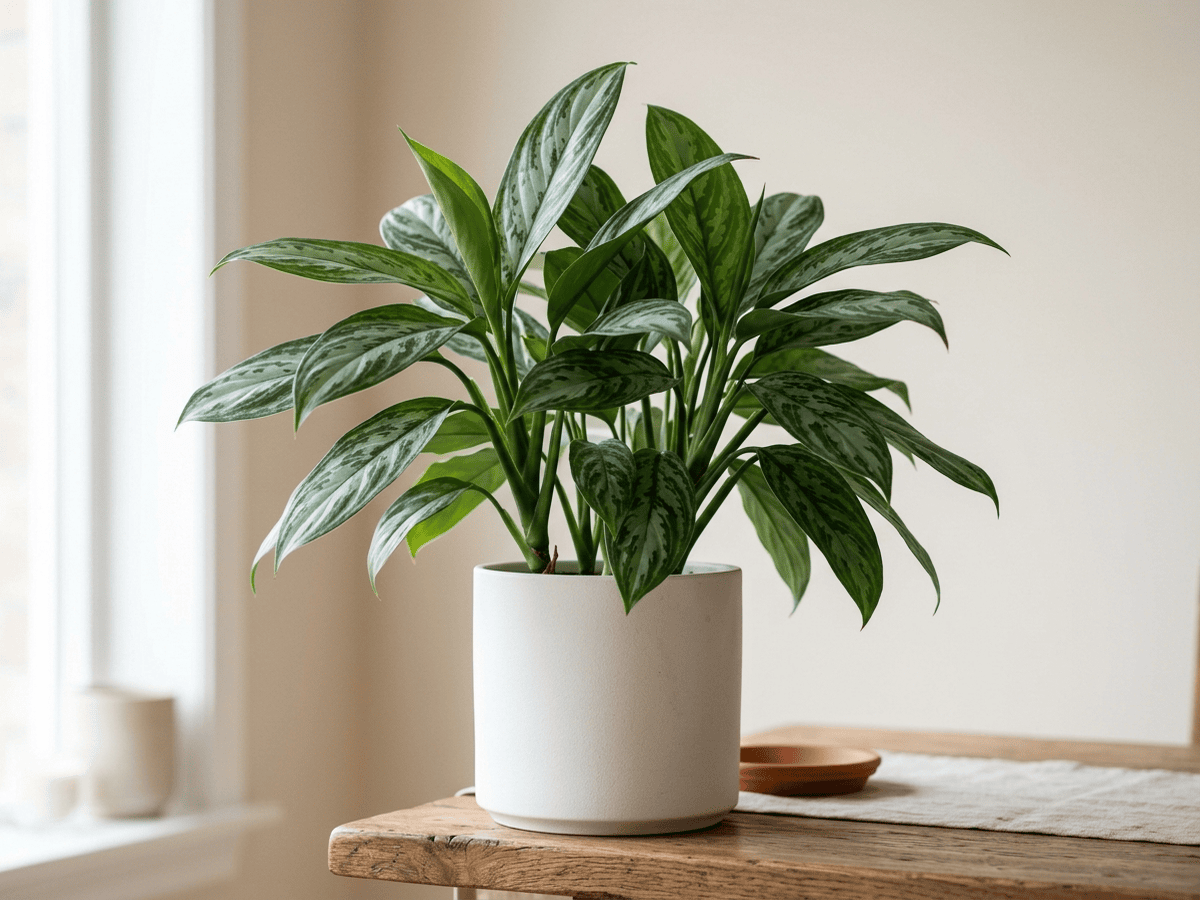 Philippine EvergreenAglaonema commutatum
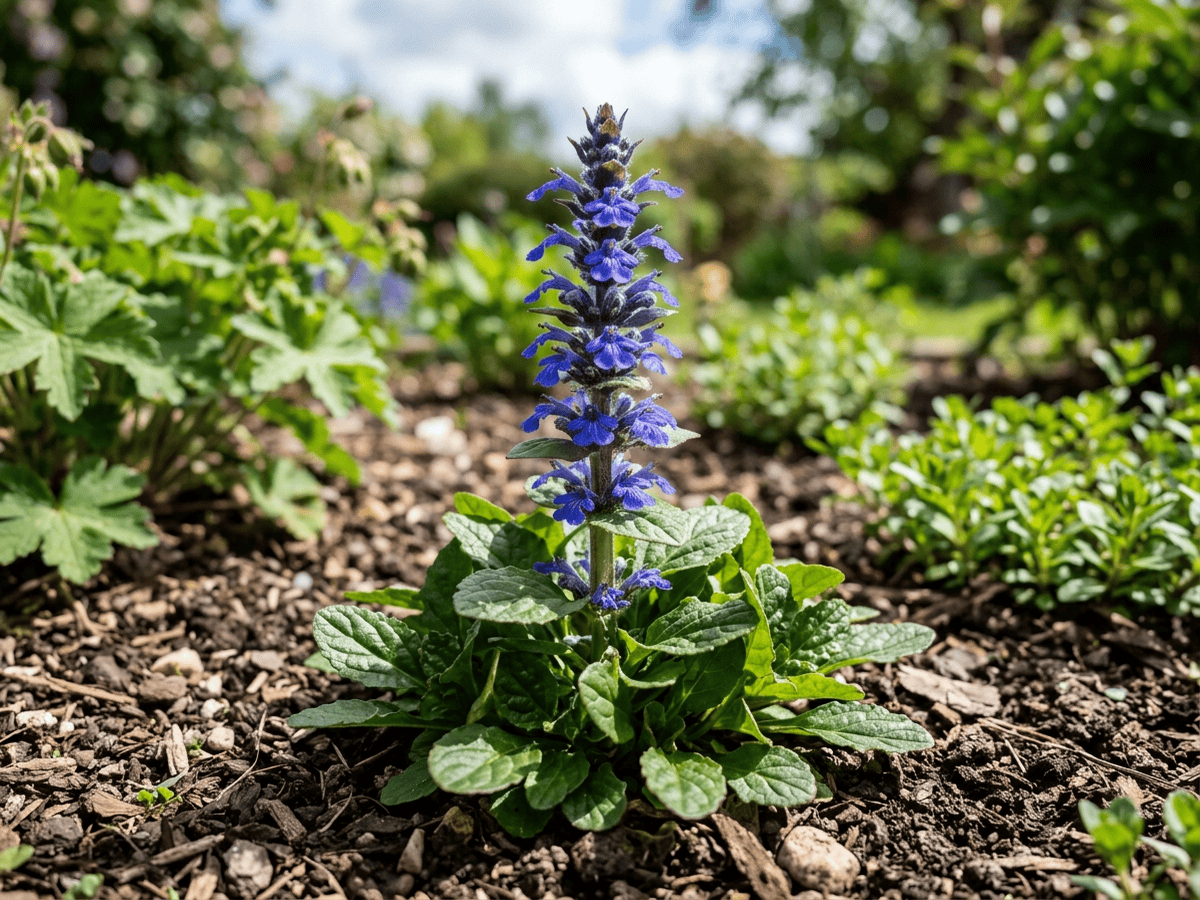 Blue BugleAjuga genevensis
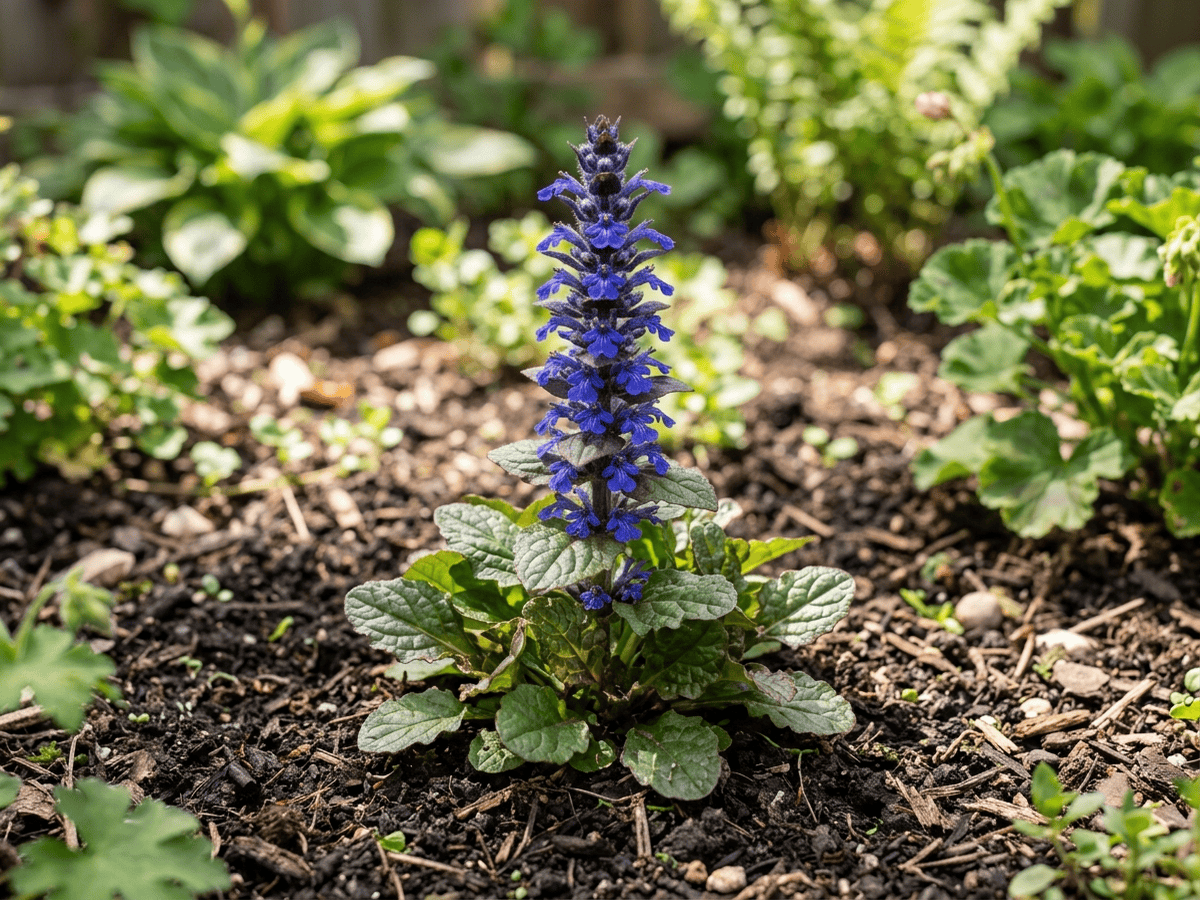 Pyramidal BugleAjuga pyramidalis
Frequently asked questions
How often should I water Spinach?
In summer, water about every 1 days; in winter, about every 5 days. Adjust for heat, pot size and drainage.
How much light does Spinach need?
Part shade: 2–4 hrs direct. Watch the leaves — scorching or stretching means the light needs adjusting.
Is Spinach toxic to cats or dogs?
Pets Slight (Dogs Slight · Cats Slight) Educational information, not medical or veterinary advice. If exposure is suspected, contact a doctor or veterinarian.
Is Spinach easy to grow?
Yes — it is considered an easy, beginner-friendly plant.
Can Spinach be grown indoors?
Yes, it adapts well to indoor growing given the right light.
When does Spinach bloom?
It typically blooms Mar, Apr, May, Sep, Oct, Nov in the Northern Hemisphere.
YardMate
Identify any plant in seconds
Snap a photo — YardMate names the plant, diagnoses problems, and reminds you when to water.
Download on the App Store