 YardMate
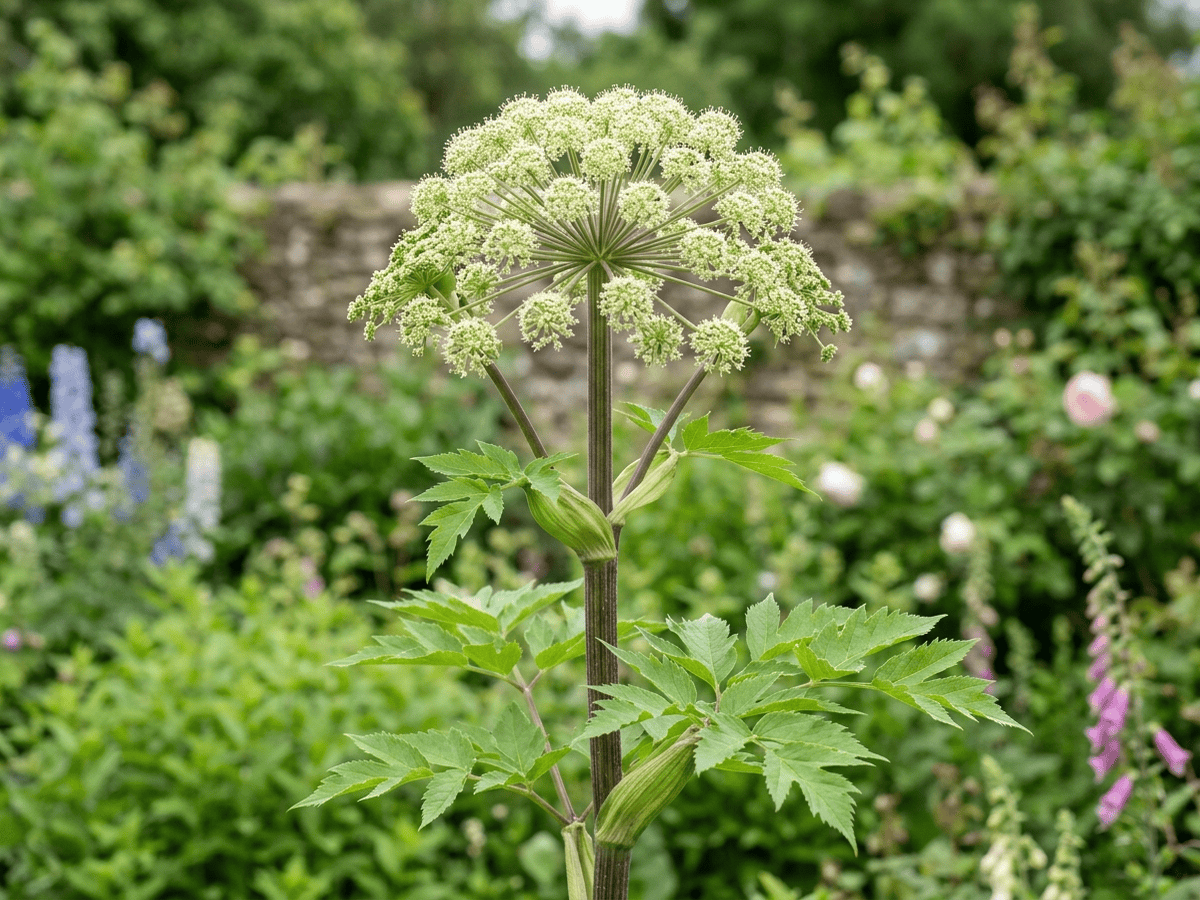
Garden Angelica
Angelica archangelica
Medium · Some experienceAbout Garden Angelica
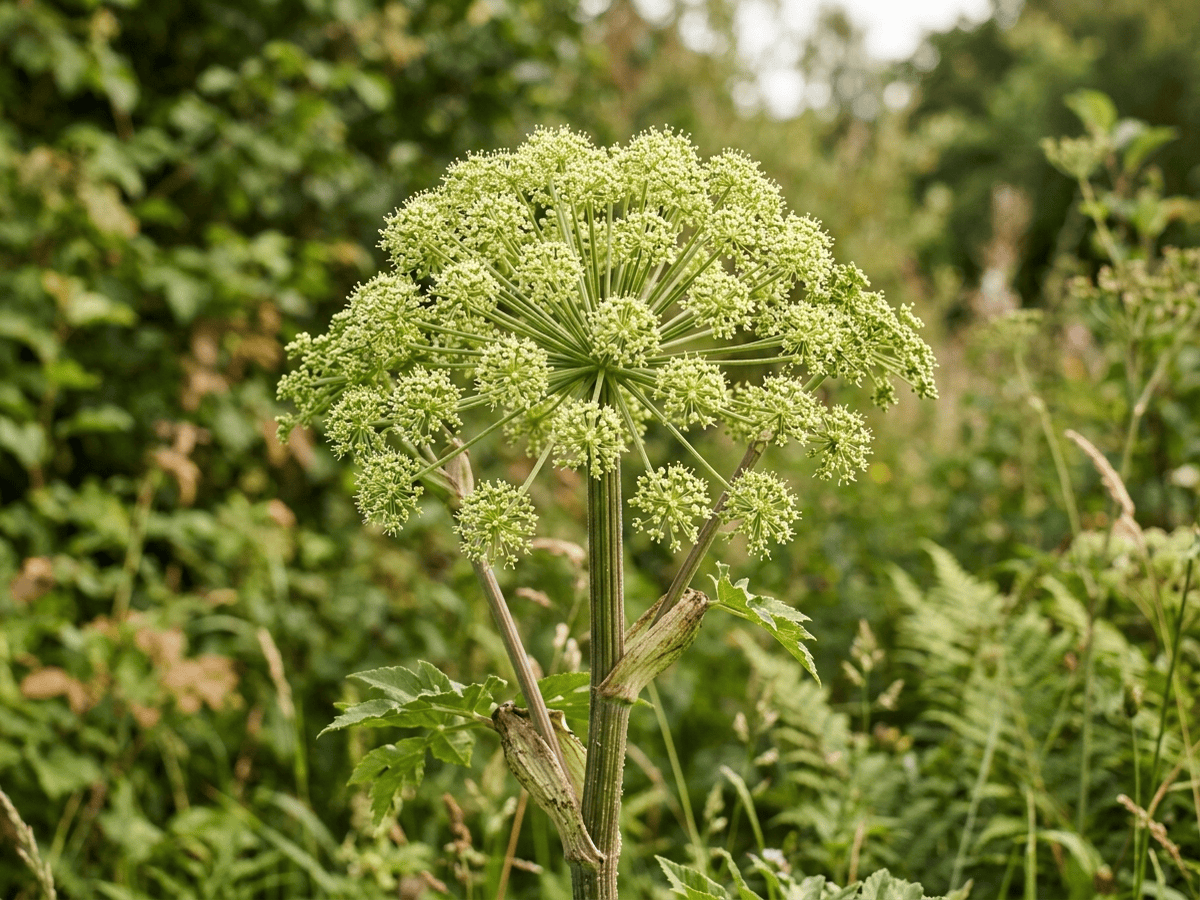
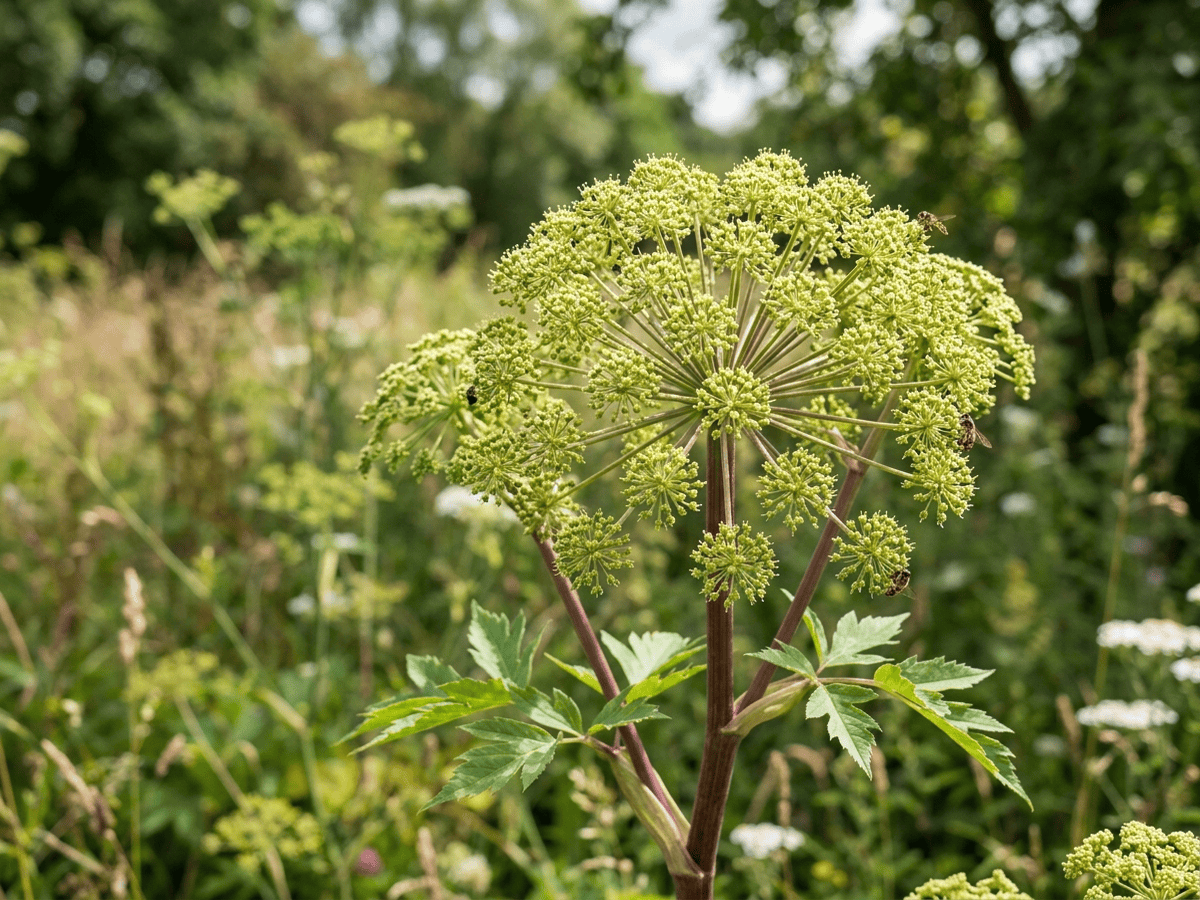
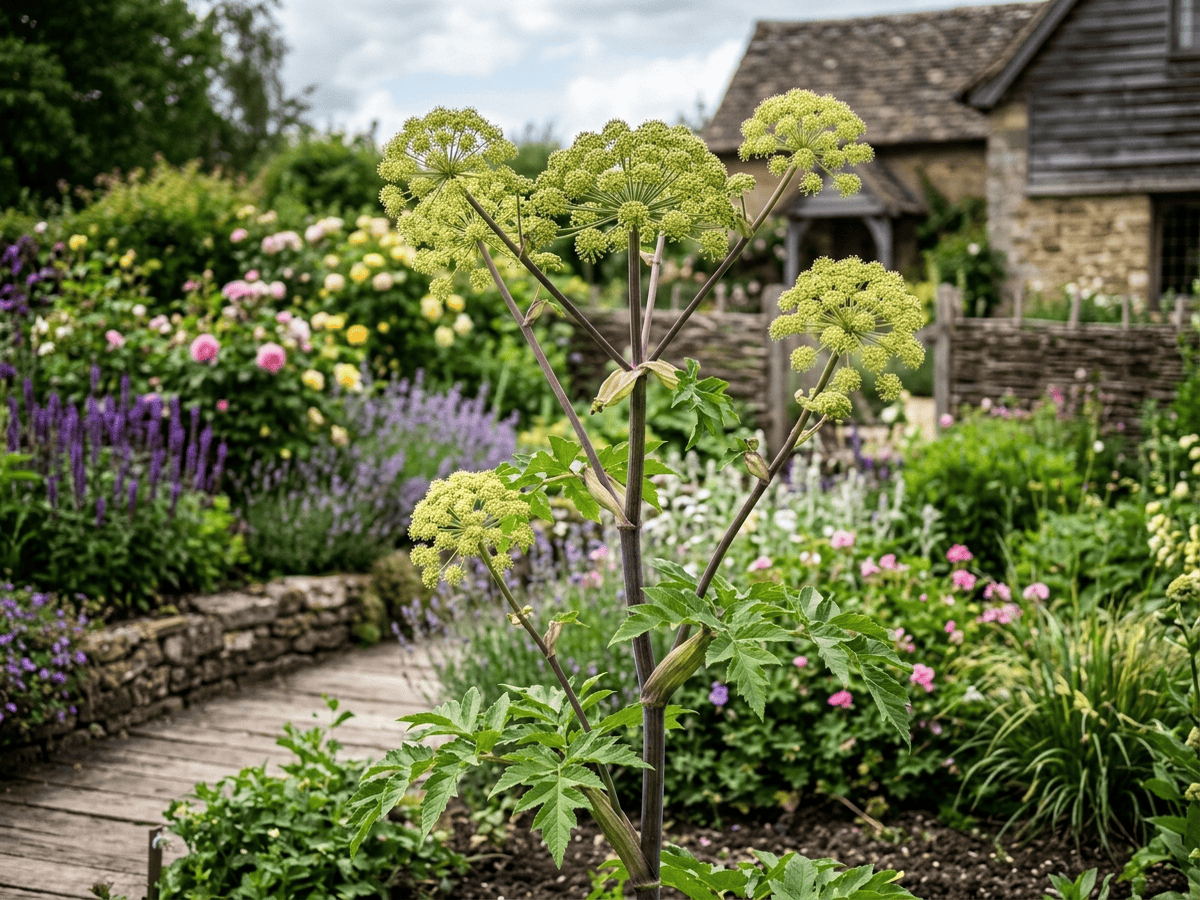
Garden Angelica is a stately European biennial herb reaching 5-8 feet in flower, with large deeply-divided bright-green leaves and dramatic dome-shaped greenish-white flower umbels in summer. Every part of the plant is aromatic, with hollow stems traditionally candied as a confection and the seeds used to flavor gin, Chartreuse, and Bénédictine liqueurs. Grown in American herb gardens for its imposing architectural presence and historic culinary uses.
- Edible
- Fragrant
- Architectural
How to care for Garden Angelica
Watering
- Springevery 5 days
- Summerevery 7 days
- Fallevery 10 days
- Winterevery 21 days
Soil · Rich & well-draining
- Top dressingCompost10%
- Main mixPotting soil + compost 3:180%
- DrainageGravel10%
Top up the compost layer each season.
FERTILIZER
Balanced Feed 14-14-14
An even feed covers all three needs at once, keeping leaves, roots and blooms moving together with nothing pushed out of balance.
- Nitrogen · Leaves
- Phosphorus · Roots + Blooms
- Potassium · Strength
- Springevery 60 days
At a Glance
- NativeEurope
- Height4–6 ft (1.2–1.8 m)
- Spread2–4 ft (0.6–1.2 m)
- Flower colorGreen, Cream
- Foliage colorGreen
- SoilLoamy, Moisture-retentive, Rich
- LocationsYard
Bloom time
BLOOM CYCLE
Peak bloom
Jun–Aug
Large dome-shaped greenish-white umbels in summer
Fragrance
MODERATE FRAGRANCE
The foliage has a musky-sweet anise-celery aroma.
Toxicity
Humans Slight · Pets Slight
furanocoumarins (bergapten, xanthotoxin)
Slight
- Sap
- Leaf
- Contact
EXPOSURE Touching sap and leaves.
EFFECT Photodermatitis.
NOTE Contains photosensitizing furanocoumarins; sap + sunlight can cause skin burns. Easily mistaken for poison hemlock.
Slight
- Sap
- Ingestion
- Contact
EXPOSURE Eating sap. Touching sap.
EFFECT Photodermatitis.
NOTE Contains photosensitizing furanocoumarins; sap + sunlight can cause skin burns. Easily mistaken for poison hemlock.
Slight
- Sap
- Ingestion
- Contact
EXPOSURE Eating sap. Touching sap.
EFFECT Photodermatitis.
NOTE Contains photosensitizing furanocoumarins; sap + sunlight can cause skin burns. Easily mistaken for poison hemlock.
Educational information, not medical or veterinary advice. If exposure is suspected, contact a doctor or veterinarian.
DISTRIBUTION

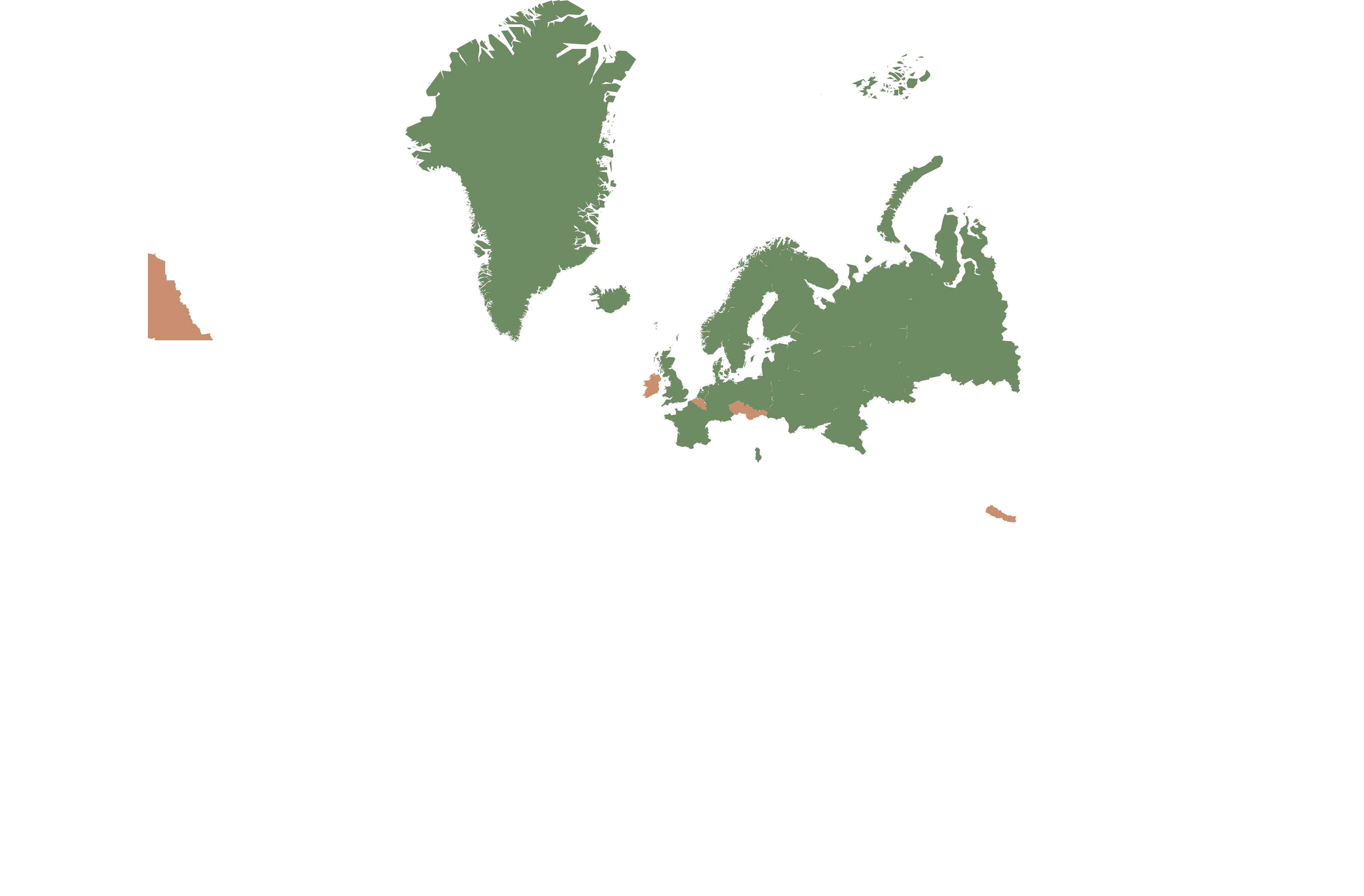
- Native
- Introduced
- Europe
History
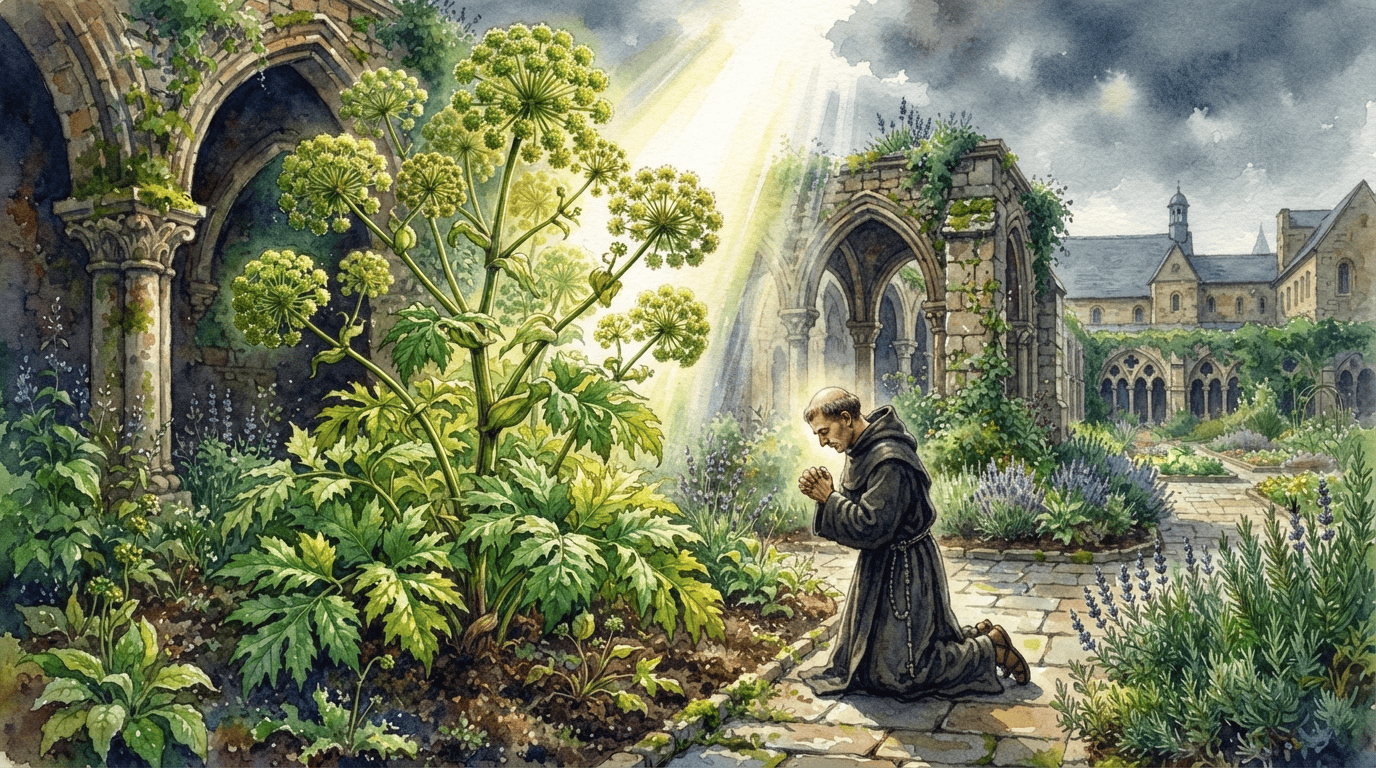
Angelica archangelica, commonly called garden angelica, wild celery, or Norwegian angelica, is an enormous biennial or short-lived perennial herb in the carrot family (Apiaceae) native to cool-temperate northern Europe from Iceland and Scandinavia through Russia to Greenland, and the montane zones of central Europe. Carl Linnaeus described it in Species Plantarum in 1753. The name archangelica refers to medieval Christian tradition that the archangel Michael revealed the plant as a remedy for plague—the plant has been associated with religious and medicinal use since at least the 10th century.
Plants grow 1.5-2.5 meters tall with massive pinnately compound leaves and enormous 15-25 cm spherical umbels of tiny greenish-yellow flowers in their second summer, after which the plant dies. The hollow stems are candied in Europe (especially in France and Poland) and used in traditional liqueurs including Chartreuse, Bénédictine, Strega, vermouth, and as a primary botanical in gin. Roots and seeds are also flavoring sources.
The similar poisonous water hemlock is sometimes mistaken for angelica—dangerous. Considered the most important medicinal herb of medieval European monasteries—the species name 'archangelica' refers to its supposed revelation to a monk by the archangel Raphael during a plague epidemic. Still essential in classic European liqueurs.
Symbolism & meaning
What It Symbolizes
Garden Angelica feels named by legend before botany ever reaches it. Tall umbels rise like green fireworks, and medieval stories tied the plant to angelic guidance in dangerous times. Its meaning is inspiration: the sudden height of a plant that seems to lift the herb garden into ceremony.
- Inspiration — named for the archangel Raphael
- Healing — revered medieval medicinal herb
Where the Name Comes From
'Angelica' refers to the angel; 'archangelica' to the archangel Raphael.
Uses & Fun Facts
- Stems candied as confection, seeds flavor liqueurs
- Aromatic foliage and seeds used in herb gardens
- Stately 5-8 foot biennial as architectural accent
Related plants
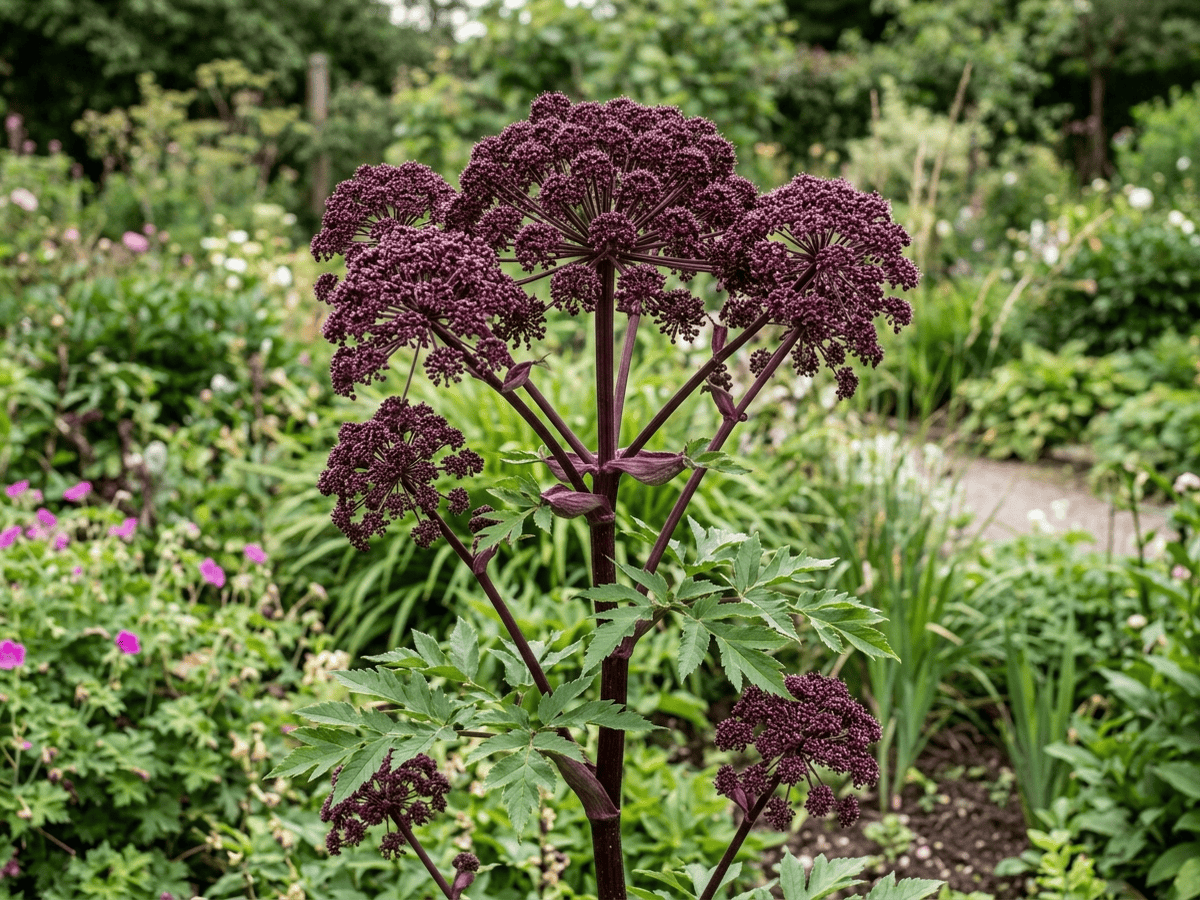
More Angelica plants
Plants with similar care
 Mexican AbeliaAbelia floribunda
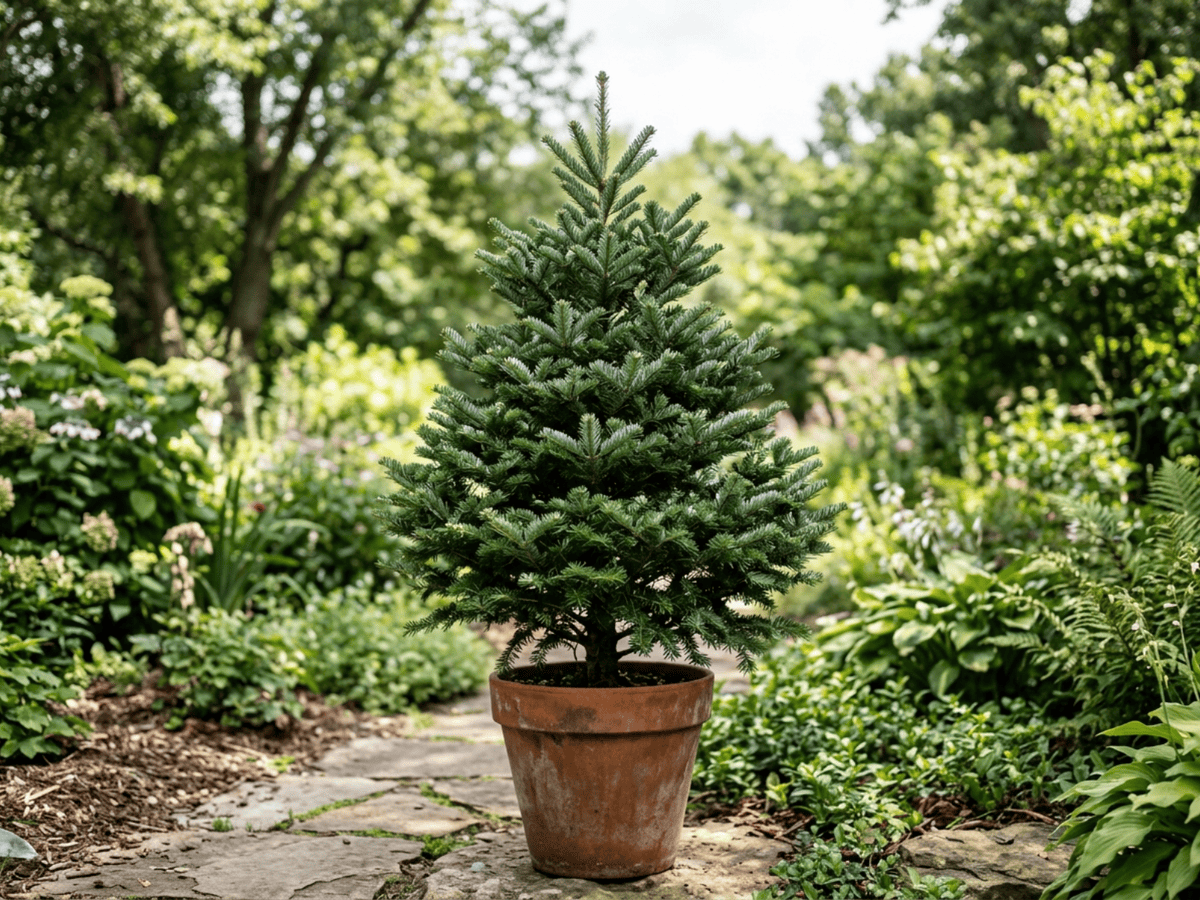 Fraser FirAbies fraseri
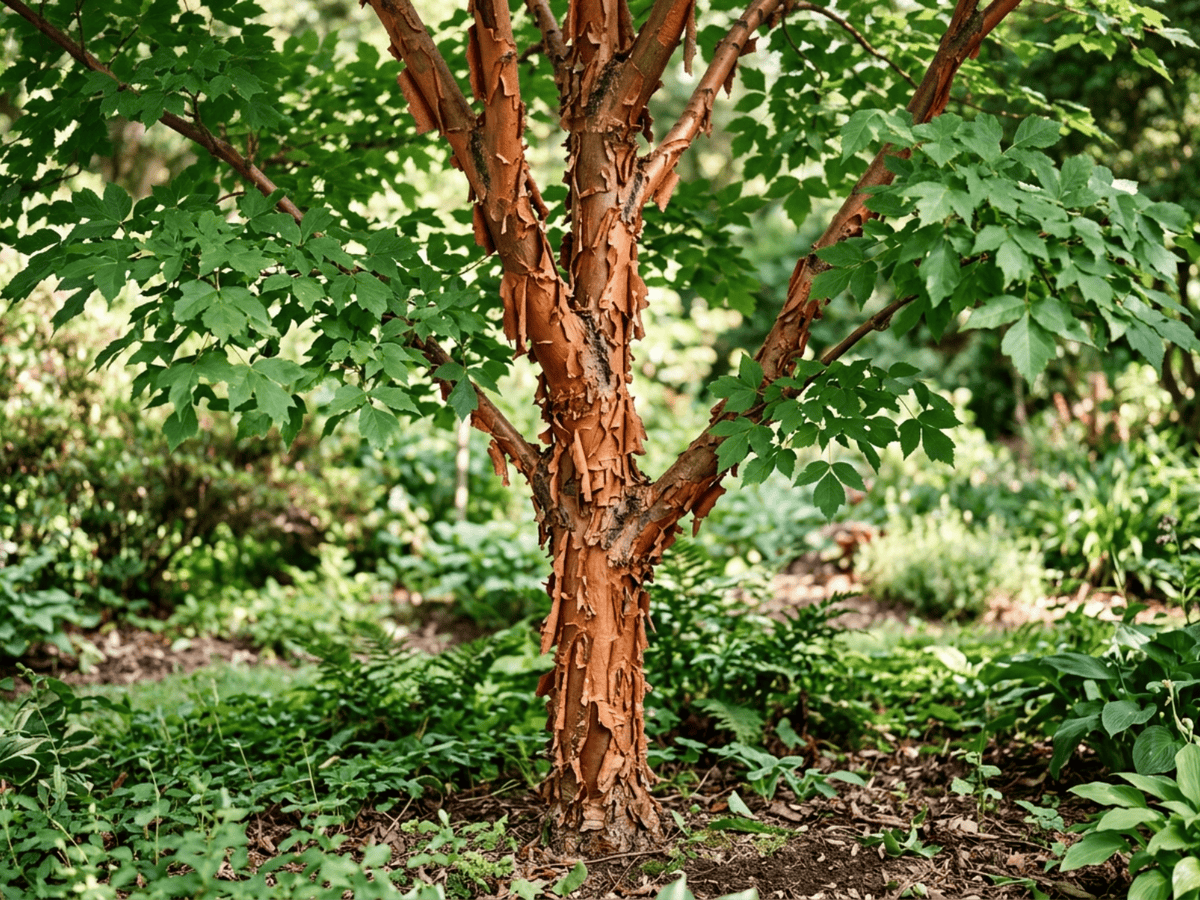 Paperbark MapleAcer griseum
 Sugar MapleAcer saccharum
Frequently asked questions
How often should I water Garden Angelica?
In summer, water about every 7 days; in winter, about every 21 days. Adjust for heat, pot size and drainage.
How much light does Garden Angelica need?
Full sun: 6+ hrs direct. Watch the leaves — scorching or stretching means the light needs adjusting.
Is Garden Angelica toxic to cats or dogs?
Pets Slight (Dogs Slight · Cats Slight) Educational information, not medical or veterinary advice. If exposure is suspected, contact a doctor or veterinarian.
Is Garden Angelica easy to grow?
It is moderately demanding: a good choice once you have a little experience.
When does Garden Angelica bloom?
It typically blooms Jun–Aug in the Northern Hemisphere.
YardMate
Identify any plant in seconds
Snap a photo — YardMate names the plant, diagnoses problems, and reminds you when to water.
Download on the App Store