 YardMate


Chicory
Cichorium intybus
Easy · Beginner friendlyAbout Chicory
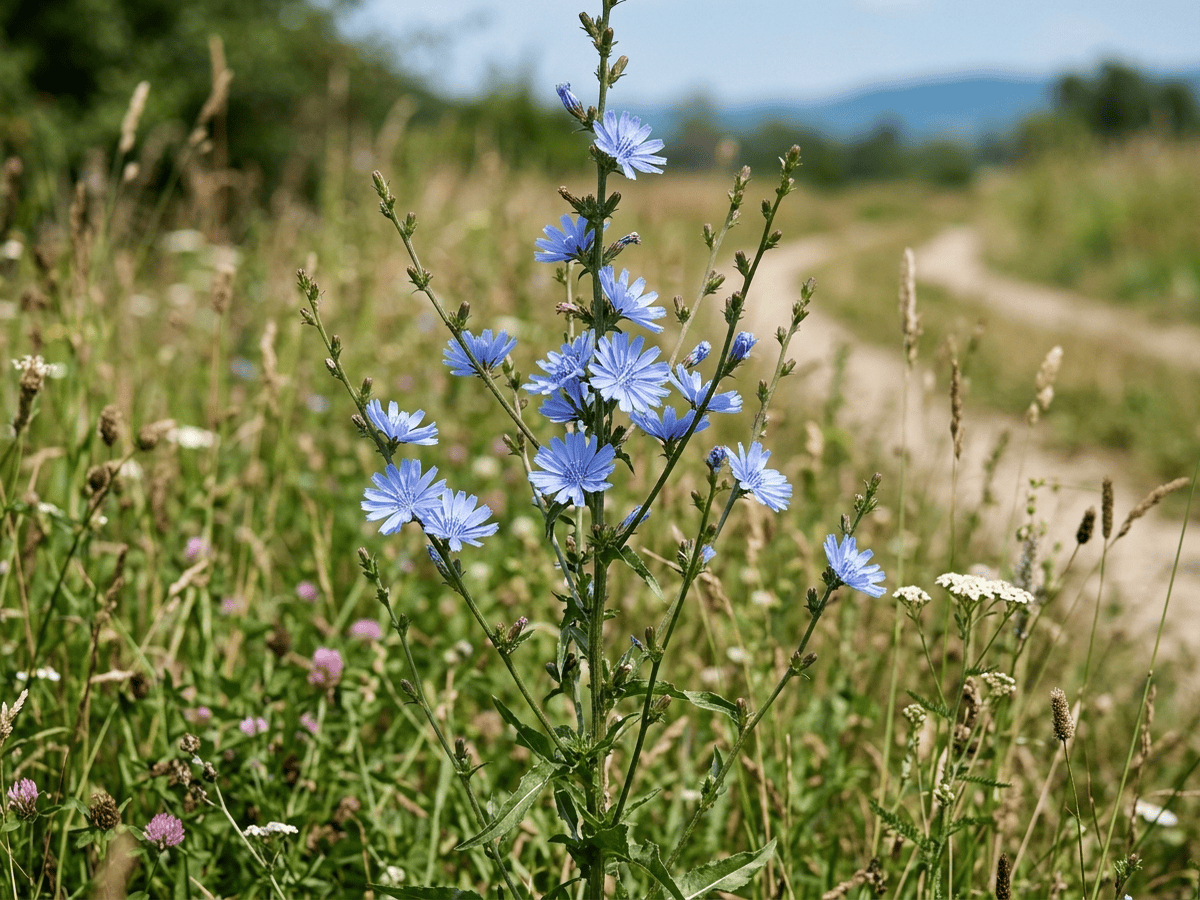
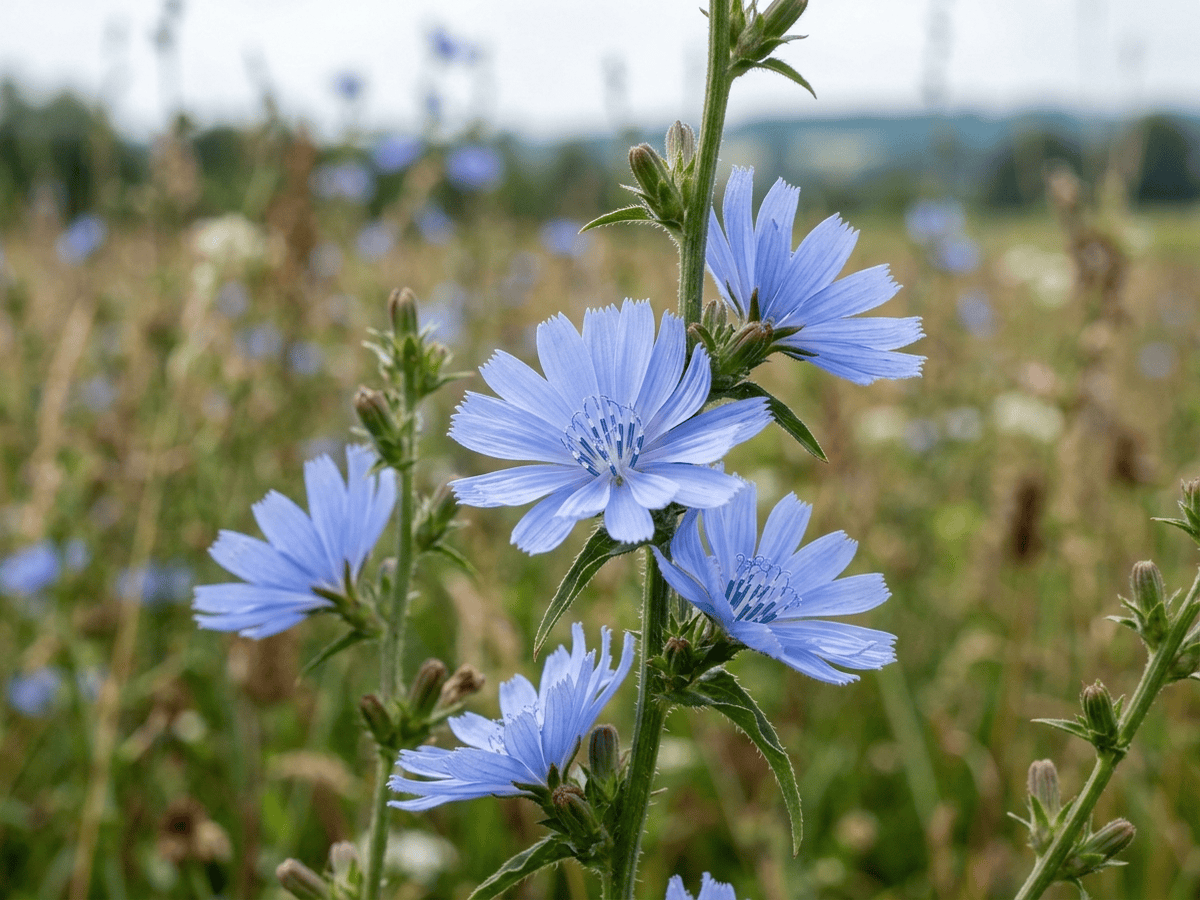
Common Chicory is a Eurasian perennial herb reaching 3-5 feet tall, with deeply lobed dark-green basal leaves and tall wiry stems topped by striking sky-blue daisy-like flowers in summer. Cultivated forms include radicchio (red Italian chicory), endive, and the roasted root used as a coffee substitute. The wild blue-flowered form has naturalized along American roadsides. A beloved bitter green in Mediterranean and Southern American cuisine.
- Edible
- Drought-tolerant
- Pollinator-friendly
How to care for Chicory
Watering
- Springevery 10 days
- Summerevery 14 days
- Fallevery 21 days
- Winterevery 30 days
Soil · Rich & well-draining
- Top dressingCompost10%
- Main mixPotting soil + compost 3:180%
- DrainageGravel10%
Top up the compost layer each season.
FERTILIZER
- Springevery 45 days
- Summerevery 45 days
At a Glance
- NativeEurope, Africa, Western Asia
- Height2–5 ft (0.6–1.5 m)
- Spread1–2 ft (0.3–0.6 m)
- Flower colorBlue, Pink, White
- Foliage colorGreen, Purple
- SoilWell-drained, Loamy, Alkaline
- LocationsYard
Bloom time
BLOOM CYCLE
Peak bloom
Jun–Aug
Sky-blue daisy-like flowers in summer
Toxicity
Humans Safe · Pets Safe
inulin and sesquiterpene lactones
Safe
EXPOSURE No exposure route is reported.
EFFECT No toxic effect is reported.
NOTE Listed as non-toxic for humans; avoid eating ornamental plants unless confirmed edible.
Safe
EXPOSURE No exposure route is reported.
EFFECT No toxic effect is reported.
NOTE Listed as non-toxic for dogs; avoid eating ornamental plants unless confirmed edible.
Safe
EXPOSURE No exposure route is reported.
EFFECT No toxic effect is reported.
NOTE Listed as non-toxic for cats; avoid eating ornamental plants unless confirmed edible.
Educational information, not medical or veterinary advice. If exposure is suspected, contact a doctor or veterinarian.
DISTRIBUTION


- Native
- Introduced
- Europe
- Africa
- Western Asia
History

Cichorium intybus, commonly called common chicory, wild chicory, succory, or radicchio (in leaf forms), is a long-lived perennial herb in the aster family (Asteraceae) native to Europe, North Africa, and western Asia, widely naturalized across North America where its striking blue-flowered form is a familiar roadside plant. Carl Linnaeus described it in Species Plantarum in 1753. The species has been cultivated since at least Ancient Egypt—named in the Ebers Papyrus (~1550 BCE)—and used across millennia for multiple purposes: (1) the roots, roasted and ground, have been widely used as a coffee substitute or additive (notably in Louisiana Creole coffee and Mediterranean traditions especially during coffee shortages in wartime); (2) the leaves form radicchio (Italian red-leafed forms including Chioggia and Treviso), curly endive/frisée, escarole, Belgian witloof endive (forced blanched chicons), and Catalogna (Italian dandelion); (3) the plant is also used as forage and as a source of inulin fiber.
Plants grow 60-150 cm tall with tough grooved stems and characteristic pure sky-blue (occasionally pink or white) ray flowers opening only in the morning. Cultivated for over 2,000 years as both a vegetable and medicinal herb.
Roasted chicory root became a famous coffee substitute during shortages, particularly in New Orleans where it remains a defining ingredient in Café du Monde coffee. Now widely naturalized along American roadsides.
Symbolism & meaning
What It Symbolizes
Chicory is a flower of Patience — each cobalt blossom opens precisely with the dawn and closes by midday, faithful to a clock older than gardens. Its heritage runs through New Orleans coffee tradition, where Civil War shortages turned the roasted root into a beloved local cup. A roadside weed and a cultural institution, blooming on the same stem.
- Patience — blue flowers open precisely with dawn
- Heritage — New Orleans coffee tradition since the Civil War
Where the Name Comes From
'Cichorium' from the Greek 'kichora'; 'intybus' from Latin/Egyptian for endive.
Uses & Fun Facts
- Roots roasted as coffee substitute, leaves used in salads
- Traditional remedy for liver and digestive complaints
- Sky-blue roadside flowers feed bees and hoverflies
Related plants
More Cichorium plants

Plants with similar care
 Chinese AbeliaAbelia chinensis
 Fragrant AbeliaAbelia mosanensis
 Large-Flowered AbeliaAbelia uniflora
 Glossy AbeliaAbelia x grandiflora
Frequently asked questions
How often should I water Chicory?
In summer, water about every 14 days; in winter, about every 30 days. Adjust for heat, pot size and drainage.
How much light does Chicory need?
Full sun: 6+ hrs direct. Watch the leaves — scorching or stretching means the light needs adjusting.
Is Chicory toxic to cats or dogs?
Pets Safe (Dogs Safe · Cats Safe) Educational information, not medical or veterinary advice. If exposure is suspected, contact a doctor or veterinarian.
Is Chicory easy to grow?
Yes — it is considered an easy, beginner-friendly plant.
When does Chicory bloom?
It typically blooms Jun–Aug in the Northern Hemisphere.
YardMate
Identify any plant in seconds
Snap a photo — YardMate names the plant, diagnoses problems, and reminds you when to water.
Download on the App Store