 YardMate


Giant Elephant Ear
Colocasia gigantea
Medium · Some experienceAbout Giant Elephant Ear
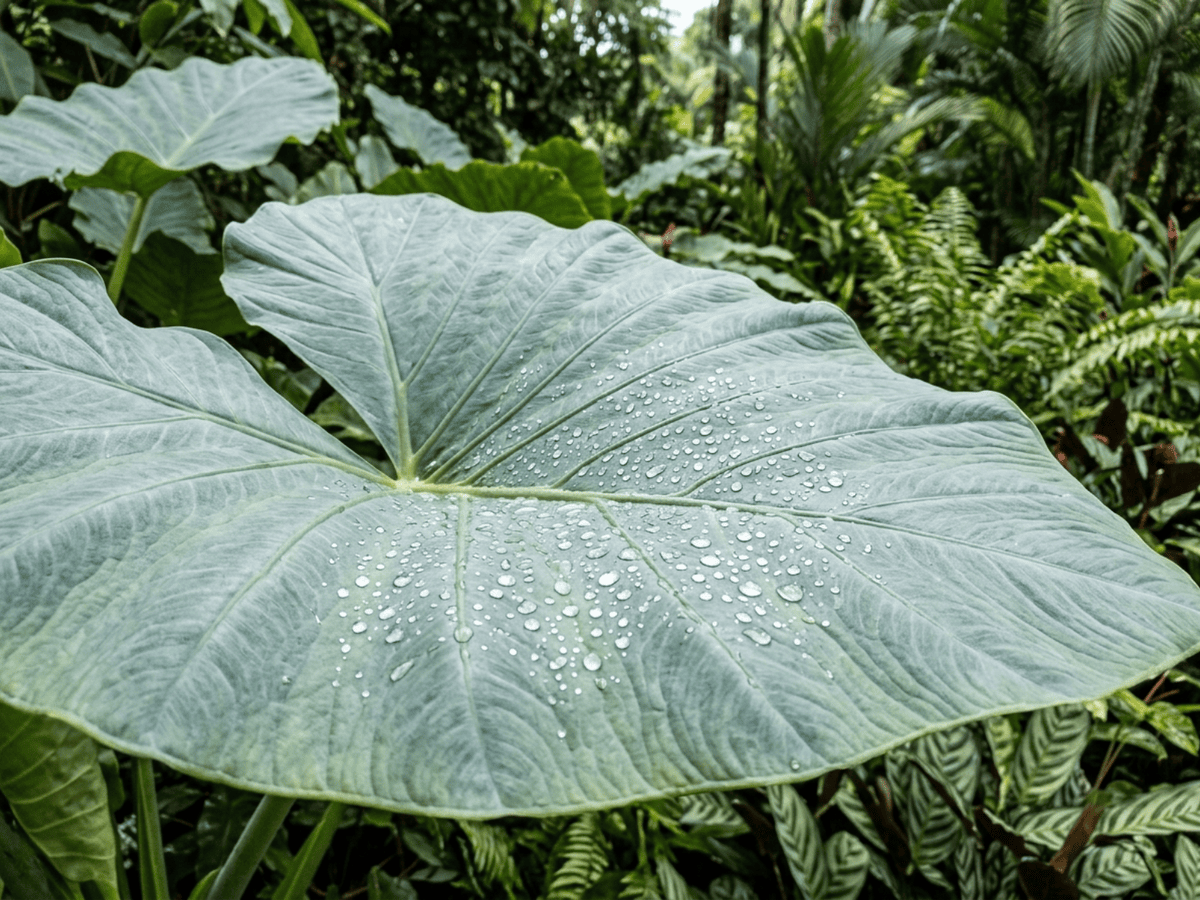
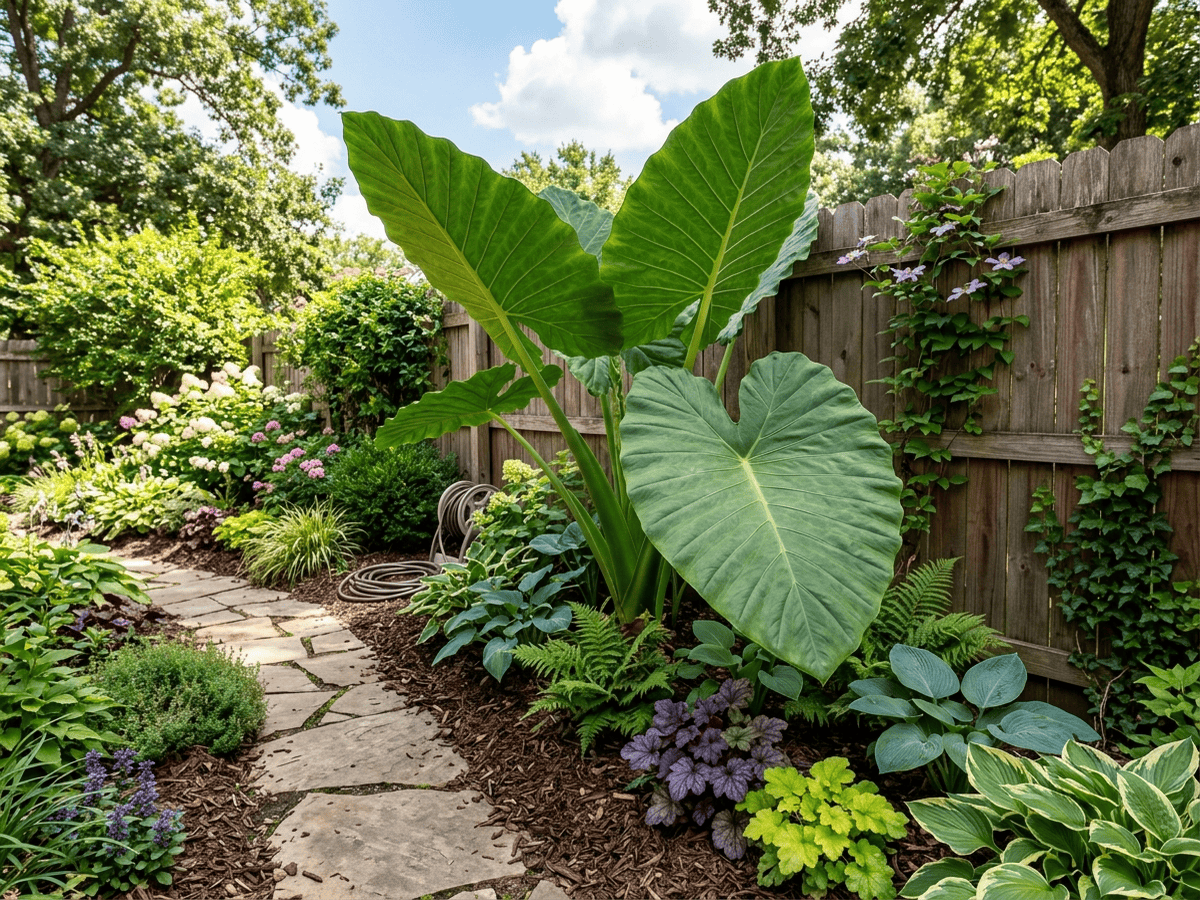
Giant Elephant Ear is a colossal tropical aroid native to mainland Southeast Asia, known for producing some of the largest leaves of any cultivated plant. A single leaf blade can measure 4 to 5 feet long and 3 to 4 feet wide, held aloft on thick, sturdy petioles that can reach 6 feet, giving the plant an overall height of 6 to 9 feet. The leaves are a distinctive blue-green with prominent pale veins and a waxy, water-repellent surface — raindrops bead and roll like mercury across the blade. Unlike its cousin Colocasia esculenta (taro), the giant elephant ear is grown primarily as an ornamental rather than a food crop. It thrives in rich, boggy soil or even standing water, making it excellent for pond margins and rain gardens. The plant spreads via offsets but is less aggressive than common taro. In temperate regions, the large corm must be lifted before frost and stored dry over winter. The cultivar 'Thailand Giant' is especially popular for its record-breaking leaf size.
- Tropical
How to care for Giant Elephant Ear
Watering
- Springevery 1 days
- Summerevery 1 days
- Fallevery 3 days
- Winterevery 14 days
Soil · Chunky & airy
- Top dressingBark chips10%
- Main mixBark + potting soil + perlite 1:1:170%
- DrainageLECA20%
Chunky pieces hold air pockets open so thick roots don't suffocate.
FERTILIZER
Foliage Feed 24-8-16
Nitrogen leads so the plant spends its energy on dense green growth. Phosphorus and potassium follow just far enough to keep roots and stems up to speed.
- Nitrogen · Leaves
- Phosphorus · Roots + Blooms
- Potassium · Strength
- Springevery 30 days
- Summerevery 30 days
At a Glance
- NativeEast Asia
- Height6–10 ft (1.8–3 m)
- Spread4–8 ft (1.2–2.4 m)
- Flower colorWhite, Cream
- Foliage colorGreen, Blue-green
- SoilMoisture-retentive, Rich, Loamy
- LocationsYard
Bloom time
BLOOM CYCLE
Peak bloom
Jun–Aug
Produces a large fragrant spadix; grown primarily for its enormous foliage
Fragrance
MODERATE FRAGRANCE
Large spathe flowers have a strong fruity-fermented scent in full bloom.
Toxicity
Humans Moderate · Pets Moderate
insoluble calcium oxalate raphides
Moderate
- All
- Ingestion
EXPOSURE Eating any part of the plant.
EFFECT Raw plant contains calcium oxalate raphides: oral burning, swelling, drooling. Cooked petioles safely eaten in SE Asia.
NOTE Documented concern for humans: Raw plant contains calcium oxalate raphides: oral burning, swelling, drooling. Cooked petioles safely eaten in SE Asia.
Moderate
- All
- Ingestion
EXPOSURE Eating any part of the plant.
EFFECT Oral pain, drooling, swelling, vomiting.
NOTE ASPCA lists Colocasia (elephant ear) as toxic to dogs, cats, and horses — oral and GI irritation.
Moderate
- All
- Ingestion
EXPOSURE Eating any part of the plant.
EFFECT Same as dogs.
NOTE ASPCA lists Colocasia (elephant ear) as toxic to dogs, cats, and horses — oral and GI irritation.
Educational information, not medical or veterinary advice. If exposure is suspected, contact a doctor or veterinarian.
DISTRIBUTION


- Native
- Introduced
- East Asia
History
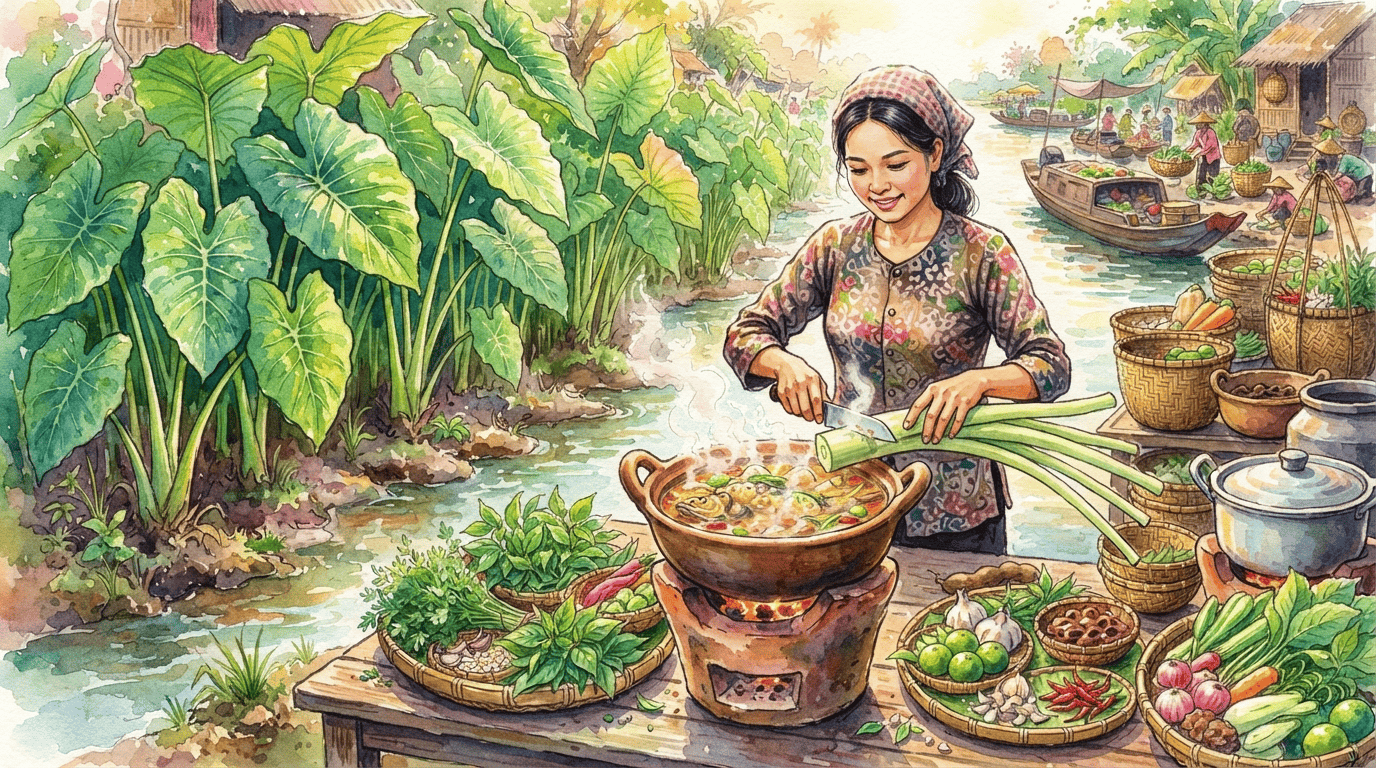
Colocasia gigantea is native to Southeast Asia — Bangladesh, southern China, Myanmar, Thailand, Vietnam, Laos, Cambodia, Malaysia, and Indonesia (Java) — where it grows as an understory plant in moist tropical forests and stream margins. Mature plants produce immense arrow-shaped leaves 1-1.5 meters long on petioles 1.5-2 meters tall, making it among the largest-leaved herbaceous plants grown in temperate gardens as a subtropical foliage accent. It is closely related to taro (C. esculenta), but whereas taro is cultivated primarily for its edible corms, C. gigantea is more often cultivated for its edible petioles: in Vietnamese cuisine the long succulent petioles are called "bạc hà" and are a traditional ingredient of canh chua (sour fish soup), where their spongy aerated tissue absorbs the broth; in Thai cuisine the petioles are used in various curries and soups. The plant's corms, unlike true taro, are generally not eaten.
All parts contain calcium oxalate raphides — needle-shaped crystals — which make raw material painfully irritating to mucous membranes; proper cooking (and careful preparation) dissolves/neutralizes the oxalate. Popular ornamental selections include "Thailand Giant" (very large leaves) and "Laosy Giant." Colocasia gigantea has been grown in Southeast Asian gardens for centuries, though it lacks the deep agricultural history of its edible cousin, taro.
The species gained worldwide horticultural fame in the early 2000s when the cultivar 'Thailand Giant' set records for enormous leaf size. In its native habitat, the plants grow along streams and in seasonally flooded forests. The genus Colocasia contains about 20 species, all native to tropical Asia.
Symbolism & meaning
What It Symbolizes
Giant Elephant Ear is Grandeur in leaf form — single fronds large enough to dwarf an adult, each one an unfolding green flag. Its broad form also offers Protection, casting deep shade like a living umbrella over the plants and creatures beneath. To stand under one is to feel the tropics translated into pure scale.
- Grandeur — the massive leaves represent magnificence and awe-inspiring scale
- Protection — the umbrella-like leaves symbolize shelter and guardianship
Where the Name Comes From
'Colocasia' derives from the Greek 'kolokasia,' an ancient name for the edible root of a related plant. 'Gigantea' is Latin for giant, an apt description of this species' enormous leaves.
Uses & Fun Facts
- Enormous powder-blue elephant-ear leaves create tropical scale
- Petioles cooked as vegetable in Southeast Asian cuisine
- Bold focal point in summer water and bog gardens
Related plants
More Colocasia plants
Plants with similar care
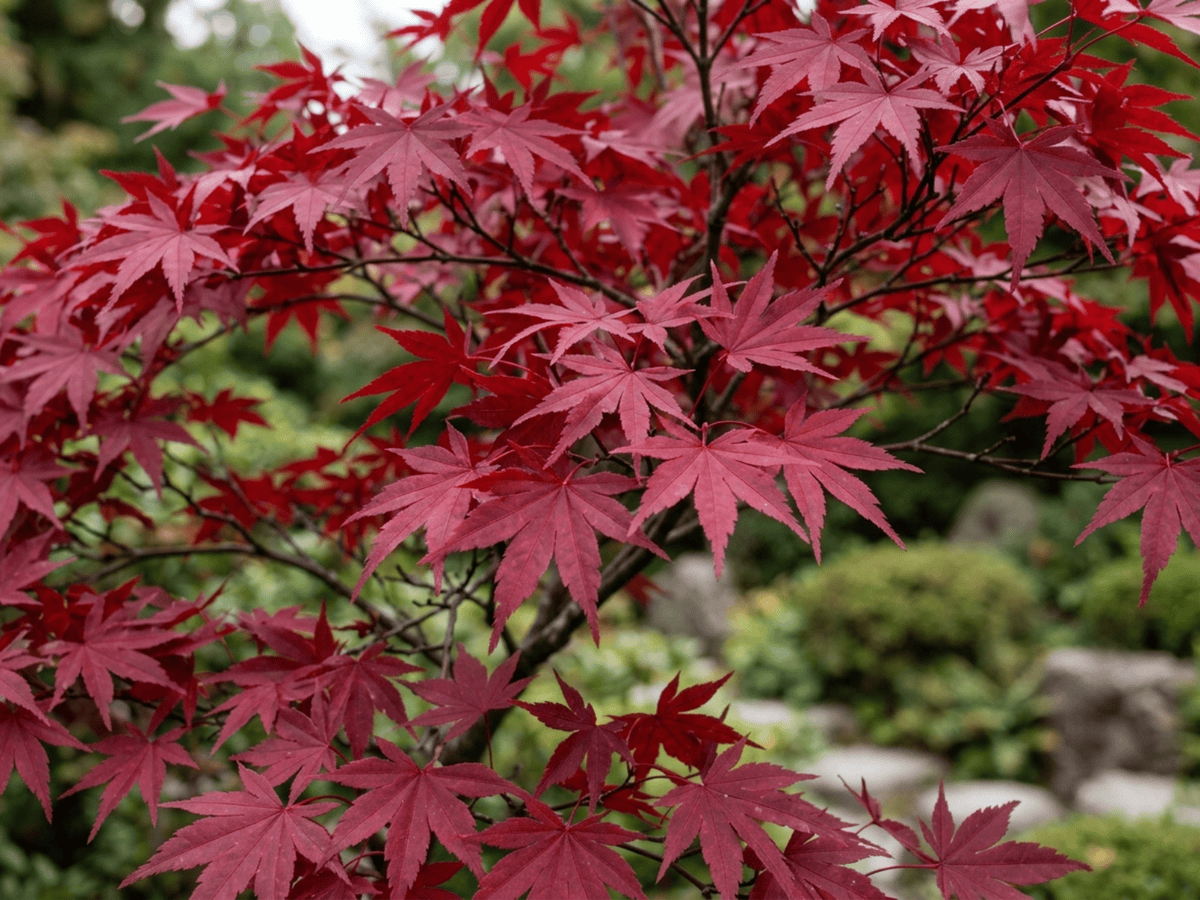 Japanese MapleAcer palmatum
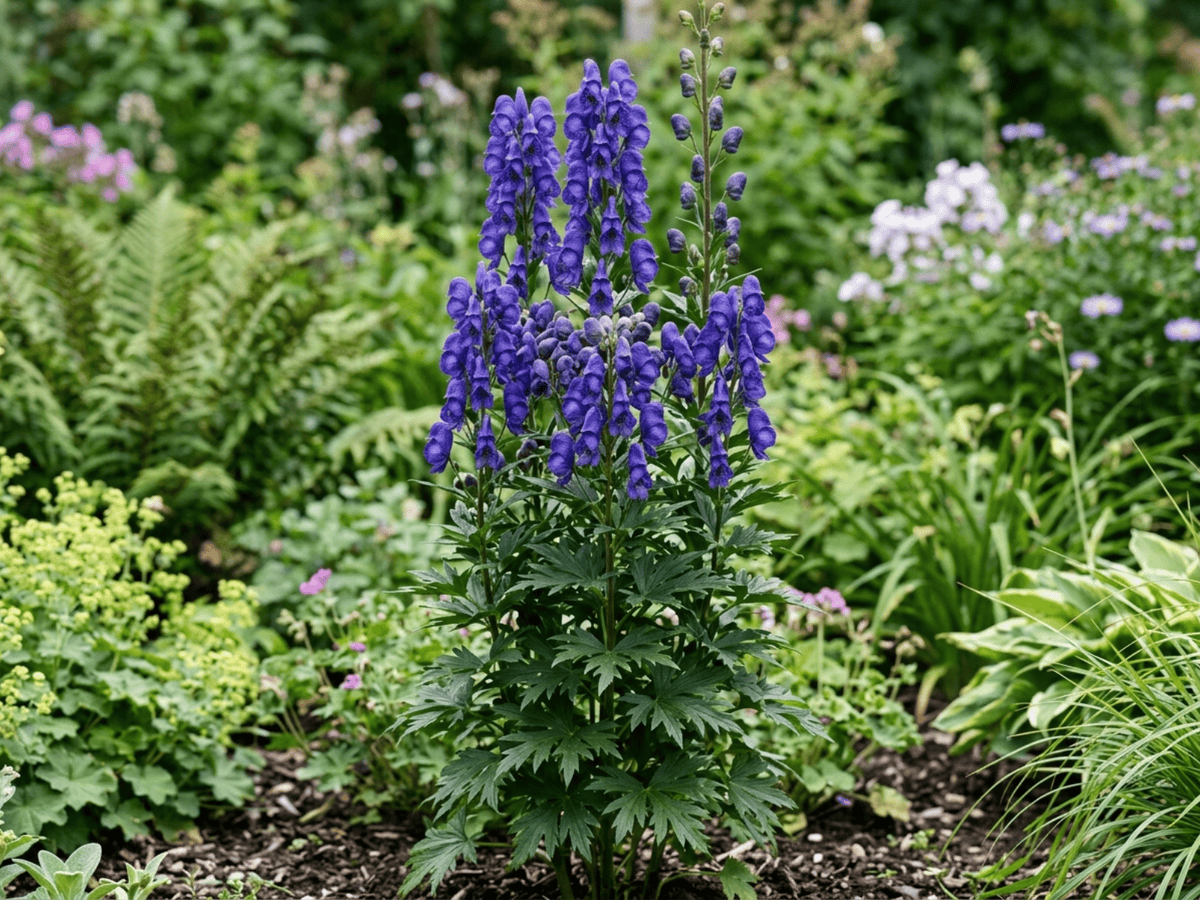 Azure MonkshoodAconitum carmichaelii
 Florida HobblebushAgarista populifolia
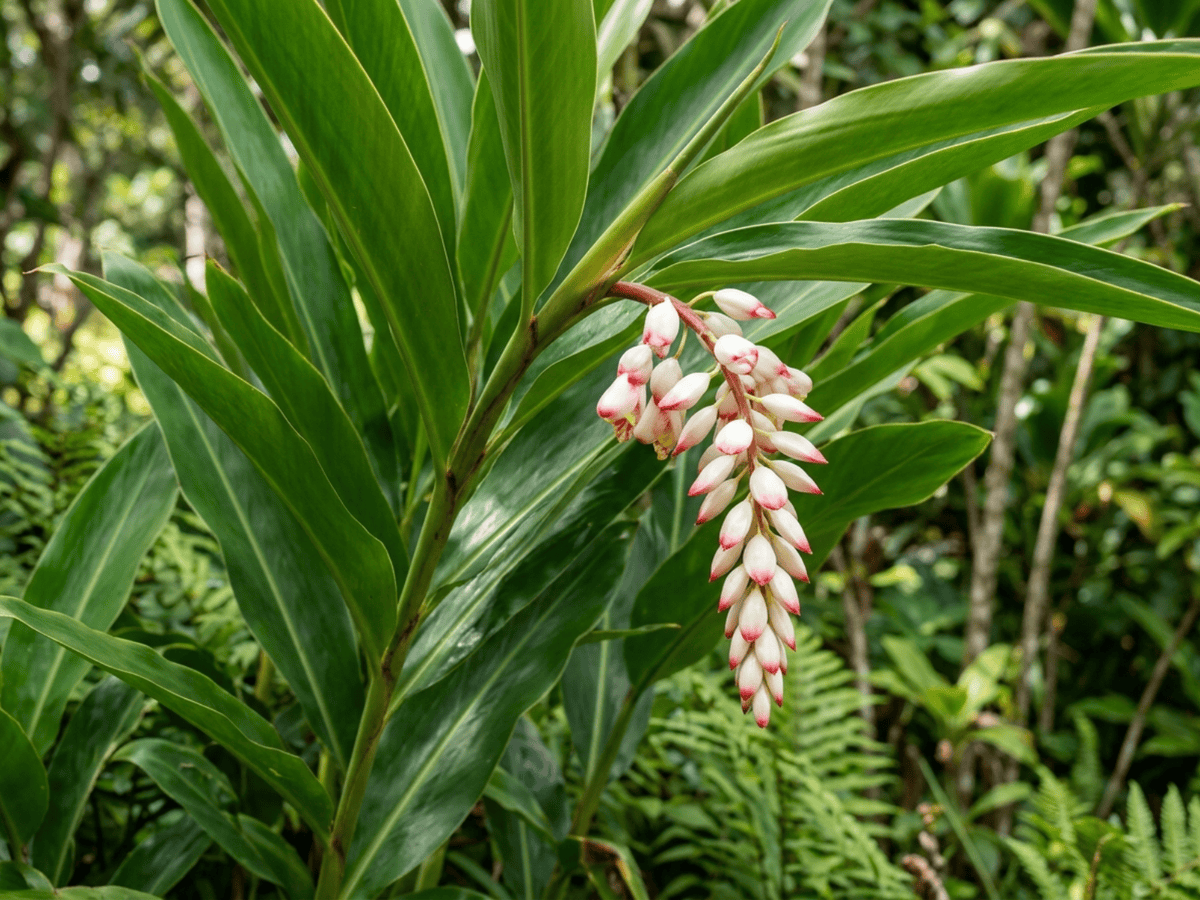 Shell GingerAlpinia zerumbet
Frequently asked questions
How often should I water Giant Elephant Ear?
In summer, water about every 1 days; in winter, about every 14 days. Adjust for heat, pot size and drainage.
How much light does Giant Elephant Ear need?
Part shade: 2–4 hrs direct. Watch the leaves — scorching or stretching means the light needs adjusting.
Is Giant Elephant Ear toxic to cats or dogs?
Pets Moderate (Dogs Moderate · Cats Moderate) Educational information, not medical or veterinary advice. If exposure is suspected, contact a doctor or veterinarian.
Is Giant Elephant Ear easy to grow?
It is moderately demanding: a good choice once you have a little experience.
When does Giant Elephant Ear bloom?
It typically blooms Jun–Aug in the Northern Hemisphere.
YardMate
Identify any plant in seconds
Snap a photo — YardMate names the plant, diagnoses problems, and reminds you when to water.
Download on the App Store