 YardMate



Maize
Zea mays
Medium · Some experienceAbout Maize
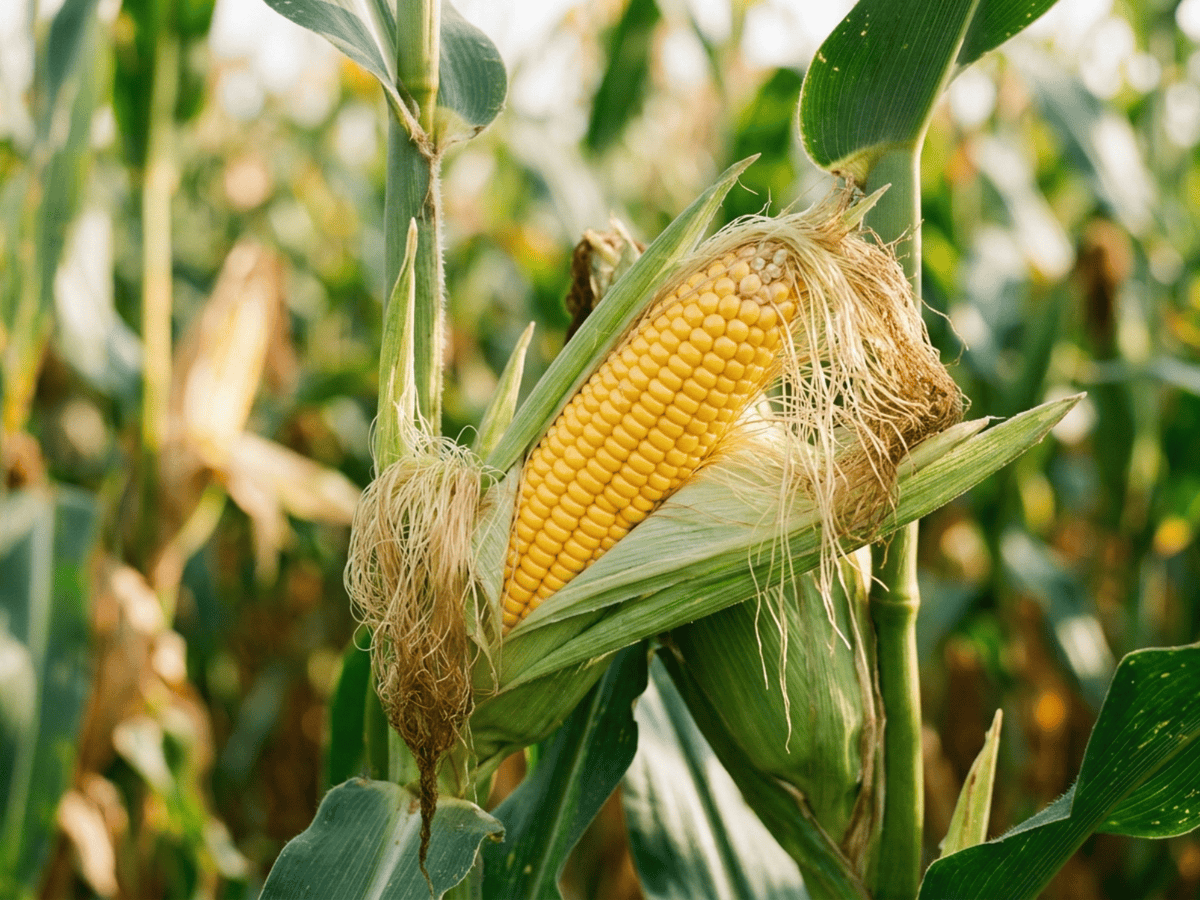
Zea mays, maize or corn, is an annual grass in the Poaceae family and one of the most consequential plants in human history. Domesticated from the wild grass teosinte in southern Mexico about 9,000 years ago, this single species now produces more grain by weight than any other crop on Earth. Sweet corn (the garden type), field corn (dent), popcorn, flint corn, and ornamental Indian corn are all the same species.
Sweet corn requires warm soil (above 16°C), full sun, and rich, well-watered ground. It grows 1.5–2.5 m tall and is wind-pollinated, so it must be planted in blocks (minimum 4 rows) rather than single rows for adequate ear fill. Each stalk typically produces 1–2 ears. Sugar-enhanced (se) and supersweet (sh2) varieties hold their sweetness longer after picking.
Corn is a nutritional and industrial titan: it provides staple food for billions, animal feed, ethanol fuel, corn syrup, cornstarch, bioplastics, and thousands of other products. The Three Sisters agriculture of the Americas (corn, beans, squash) is one of the most elegant polyculture systems ever devised. Freshly picked sweet corn, boiled or grilled within minutes of harvest, is a pinnacle of summer eating—sugars begin converting to starch immediately after picking.
- Edible
- Heat-tolerant
- Fast-growing
How to care for Maize
Watering
- Springevery 3 days
- Summerevery 2 days
- Fallevery 4 days
- Winterevery 7 days
Soil · Rich & well-draining
- Top dressingCompost10%
- Main mixPotting soil + compost 3:180%
- DrainageGravel10%
Top up the compost layer each season.
FERTILIZER
Balanced Feed 14-14-14
An even feed covers all three needs at once, keeping leaves, roots and blooms moving together with nothing pushed out of balance.
- Nitrogen · Leaves
- Phosphorus · Roots + Blooms
- Potassium · Strength
- Springevery 14 days
- Summerevery 14 days
- Fallevery 21 days
At a Glance
- NativeNorth America
- Height6–10 ft (1.8–3 m)
- Spread1–2 ft (0.3–0.6 m)
- Flower colorGreen, Yellow
- Foliage colorGreen
- Fruit colorYellow
- SoilLoamy, Moisture-retentive, Rich
- LocationsYard
Bloom time
BLOOM CYCLE
Peak bloom
Jun–Aug
Wind-pollinated; plant in blocks of at least 4 rows for full ear development, not single rows.
Fragrance
NO FRAGRANCE
No notable fragrance.
Toxicity
Humans Safe · Pets Safe
None reported
Safe
EXPOSURE No exposure route is reported.
EFFECT Widely consumed and fungal aflatoxin contamination in poorly stored maize is a serious food-safety concern globally.
NOTE Listed as non-toxic for humans; avoid eating ornamental plants unless confirmed edible.
Safe
EXPOSURE No exposure route is reported.
EFFECT Not toxic and corn cobs can cause intestinal obstruction.
NOTE Listed as non-toxic for dogs; avoid eating ornamental plants unless confirmed edible.
Safe
EXPOSURE No exposure route is reported.
EFFECT Not toxic.
NOTE Listed as non-toxic for cats; avoid eating ornamental plants unless confirmed edible.
Educational information, not medical or veterinary advice. If exposure is suspected, contact a doctor or veterinarian.
DISTRIBUTION

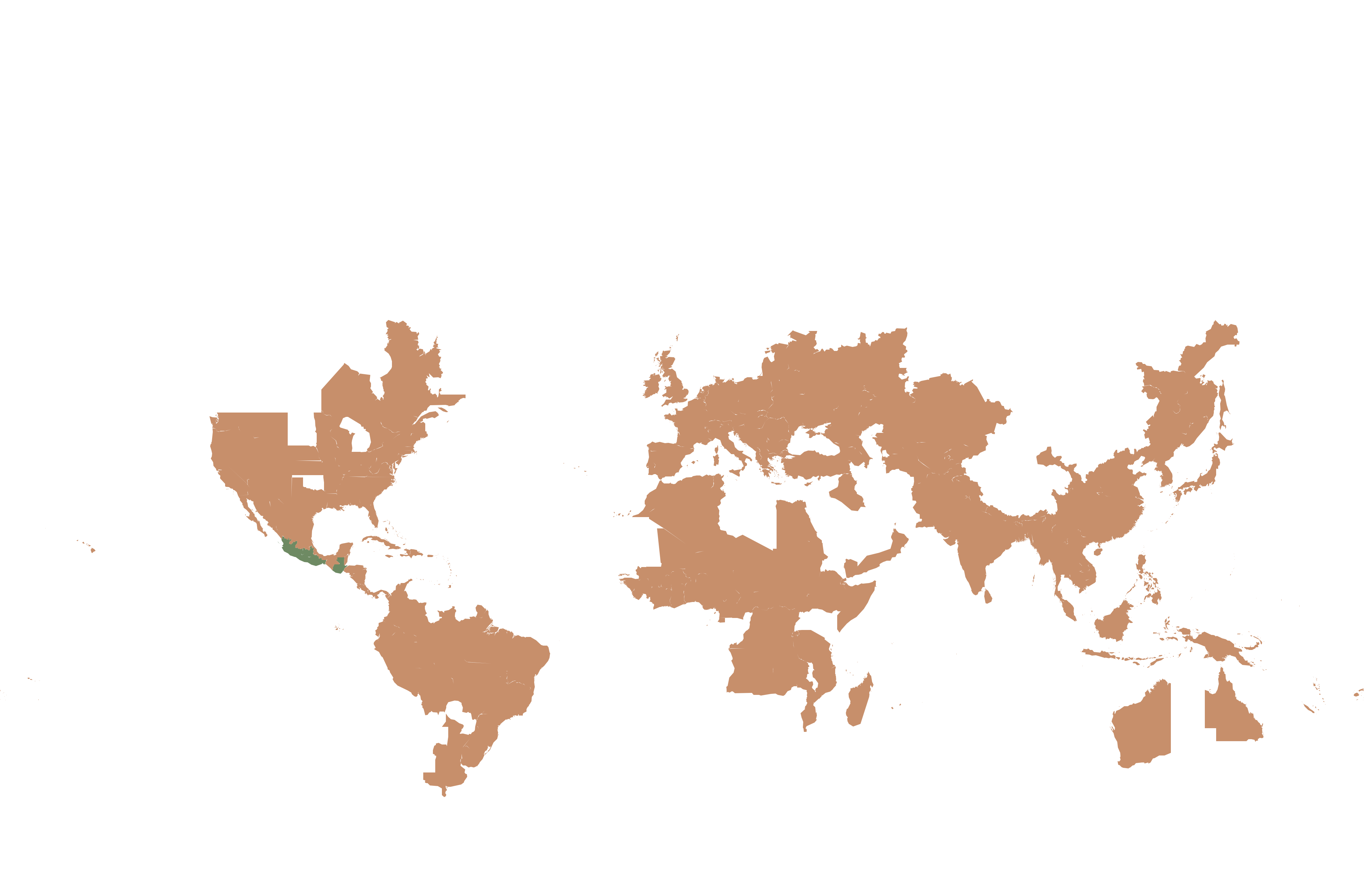
- Native
- Introduced
- North America
History

Zea mays was domesticated approximately 9,000 years ago in the Balsas River valley of Guerrero, southern Mexico, from the wild grass teosinte (Zea mays subsp. parviglumis). Genetic reconstruction by geneticist John Doebley and others showed that maize descended from a single teosinte domestication event; fewer than ten key genes including the tb1 branching gene and the tga1 glume gene together transformed the tiny-seeded branched grass into the huge-kernelled single-cobbed crop. Maize spread rapidly through Mesoamerica (supporting Olmec, Maya, and Aztec civilizations), southward through the Andes and Amazon, and northward across the Mississippi Valley and into the American Southwest, where Pueblo peoples adopted irrigation maize cultivation.
Columbus brought maize to Europe in 1493. Within 200 years it was cultivated across Africa, Asia, and southern Europe. Today maize is the world's largest cereal crop by tonnage, driving food, livestock feed, ethanol fuel, and thousands of industrial products (corn syrup, corn starch, bioplastics).
Over 70% of maize calories in the modern food system come via animal feed and ethanol rather than direct human consumption. The Three Sisters (corn, beans, squash) was among the most productive agricultural systems of the pre-Columbian Americas. Corn now covers more cropland than any other plant on Earth.
Symbolism & meaning
What It Symbolizes
Maize expresses prosperity, a single kernel producing a stalk with hundreds more, its arithmetic itself a symbol of multiplication and abundant wealth. It also carries civilization, for it was its domestication that made Mesoamerican settlement, ceremony, and culture possible. It is often read as a flower of foundational abundance, a grass whose meaning is the deep truth that whole civilizations rest on a single plant, and that prosperity often begins with one seed multiplied generously enough to feed everyone.
- Prosperity — A single kernel producing a stalk with hundreds of kernels symbolizes multiplication and abundant wealth
- Civilization — Maize made Mesoamerican civilization possible — it represents the foundation of human settlement and culture
Where the Name Comes From
Zea from Greek 'zeia' (a type of grain); 'mays' from Taino 'mahiz' via Spanish 'maíz.' The English 'corn' originally meant any grain — it was applied specifically to maize in the Americas.
Uses & Fun Facts
- Sweet corn, tortillas, popcorn, and cornmeal staple
- Industrial sources of ethanol fuel and cornstarch
- Sacred crop central to Mesoamerican civilizations and cuisine
Related plants
Plants with similar care
 Mexican AbeliaAbelia floribunda
 Fraser FirAbies fraseri
 Paperbark MapleAcer griseum
 Sugar MapleAcer saccharum
Frequently asked questions
How often should I water Maize?
In summer, water about every 2 days; in winter, about every 7 days. Adjust for heat, pot size and drainage.
How much light does Maize need?
Full sun: 6+ hrs direct. Watch the leaves — scorching or stretching means the light needs adjusting.
Is Maize toxic to cats or dogs?
Pets Safe (Dogs Safe · Cats Safe) Educational information, not medical or veterinary advice. If exposure is suspected, contact a doctor or veterinarian.
Is Maize easy to grow?
It is moderately demanding: a good choice once you have a little experience.
When does Maize bloom?
It typically blooms Jun–Aug in the Northern Hemisphere.
YardMate
Identify any plant in seconds
Snap a photo — YardMate names the plant, diagnoses problems, and reminds you when to water.
Download on the App Store