 YardMate


Redroot Amaranth
Amaranthus retroflexus
Easy · Beginner friendlyAbout Redroot Amaranth
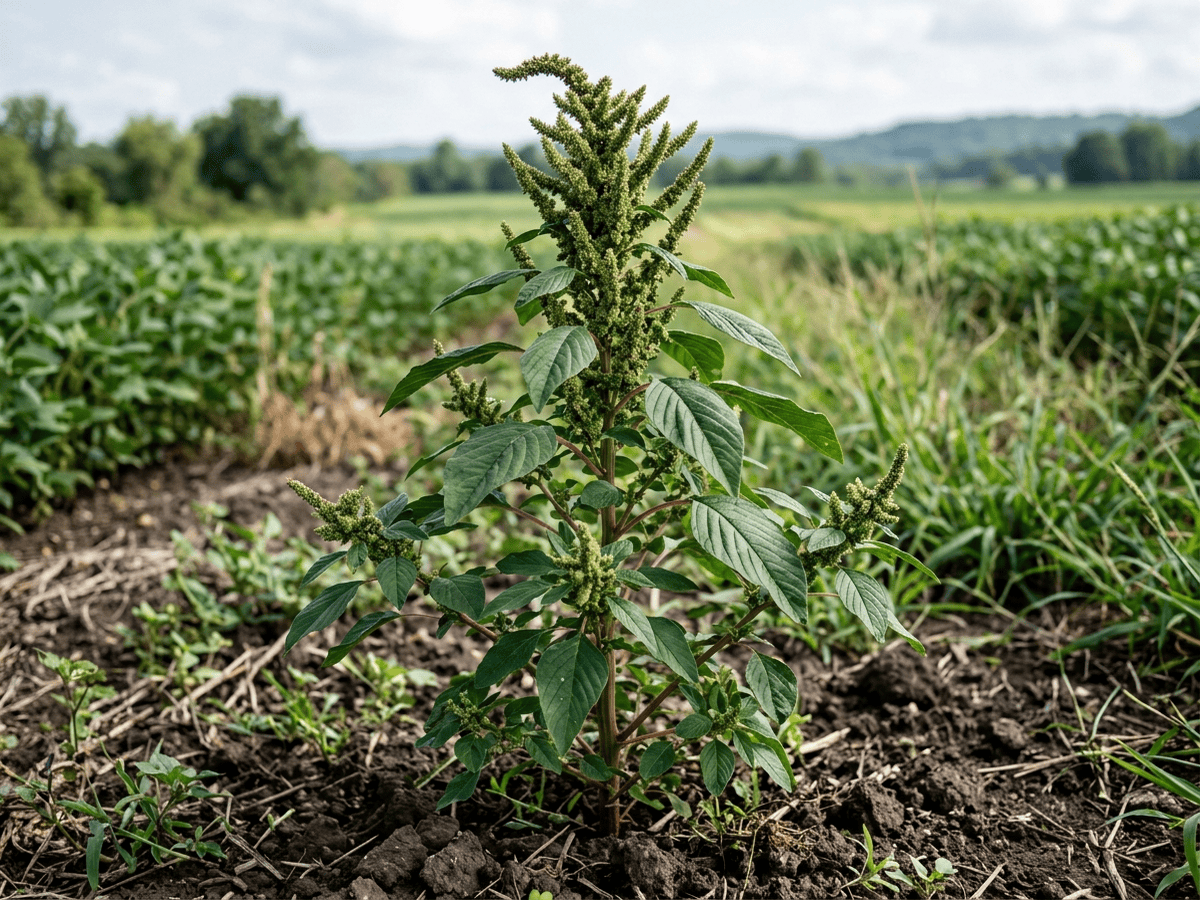
Redroot Pigweed is a fast-growing warm-season annual weed of the Americas, now a noxious agricultural pest across the US. Growing 1 to 6 feet tall with a distinctive red taproot, diamond-shaped leaves, and dense terminal spikes of greenish flowers, a single plant produces up to 200,000 wind-dispersed seeds. One of the most damaging weeds in American corn, soybean, and vegetable production.
- Heat-tolerant
- Fast-growing
How to care for Redroot Amaranth
Watering
- Springevery 14 days
- Summerevery 7 days
- Fallevery 14 days
- Winterpause watering
Soil · Rich & well-draining
- Top dressingCompost10%
- Main mixPotting soil + compost 3:180%
- DrainageGravel10%
Top up the compost layer each season.
FERTILIZER
This plant needs little to no feeding.
At a Glance
- NativeNorth America
- Height2–6 ft (0.6–1.8 m)
- Spread1–2 ft (0.3–0.6 m)
- Flower colorGreen
- Foliage colorGreen, Red
- SoilLoamy, Well-drained, Sandy
- LocationsYard
Bloom time
BLOOM CYCLE
Peak bloom
Jun–Nov
Dense greenish terminal flower spikes summer to fall
Toxicity
Humans Slight · Pets Slight
oxalates and nitrates
Slight
- Leaf
- Stem
- Ingestion
EXPOSURE Eating leaves and stems.
EFFECT High oxalate and nitrate content; moderate consumption only.
NOTE Edible as cooked leafy green in moderation. Livestock fed heavy pigweed hay can develop nitrate poisoning.
Slight
- All
- Ingestion
EXPOSURE Eating any part of the plant.
EFFECT GI upset if large amounts eaten.
NOTE Edible as cooked leafy green in moderation. Livestock fed heavy pigweed hay can develop nitrate poisoning.
Slight
- All
- Ingestion
EXPOSURE Eating any part of the plant.
EFFECT GI upset if large amounts eaten.
NOTE Edible as cooked leafy green in moderation. Livestock fed heavy pigweed hay can develop nitrate poisoning.
Educational information, not medical or veterinary advice. If exposure is suspected, contact a doctor or veterinarian.
DISTRIBUTION

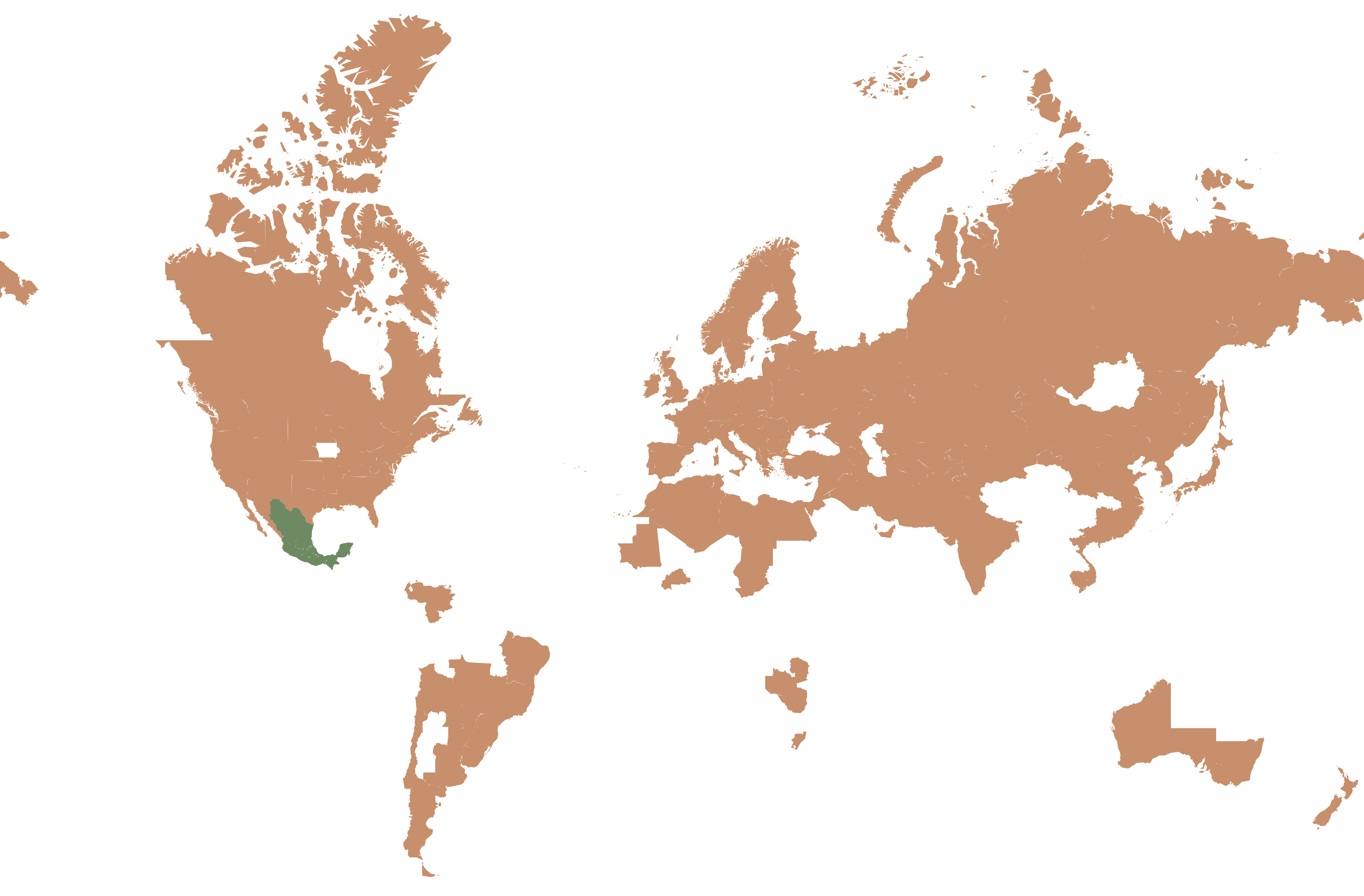
- Native
- Introduced
- North America
History

Amaranthus retroflexus is native to central North America, especially the central plains and northern Mexico, and has spread globally since Columbian contact. Linnaeus described it in Species Plantarum (1753). Pre-Columbian Indigenous peoples across North America including the Hopi, Zuni, Navajo, and Lakota harvested the seeds as a minor cereal and the young leaves as a spinach-like vegetable rich in calcium, iron, and protein — uses paralleled by the independent domestication of related species as grain amaranths (A. hypochondriacus, A. cruentus) in Mesoamerica and South America.
Modern agronomy treats it as a top-10 US weed of corn and soybean fields, producing up to 230,000 seeds per plant and rapidly evolving resistance to ALS inhibitors, triazines, glyphosate, and dicamba herbicides. It also accumulates nitrate and can poison livestock fed heavily on pigweed hay.
Native to tropical America, Redroot Pigweed spread across North American farmland with European-style agriculture and is now one of the most damaging summer annual weeds in US row crops. Glyphosate- and ALS-resistant biotypes have emerged across the Midwest since 2000, making it an increasingly serious agricultural challenge.
Symbolism & meaning
What It Symbolizes
Redroot Amaranth is the emblem of relentless increase: a single plant can scatter two hundred thousand seeds across a fallow field, ensuring its descendants long after the farmer has moved on. Yet it is no stranger to human kitchens — kin to the ancient grain amaranths of Mesoamerica, sacred to the Aztecs. It holds both meanings at once: cursed weed in one row, ancestral nourishment in another.
- Relentless increase — 200,000 seeds per plant
- Ancient grain — related to cultivated amaranth grains
Where the Name Comes From
'Amaranthus' from Greek 'amarantos' meaning unfading, for persistent flower bracts; 'retroflexus' from Latin means bent back, for curved leaf tips.
Uses & Fun Facts
- Young leaves cooked as quelite greens in Mexican country kitchens
Related plants
More Amaranthus plants
 Love-Lies-BleedingAmaranthus caudatus
 Smooth PigweedAmaranthus hybridus
 Palmer's AmaranthAmaranthus palmeri
 Spiny AmaranthAmaranthus spinosus
Plants with similar care
 Chinese AbeliaAbelia chinensis
 Fragrant AbeliaAbelia mosanensis
 Large-Flowered AbeliaAbelia uniflora
 Glossy AbeliaAbelia x grandiflora
Frequently asked questions
How often should I water Redroot Amaranth?
Water about every 14 days during the growing season, and always let excess water drain away.
How much light does Redroot Amaranth need?
Full sun: 6+ hrs direct. Watch the leaves — scorching or stretching means the light needs adjusting.
Is Redroot Amaranth toxic to cats or dogs?
Pets Slight (Dogs Slight · Cats Slight) Educational information, not medical or veterinary advice. If exposure is suspected, contact a doctor or veterinarian.
Is Redroot Amaranth easy to grow?
Yes — it is considered an easy, beginner-friendly plant.
When does Redroot Amaranth bloom?
It typically blooms Jun–Nov in the Northern Hemisphere.
YardMate
Identify any plant in seconds
Snap a photo — YardMate names the plant, diagnoses problems, and reminds you when to water.
Download on the App Store