 YardMate


Love-Lies-Bleeding
Amaranthus caudatus
Easy · Beginner friendlyAbout Love-Lies-Bleeding
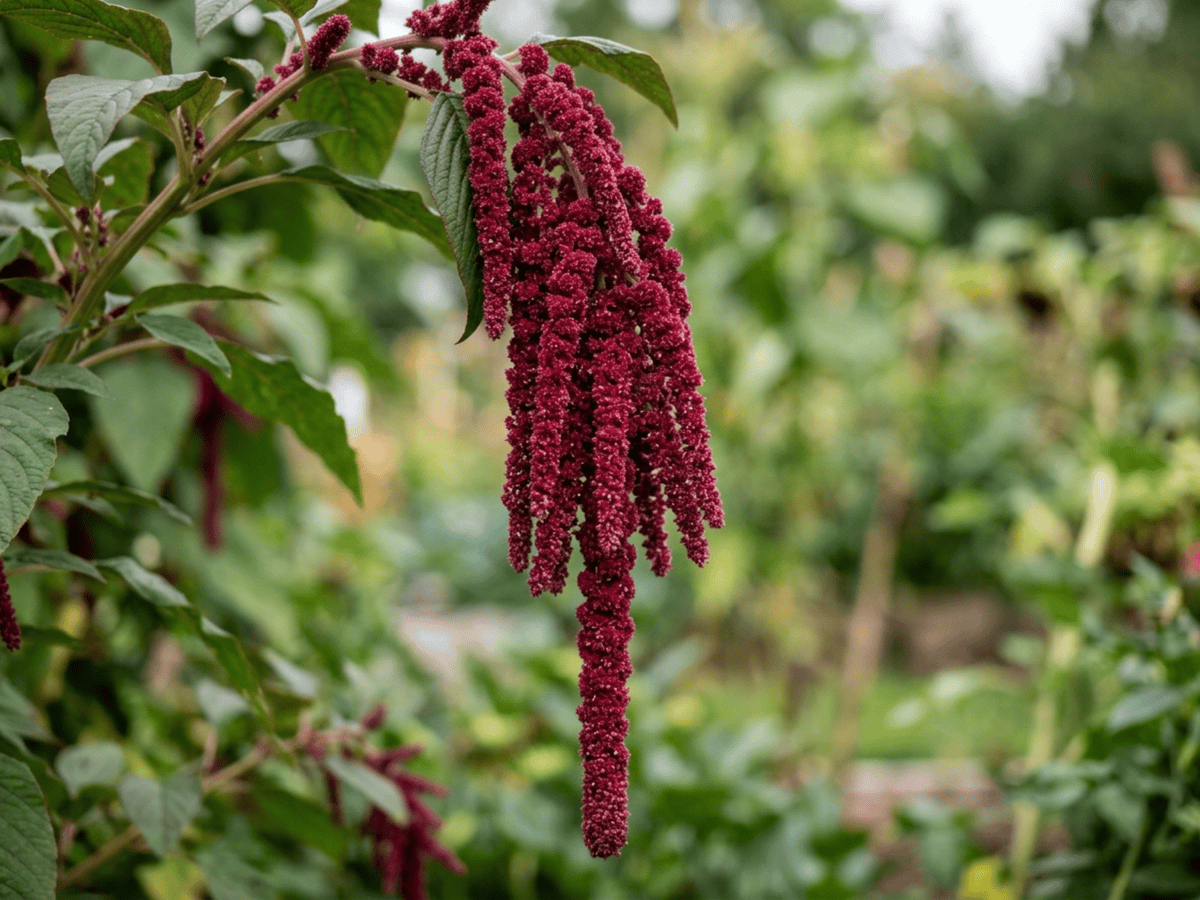
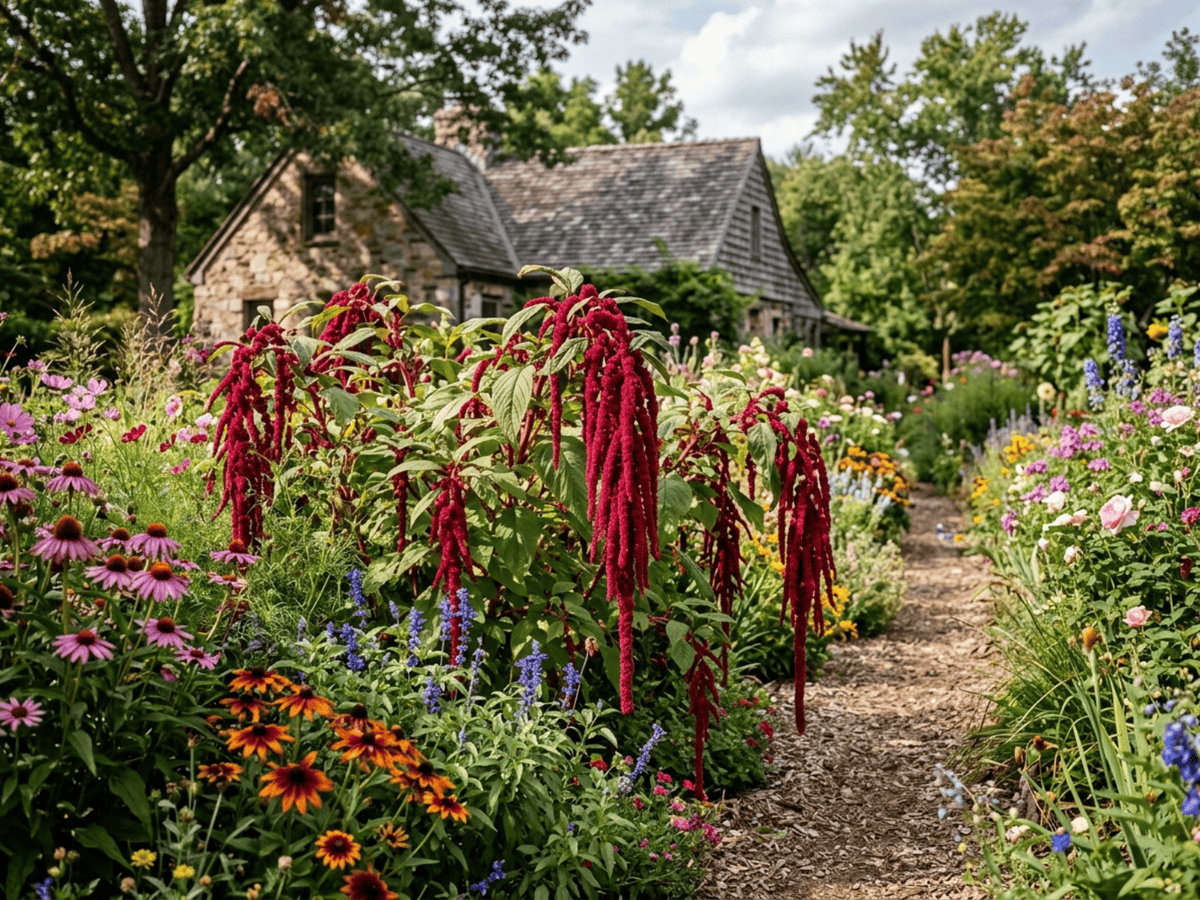
Love-Lies-Bleeding is a statuesque annual 3–5 feet tall with broad green leaves and dramatic cascading ropes of deep crimson or burgundy flowers that dangle 1–2 feet long. An heirloom cottage-garden showpiece and a cut-flower favorite at American farmers' markets. Plants self-seed and produce edible seeds rich in protein—Amaranthus grains were staples of Aztec and Inca diets. Today grown both for ornament and as a niche grain crop.
- Edible
- Cut-flower
- Architectural
How to care for Love-Lies-Bleeding
Watering
- Springevery 5 days
- Summerevery 4 days
- Fallevery 10 days
- Winterpause watering
Soil · Rich & well-draining
- Top dressingCompost10%
- Main mixPotting soil + compost 3:180%
- DrainageGravel10%
Top up the compost layer each season.
FERTILIZER
Balanced Feed 14-14-14
An even feed covers all three needs at once, keeping leaves, roots and blooms moving together with nothing pushed out of balance.
- Nitrogen · Leaves
- Phosphorus · Roots + Blooms
- Potassium · Strength
- Springevery 21 days
- Summerevery 21 days
At a Glance
- NativeSouth America
- Height3–5 ft (0.9–1.5 m)
- Spread1–2 ft (0.3–0.6 m)
- Flower colorRed, Burgundy, Yellow, Green
- Foliage colorGreen, Red
- Fruit colorRed, Black
- SoilLoamy, Well-drained, Rich
- LocationsYard
Bloom time
BLOOM CYCLE
Peak bloom
Jun–Nov
Cascading crimson ropes midsummer to frost
Fragrance
NO FRAGRANCE
No notable fragrance.
Toxicity
No toxicity has been reported for this plant. Still, it is wise to keep pets from chewing on any houseplant.
Educational information, not medical or veterinary advice. If exposure is suspected, contact a doctor or veterinarian.
DISTRIBUTION


- Native
- Introduced
- South America
History

Amaranthus caudatus is thought to be native to the Andes of Peru, Bolivia, and northern Argentina, where it was domesticated over 4,000 years ago and became a staple grain crop of the Inca Empire (alongside quinoa and kiwicha) — Spanish chroniclers described "kiwicha" grain amaranth at conquest and noted that the plant was used in Inca religious ceremonies, which led to its colonial Spanish suppression. In the mid-to-late 20th century, grain amaranth (including A. caudatus and related A. cruentus and A. hypochondriacus) has been revived as a high-quality gluten-free protein-rich grain crop by Andean agricultural restoration movements, and now has substantial modern commercial production in Peru, Bolivia, India, and Mexico. Separate from the grain agriculture, the ornamental form of A. caudatus has been a Victorian favorite for its extraordinary dramatic floral display: the plant produces extraordinary drooping 30-60 cm tassel-like chenille-textured flower spikes in intense crimson-red, maroon, or burgundy (occasionally gold, green, or cream in selected cultivars), hanging down from the main plant in a pendulous cascade.
The evocative Victorian common name "love-lies-bleeding" (suggesting the crimson tassels as dripping blood of a slain lover) captured Victorian Gothic sensibility. The plant grows 90-150 cm tall as an annual and is easily grown from seed.
Leaves are edible (a traditional cooked green in many cultures); young leaves and seeds are highly nutritious.
Symbolism & meaning
What It Symbolizes
Love-Lies-Bleeding turns grief into spectacle: in Victorian flower language, its trailing crimson ropes meant hopeless love, tears made botanical and impossible to hide. Yet the color holds for months after cutting, giving it the opposite shadow of immortality. The plant becomes devotion after loss, a flower that refuses to fade even when the story it mourns is already over.
- Hopeless love — Victorian meaning tied to trailing red tassels and unreturned love
- Immortality — long-lasting color evokes eternal life
Where the Name Comes From
Genus from Greek 'amarantos' (unfading); 'caudatus' means 'tailed' for the hanging flower ropes.
Uses & Fun Facts
- Nutritious heirloom grain seeds and edible greens
- Cascading crimson ropes star in dramatic arrangements
- Statuesque cottage-garden focal point at border backs
Related plants
More Amaranthus plants
 Smooth PigweedAmaranthus hybridus
 Palmer's AmaranthAmaranthus palmeri
 Redroot AmaranthAmaranthus retroflexus
 Spiny AmaranthAmaranthus spinosus
Plants with similar care
 Chinese AbeliaAbelia chinensis
 Fragrant AbeliaAbelia mosanensis
 Large-Flowered AbeliaAbelia uniflora
 Glossy AbeliaAbelia x grandiflora
Frequently asked questions
How often should I water Love-Lies-Bleeding?
Water about every 5 days during the growing season, and always let excess water drain away.
How much light does Love-Lies-Bleeding need?
Full sun: 6+ hrs direct. Watch the leaves — scorching or stretching means the light needs adjusting.
Is Love-Lies-Bleeding toxic to cats or dogs?
No toxicity has been reported for this plant. Still, it is wise to keep pets from chewing on any houseplant. Educational information, not medical or veterinary advice. If exposure is suspected, contact a doctor or veterinarian.
Is Love-Lies-Bleeding easy to grow?
Yes — it is considered an easy, beginner-friendly plant.
When does Love-Lies-Bleeding bloom?
It typically blooms Jun–Nov in the Northern Hemisphere.
YardMate
Identify any plant in seconds
Snap a photo — YardMate names the plant, diagnoses problems, and reminds you when to water.
Download on the App Store