 YardMate

Saffron Crocus
Crocus sativus
Medium · Some experienceAbout Saffron Crocus
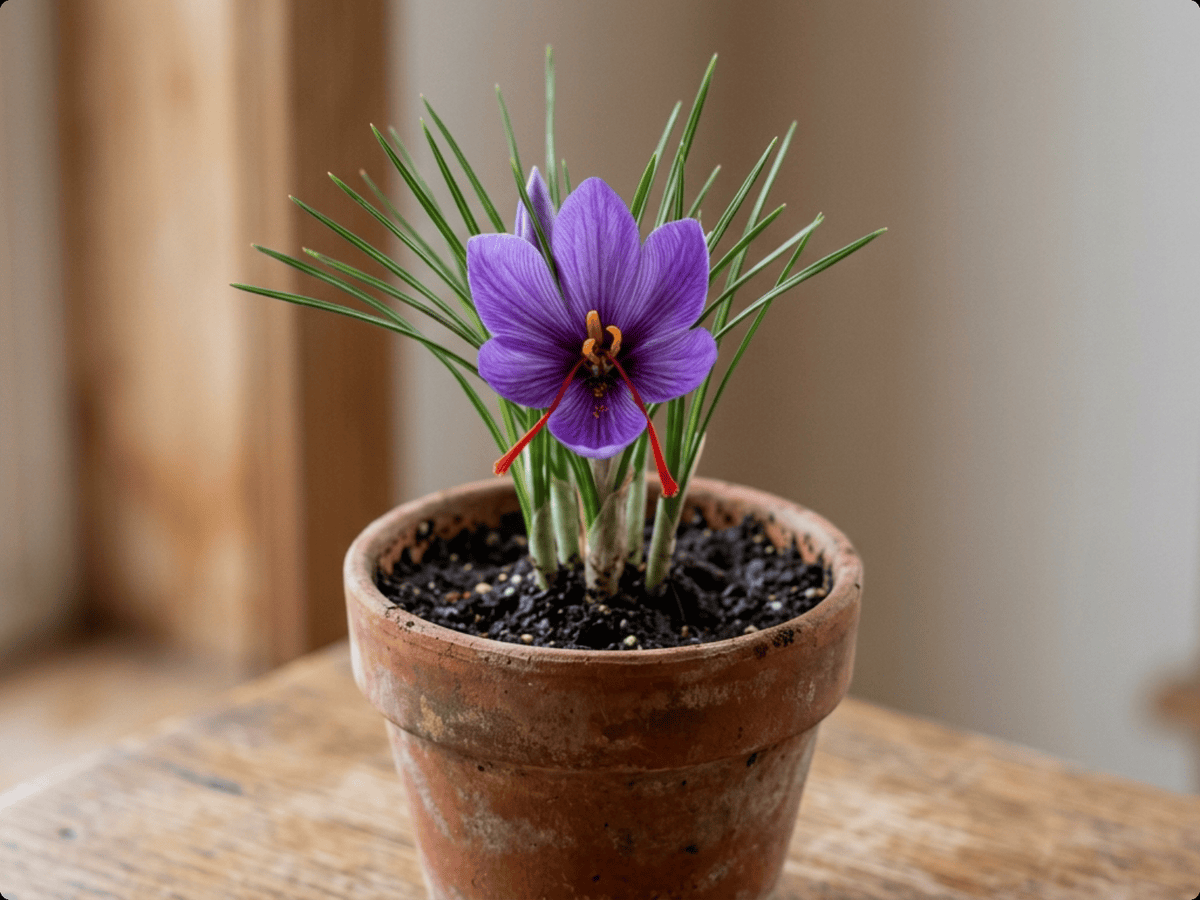
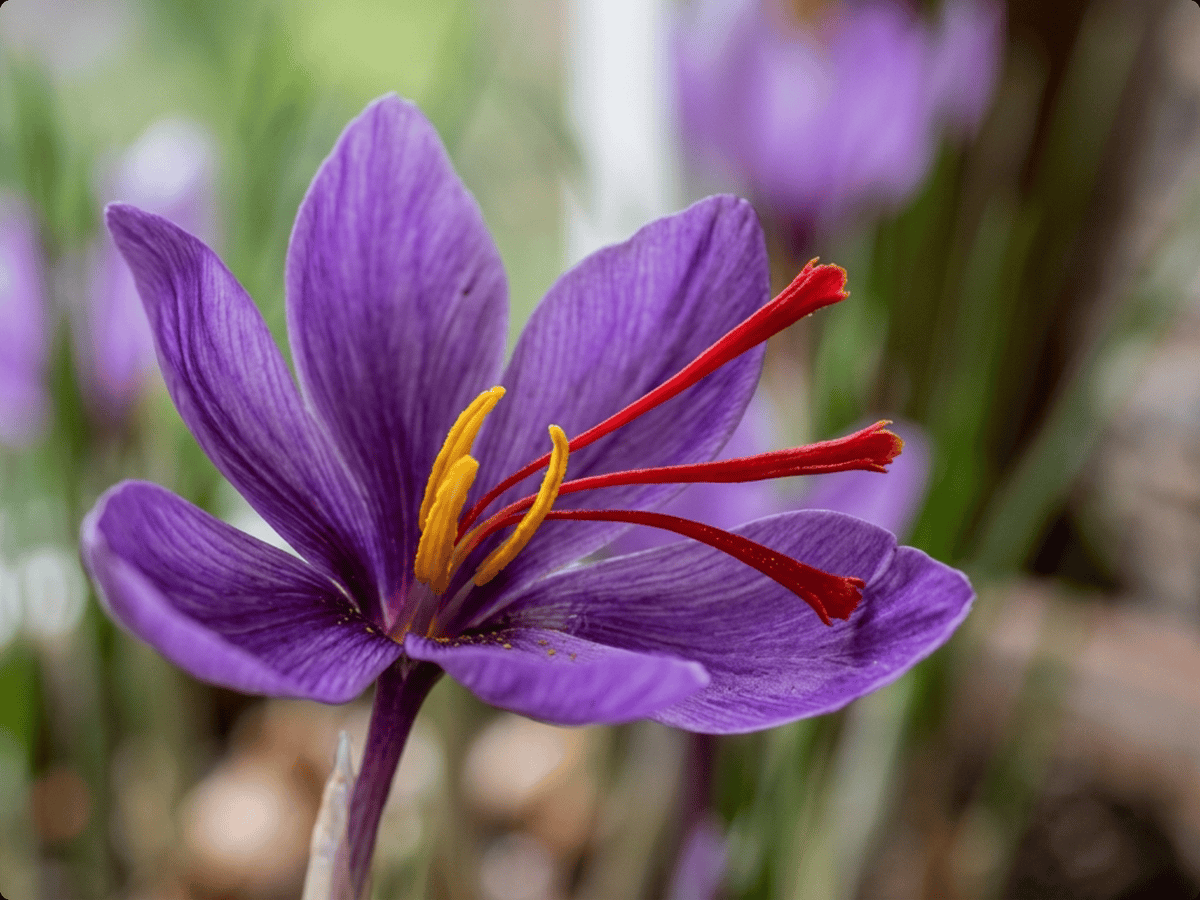
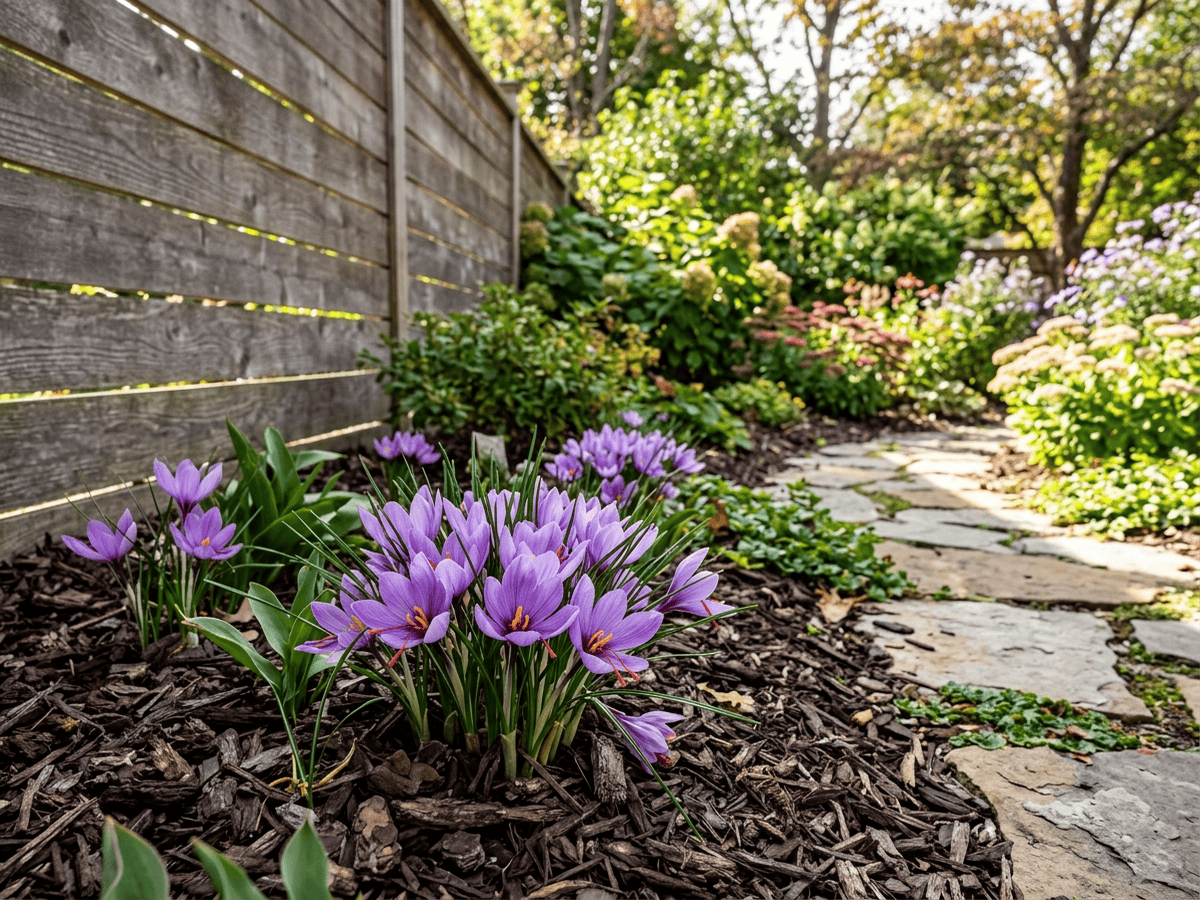
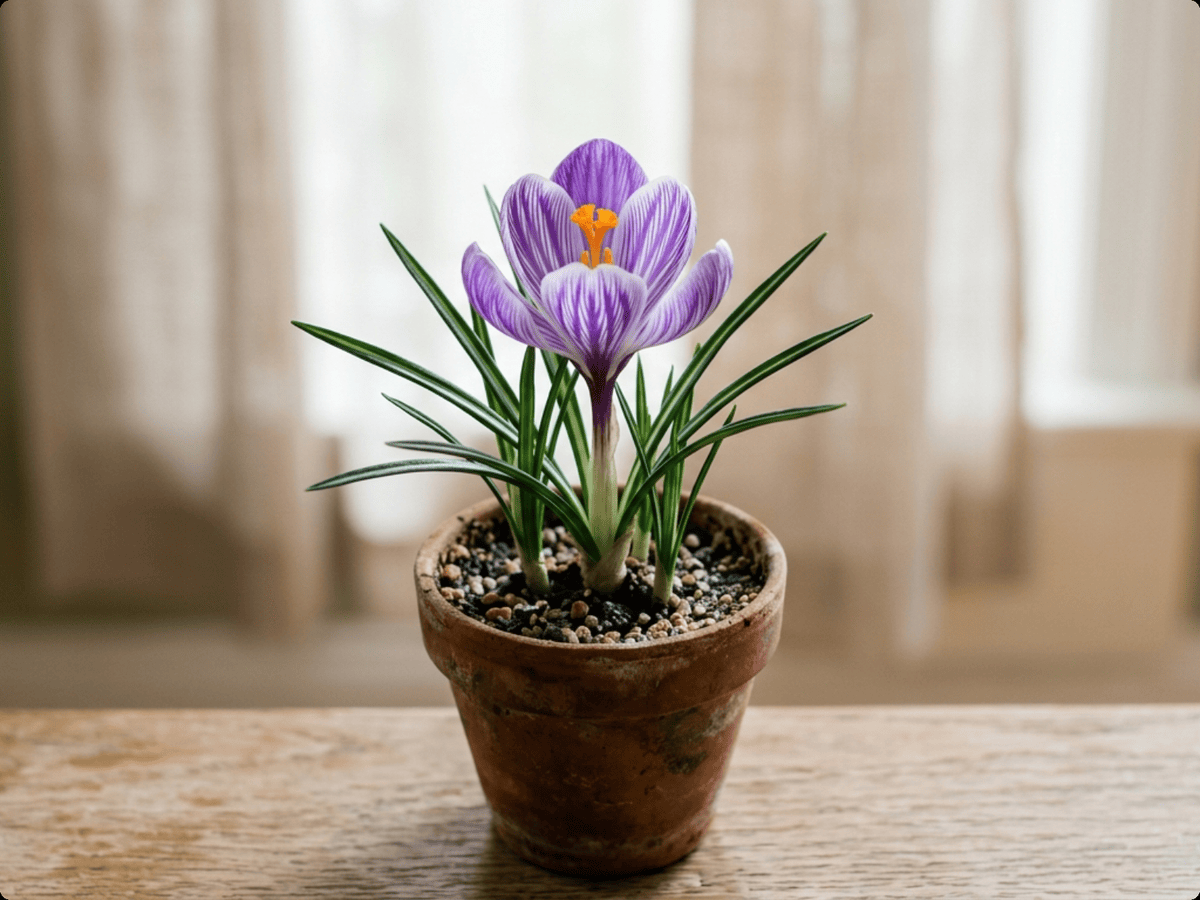
Crocus sativus, the saffron crocus, is the source of saffron — the world's most expensive spice. Each lavender-purple flower produces just three vivid red stigmas that must be hand-picked at dawn, dried, and processed. It takes 150,000 flowers to produce 1 kg of saffron. Blooming in autumn (unlike spring crocuses), it grows from corms in well-drained soil with hot, dry summers. The flowers are beautiful in their own right, with purple petals and dramatic red stigmas. It is a sterile triploid — it cannot produce seed and is propagated only by dividing corms.
- Edible
How to care for Saffron Crocus
Watering
- Springevery 7 days
- Summerevery 30 days
- Fallevery 14 days
- Winterevery 30 days
Soil · Well-draining
- Main mixLoam + coarse sand 3:175%
- DrainageGravel25%
Sharp drainage matters most — bulbs rot in wet soil while dormant.
FERTILIZER
Balanced Feed 14-14-14
An even feed covers all three needs at once, keeping leaves, roots and blooms moving together with nothing pushed out of balance.
- Nitrogen · Leaves
- Phosphorus · Roots + Blooms
- Potassium · Strength
- Springevery 30 days
- Fallevery 60 days
At a Glance
- NativeMediterranean
- Height0.3–0.5 ft (0.1–0.2 m)
- Spread0.2–0.3 ft (0.1–0.1 m)
- Flower colorPurple
- Foliage colorGreen
- SoilSandy, Well-drained, Loamy
- LocationsYard
Bloom time
BLOOM CYCLE
Peak bloom
Oct–Nov
Autumn bloomer; harvest red stigmas at dawn for saffron; needs dry summer dormancy
Fragrance
MODERATE FRAGRANCE
Stigmas carry the distinctive saffron aroma — hay-like, honey-sweet, bitter — due to safranal.
Toxicity
Humans Slight · Pets Moderate
picrocrocin, safranal, and crocin
Slight
- Flower
- Ingestion
EXPOSURE Eating flowers.
EFFECT Culinary doses of saffron are safe and large medicinal doses (over 5g) can cause vomiting and vertigo, and over 10g is potentially lethal.
NOTE Often confused with the unrelated Autumn Crocus (Colchicum autumnale), which is far more toxic — Colchicum contains lethal colchicine.
Moderate
- Root
- Flower
- Leaf
- Ingestion
EXPOSURE Eating roots, flowers, and leaves.
EFFECT Vomiting, diarrhea, bulb most dangerous, and per ASPCA Crocus listing.
NOTE Often confused with the unrelated Autumn Crocus (Colchicum autumnale), which is far more toxic — Colchicum contains lethal colchicine.
Moderate
- Root
- Flower
- Leaf
- Ingestion
EXPOSURE Eating roots, flowers, and leaves.
EFFECT Vomiting, diarrhea, bulb most dangerous, and per ASPCA Crocus listing.
NOTE Often confused with the unrelated Autumn Crocus (Colchicum autumnale), which is far more toxic — Colchicum contains lethal colchicine.
Educational information, not medical or veterinary advice. If exposure is suspected, contact a doctor or veterinarian.
DISTRIBUTION


- Native
- Introduced
- Mediterranean
History
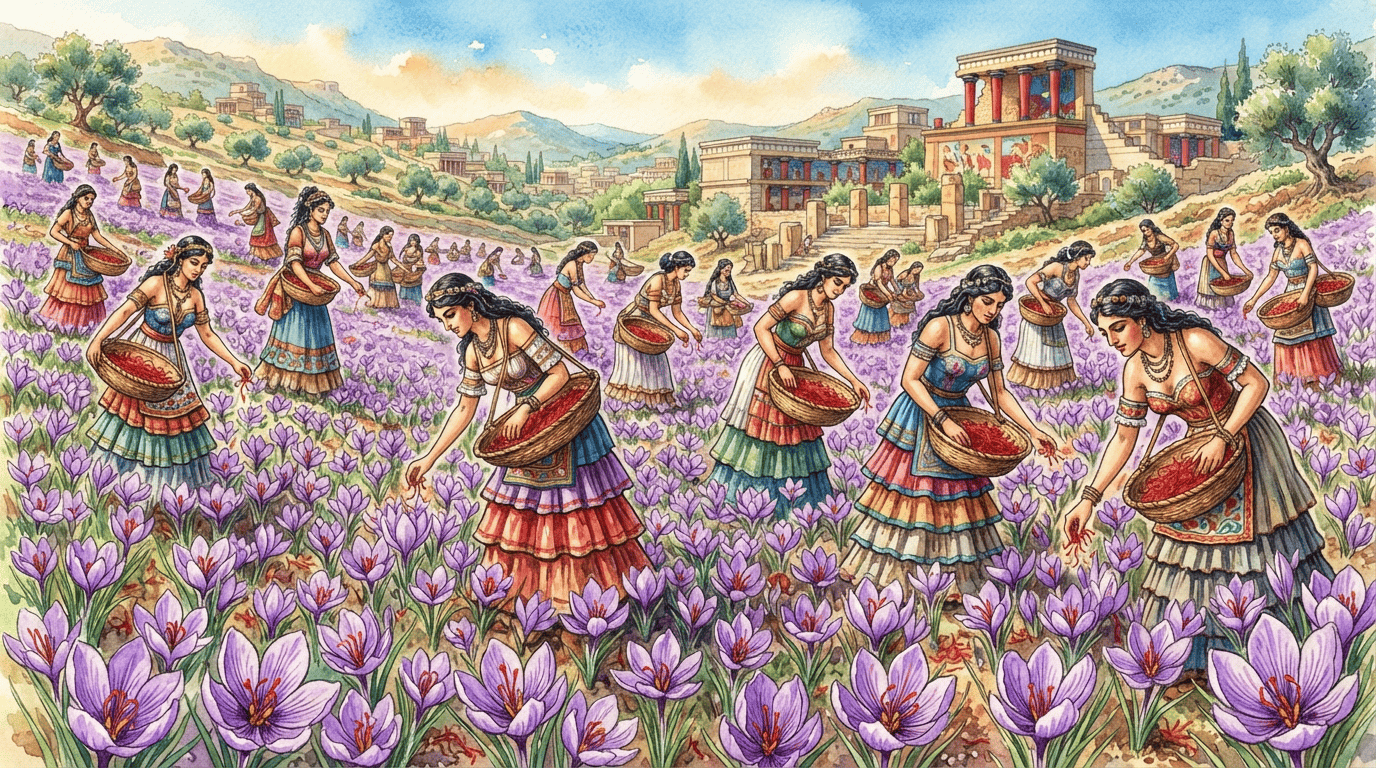
Crocus sativus is a sterile triploid cultigen, presumably derived from the wild Crocus cartwrightianus of the eastern Mediterranean, and has been cultivated in the region for over 3,500 years. Frescos in the Minoan palace of Knossos in Crete (c. 1500 BCE) show women harvesting saffron, and Mycenaean Greek Linear B tablets list it as a traded commodity. Its dried red-orange stigmas — three per flower — are the source of saffron, both the world's most expensive spice (around $5,000–$10,000 per kilogram retail) and a natural dye used historically to color Buddhist monks' robes.
Producing one kilogram of saffron requires hand-harvesting and hand-separating the stigmas from approximately 150,000 flowers. Iran now produces about 90% of the global supply, with Spain, Kashmir, Morocco, and Italy supplying most of the remainder. Moderately toxic to pets.
Cleopatra bathed in saffron-infused water for its golden glow. The plant is a sterile mutant — it cannot reproduce sexually and every saffron crocus alive today is a clone, propagated by hand-dividing corms. This means every corm traces back to a single ancient mutation, likely in Bronze Age Crete or Persia.
Symbolism & meaning
What It Symbolizes
Saffron Crocus is preciousness distilled — three crimson stigmas per flower, hand-plucked at dawn, more valuable by weight than gold for the saffron they yield. From Persian rice to Milanese risotto to Moroccan tagine, it has flavored civilizations and dyed royal cloth. It is the small autumn bulb that taught humanity how much rarity, beauty, and labor can be folded into a single colored thread.
- Preciousness — More valuable than gold by weight, saffron represents rare, concentrated worth
Where the Name Comes From
Crocus from Greek 'krokos' (saffron/thread), for the thread-like stigmas. Sativus means 'cultivated,' as it exists only in cultivation.
Uses & Fun Facts
- Crimson stigmas hand-harvested as the world's most expensive spice
- Stigmas yield natural golden dye for textiles and food
- Lavender autumn-blooming bulb for rock gardens and edging
Related plants
More Crocus plants
Plants with similar care
 Mexican AbeliaAbelia floribunda
 Fraser FirAbies fraseri
 Paperbark MapleAcer griseum
 Sugar MapleAcer saccharum
Frequently asked questions
How often should I water Saffron Crocus?
In summer, water about every 30 days; in winter, about every 30 days. Adjust for heat, pot size and drainage.
How much light does Saffron Crocus need?
Full sun: 6+ hrs direct. Watch the leaves — scorching or stretching means the light needs adjusting.
Is Saffron Crocus toxic to cats or dogs?
Pets Moderate (Dogs Moderate · Cats Moderate) Educational information, not medical or veterinary advice. If exposure is suspected, contact a doctor or veterinarian.
Is Saffron Crocus easy to grow?
It is moderately demanding: a good choice once you have a little experience.
When does Saffron Crocus bloom?
It typically blooms Oct–Nov in the Northern Hemisphere.
YardMate
Identify any plant in seconds
Snap a photo — YardMate names the plant, diagnoses problems, and reminds you when to water.
Download on the App Store