 YardMate


Chives
Allium schoenoprasum
Easy · Beginner friendlyAbout Chives
Allium schoenoprasum, chives, is a clump-forming perennial herb with slender, hollow, grass-like leaves and spherical purple-pink flower heads. The mildest member of the onion family, chives add a delicate onion flavor to eggs, potatoes, cream cheese, and soups. Growing 20–30 cm tall, they form tidy clumps that multiply over the years. The edible flower heads are beautiful in salads. Chives are the only Allium species found wild on both sides of the Atlantic — native to Europe, Asia, and North America. They are virtually pest-free and make excellent ornamental edging.
- Edible
How to care for Chives
Watering
- Springevery 3 days
- Summerevery 2 days
- Fallevery 4 days
- Winterevery 7 days
Soil · Well-draining
- Main mixLoam + coarse sand 3:175%
- DrainageGravel25%
Sharp drainage matters most — bulbs rot in wet soil while dormant.
FERTILIZER
Balanced Feed 14-14-14
An even feed covers all three needs at once, keeping leaves, roots and blooms moving together with nothing pushed out of balance.
- Nitrogen · Leaves
- Phosphorus · Roots + Blooms
- Potassium · Strength
- Springevery 21 days
- Summerevery 21 days
- Fallevery 30 days
At a Glance
- NativeEast Asia, North America
- Height1–1.5 ft (0.3–0.5 m)
- Spread0.5–1 ft (0.2–0.3 m)
- Flower colorPurple, Pink
- Foliage colorGreen
- SoilLoamy, Well-drained, Neutral
- LocationsYard · Balcony
Fragrance
LIGHT FRAGRANCE
Mild onion aroma from crushed leaves.
Toxicity
Pets Toxic
n-propyl disulfide and organosulfur compounds
Not reported
EXPOSURE No exposure route is reported.
EFFECT Widely consumed culinary herb.
NOTE No human toxicity is reported in this catalog; avoid eating ornamental plants unless confirmed edible.
Moderate
- All
- Ingestion
EXPOSURE Eating any part of the plant.
EFFECT Vomiting, weakness, hemolytic anemia with sustained ingestion and allium species all toxic to dogs.
NOTE ASPCA lists all Allium species as toxic to dogs and cats. Keep culinary scraps away from pets.
Toxic
- All
- Ingestion
EXPOSURE Eating any part of the plant.
EFFECT Hemolytic anemia and cats particularly vulnerable to Allium toxicity.
NOTE ASPCA lists all Allium species as toxic to dogs and cats. Keep culinary scraps away from pets.
Educational information, not medical or veterinary advice. If exposure is suspected, contact a doctor or veterinarian.
DISTRIBUTION

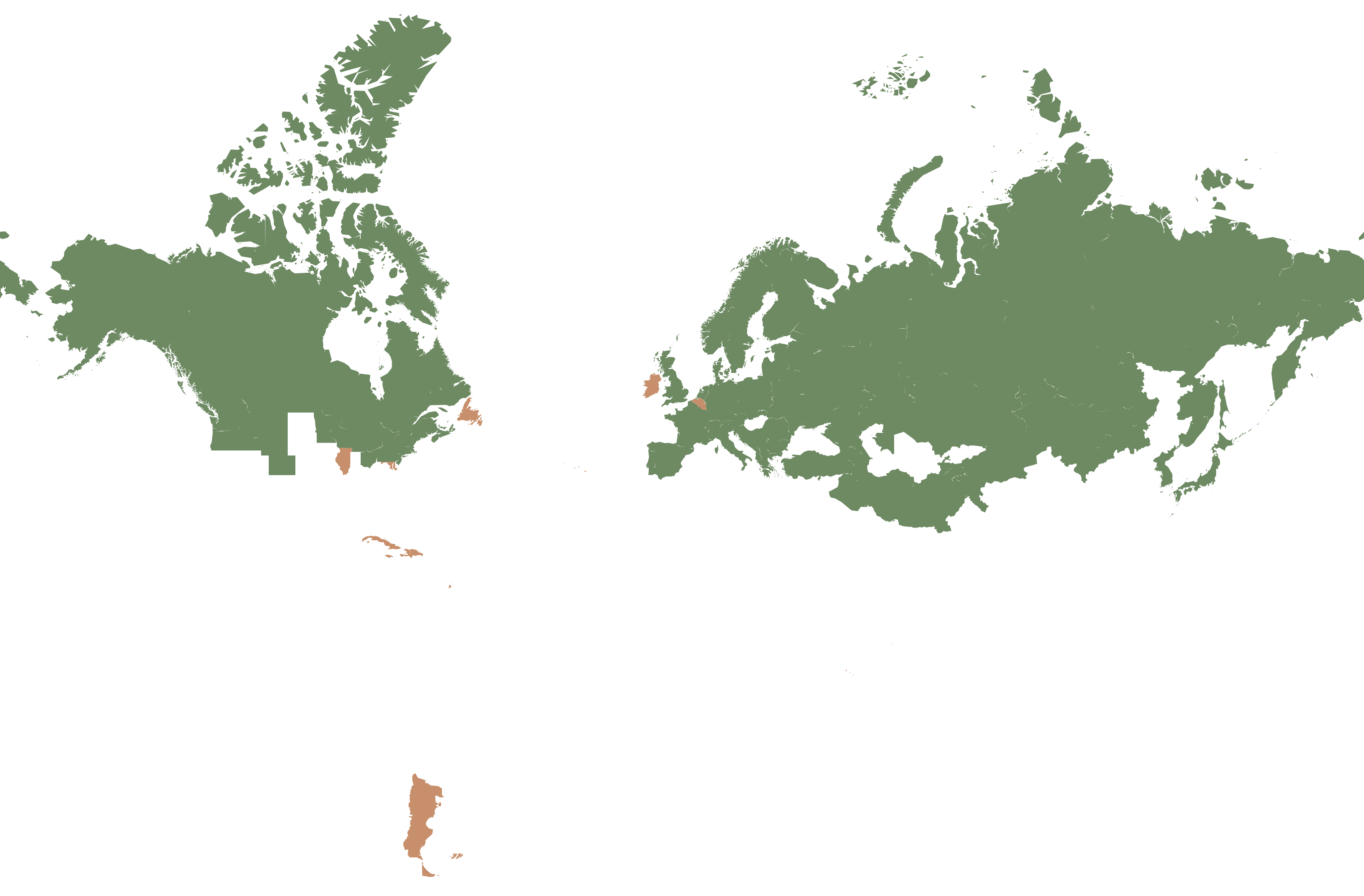
- Native
- Introduced
- East Asia
- North America
History

Allium schoenoprasum has an unusually broad native range, with wild populations across temperate Europe, Asia, and North America — making it one of the few culinary herbs genuinely native to both Old and New Worlds. Chinese cultivation is documented from around 3000 BCE. Roman soldiers carried it across Europe, and Marco Polo commented on its widespread use in Asia during his 13th-century travels.
Medieval European monastery gardens grew it, and it is recorded in Charlemagne's Capitulare de villis (8th century) among plants required on imperial estates. It is central to the classical French "fines herbes" combination (chives, parsley, tarragon, chervil) foundational to haute cuisine, and to Eastern European sour cream and potato traditions. Unlike the larger Alliums, chives retain a delicate flavor that survives raw application, making them signature garnishes.
They have been cultivated in Chinese gardens for at least 3,000 years. In companion planting, chives are planted around apple trees and rose bushes to deter aphids and reduce black spot. Romanian folklore says that bundles of chives hung over doorways repel evil spirits and disease. Chives are the only allium species native to both the Old and New Worlds — a circumpolar distribution that traces back to when the Bering land bridge connected the continents.
Symbolism & meaning
What It Symbolizes
Chives speak of usefulness, that quiet Victorian virtue assigned to plants whose value lies in daily service. A humble herb that improves nearly everything it touches, chives have flavored European kitchens for over five thousand years without seeking glory. In the language of flowers, their lavender pompoms remind us that the most beloved garden companions are often those that ask little and give much.
- Usefulness — A humble herb that improves everything it touches, representing practical value
Where the Name Comes From
Allium is the Latin name for garlic. Schoenoprasum from Greek 'schoinos' (rush) and 'prason' (leek) — rush-leek.
Uses & Fun Facts
- Small clumps keep a kitchen herb harvest close on sunny balconies
Related plants
More Allium plants
 Common OnionAllium cepa
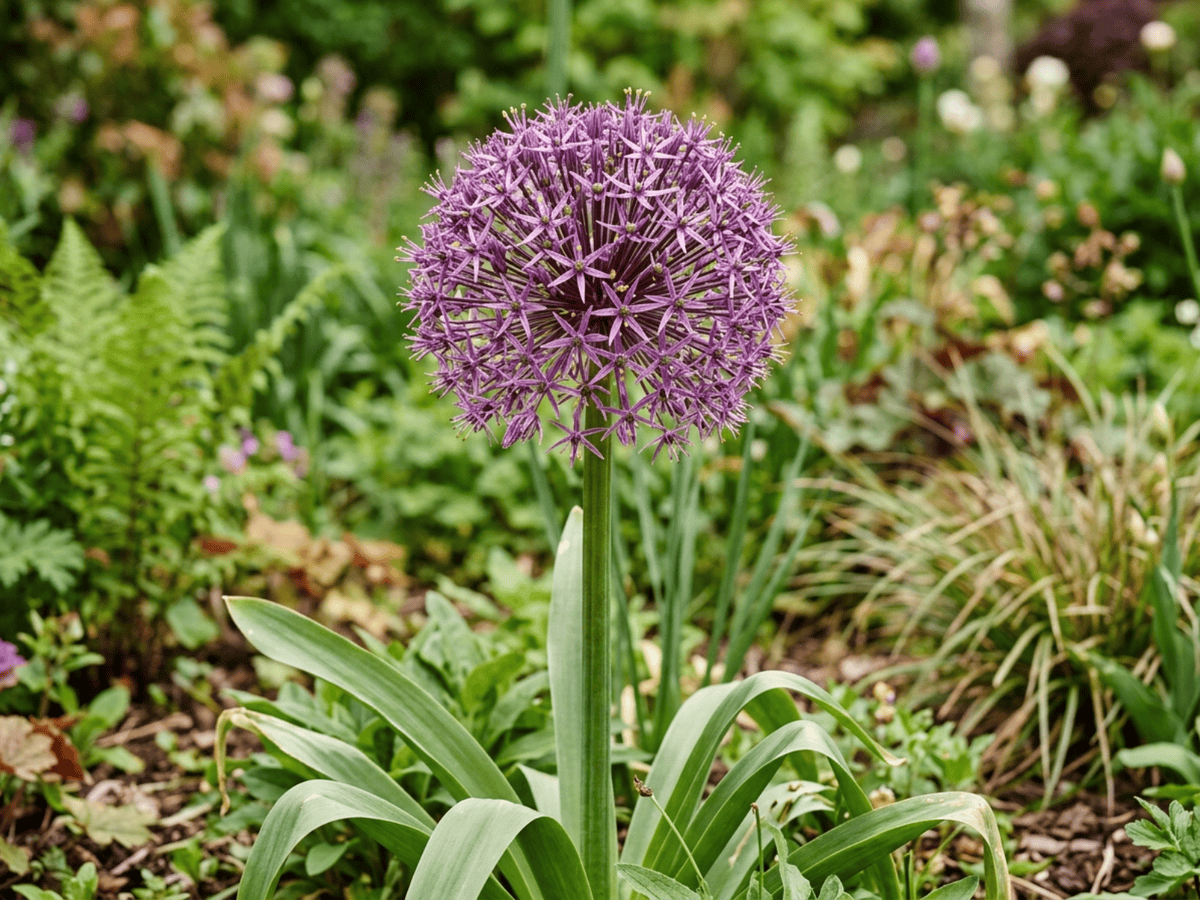 Star Of PersiaAllium christophii
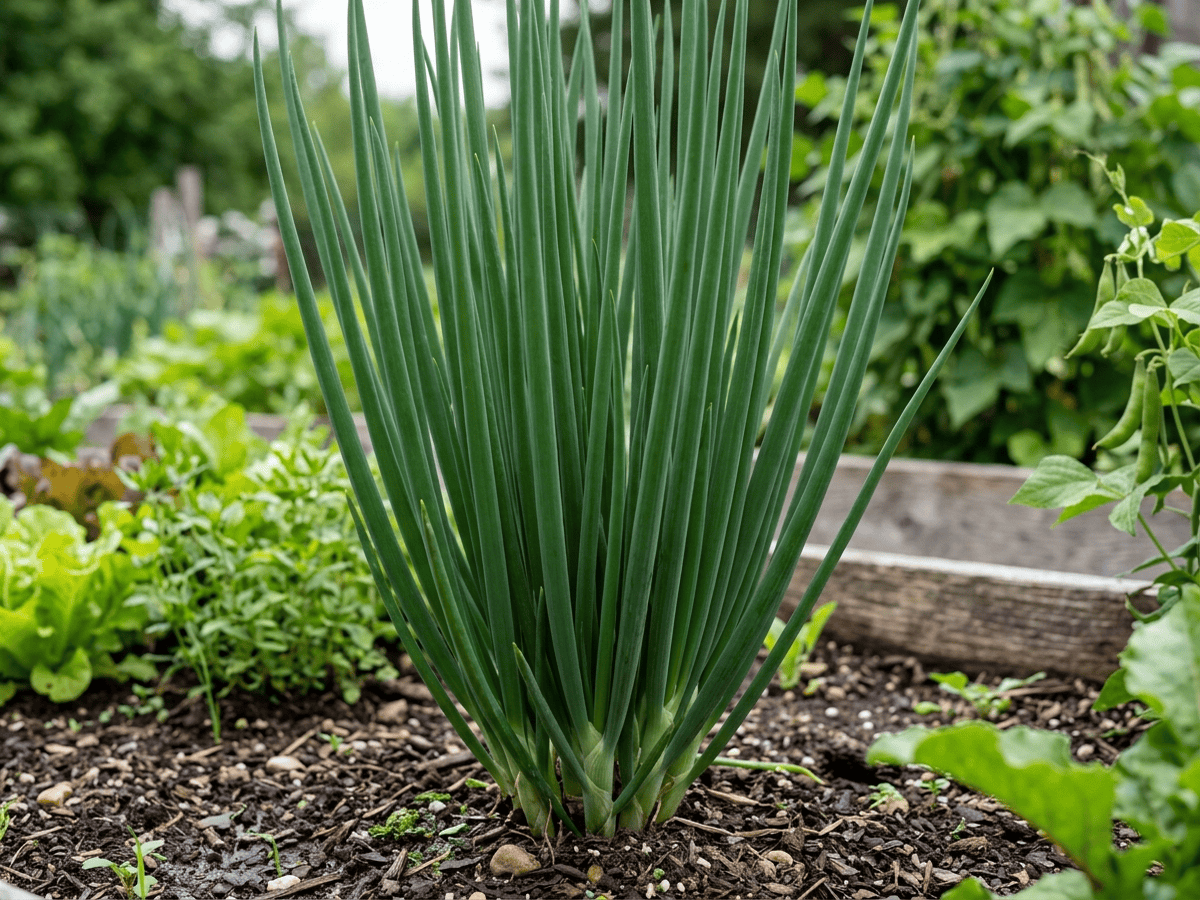 Welsh OnionAllium fistulosum
 Turkistan OnionAllium karataviense
Plants with similar care
 Chinese AbeliaAbelia chinensis
 Fragrant AbeliaAbelia mosanensis
 Large-Flowered AbeliaAbelia uniflora
 Glossy AbeliaAbelia x grandiflora
Frequently asked questions
How often should I water Chives?
In summer, water about every 2 days; in winter, about every 7 days. Adjust for heat, pot size and drainage.
How much light does Chives need?
Full sun: 6+ hrs direct. Watch the leaves — scorching or stretching means the light needs adjusting.
Is Chives toxic to cats or dogs?
Pets Toxic (Dogs Moderate · Cats Toxic) Educational information, not medical or veterinary advice. If exposure is suspected, contact a doctor or veterinarian.
Is Chives easy to grow?
Yes — it is considered an easy, beginner-friendly plant.
YardMate
Identify any plant in seconds
Snap a photo — YardMate names the plant, diagnoses problems, and reminds you when to water.
Download on the App Store