 YardMate


Garden Nasturtium
Tropaeolum majus
Easy · Beginner friendlyAbout Garden Nasturtium
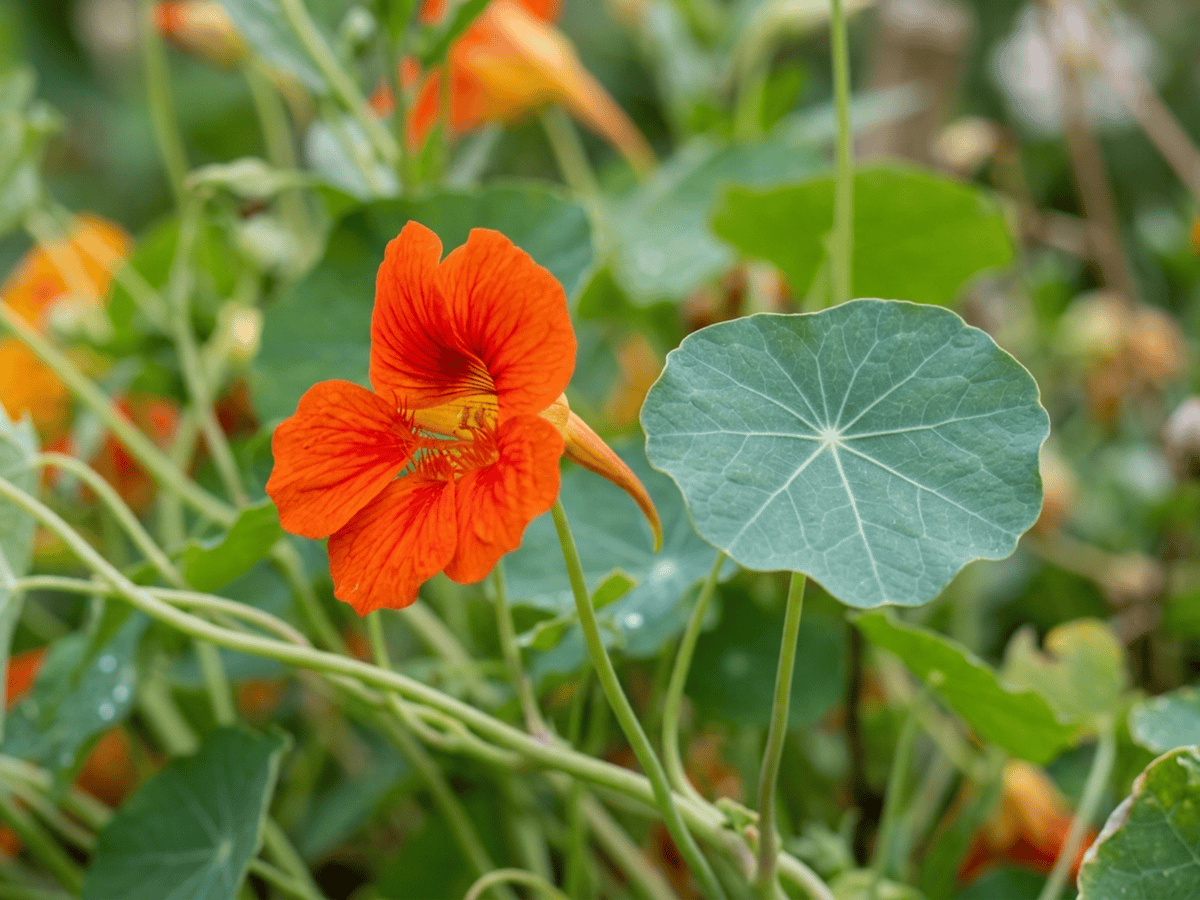
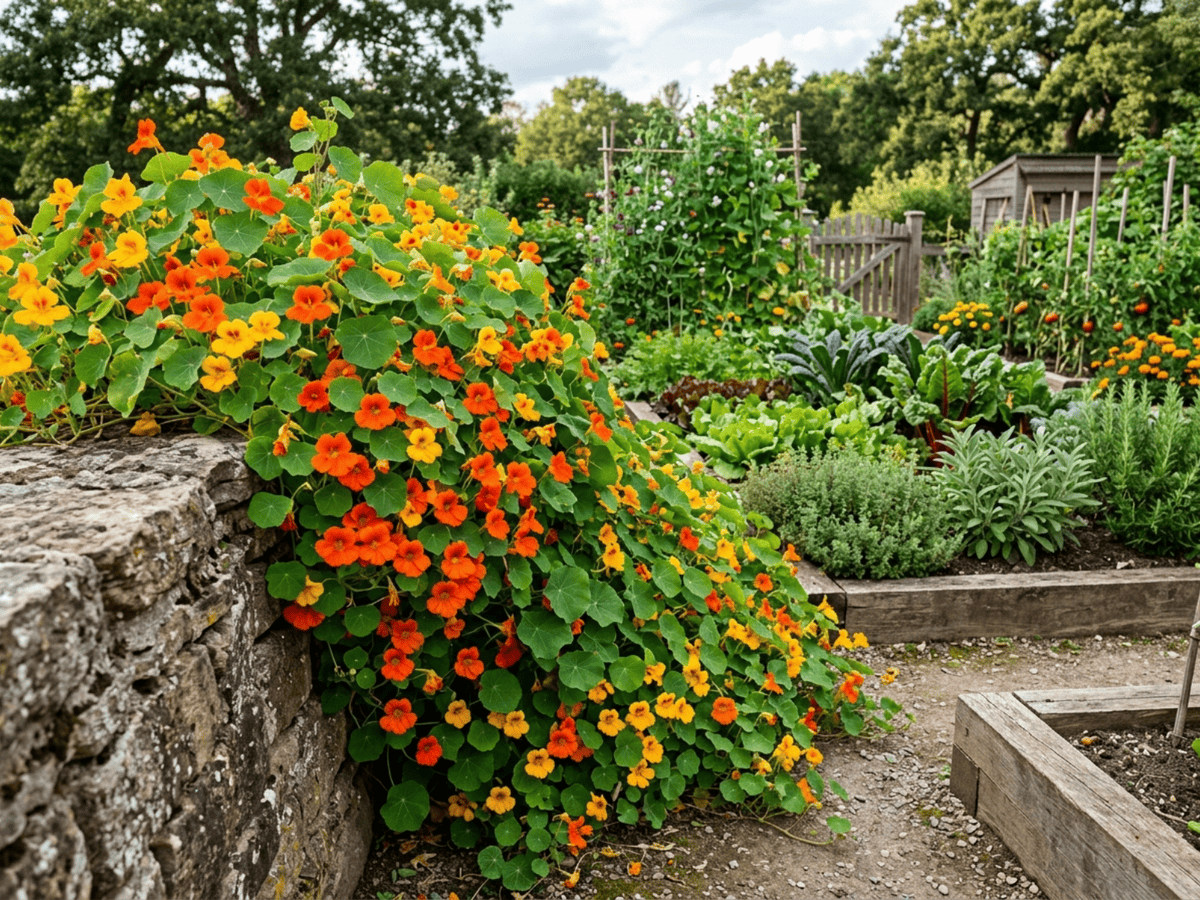
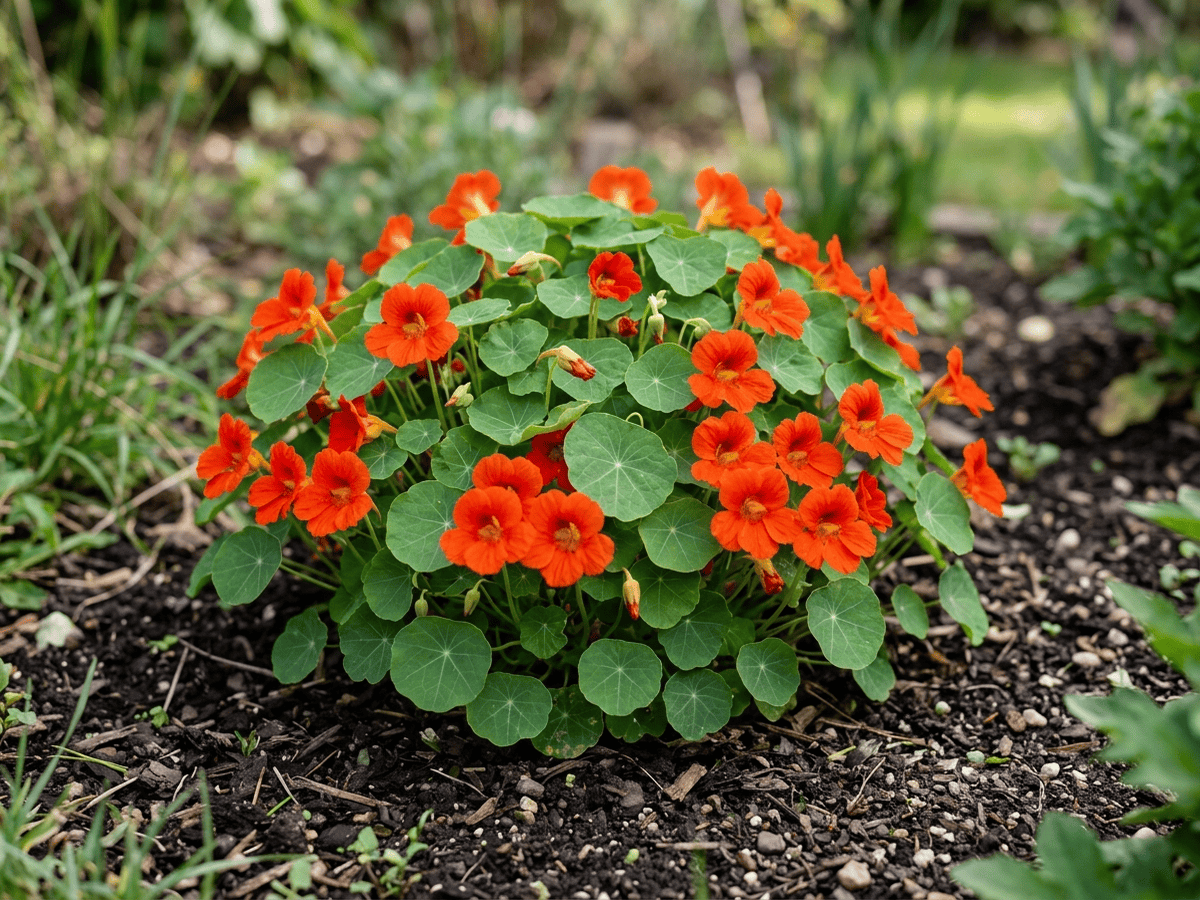
Tropaeolum majus, commonly known as nasturtium, is a cheerful, fast-growing annual native to the Andes of South America, from Colombia to Bolivia. It produces bright, funnel-shaped flowers in warm shades of orange, yellow, red, and bicolor combinations, each with a distinctive nectar spur at the back. The round, shield-shaped leaves resemble miniature lily pads and are equally ornamental with their blue-green color and prominent radiating veins. Both the flowers and leaves are entirely edible, with a peppery, watercress-like flavor that adds color and zest to salads. The unripe seed pods can be pickled as a caper substitute. Nasturtiums are one of the best companion plants for vegetable gardens, attracting aphids away from crops as a trap plant while simultaneously deterring whiteflies and squash bugs. They thrive in poor soil — rich soil produces lush foliage at the expense of flowers. Trailing varieties can spread 2 meters, while bush types stay compact at 30 centimeters.
- Edible
- Pollinator-friendly
How to care for Garden Nasturtium
Watering
- Springevery 3 days
- Summerevery 2 days
- Fallevery 5 days
- Winterpause watering
Soil · Well-draining
- Top dressingPine bark mulch10%
- Main mixPotting soil + perlite 2:170%
- DrainageLECA / gravel20%
Never skip the drainage layer — standing water is the top cause of root rot.
FERTILIZER
This plant needs little to no feeding.
At a Glance
- NativeSouth America
- Height1–10 ft (0.3–3 m)
- Spread1–3 ft (0.3–0.9 m)
- Flower colorOrange, Yellow, Red, Cream
- Foliage colorGreen, Variegated
- SoilWell-drained, Sandy, Loamy
- LocationsYard · Balcony
Bloom time
BLOOM CYCLE
Peak bloom
Jun–Nov
Orange-red-yellow flowers summer to frost; grow in lean soil for best bloom
Fragrance
LIGHT FRAGRANCE
Slightly peppery scent; not notable floral fragrance.
Toxicity
Pets Slight
glucotropaeolin (mustard oil glucoside)
Not reported
EXPOSURE No exposure route is reported.
EFFECT Entire plant edible.
NOTE No human toxicity is reported in this catalog; avoid eating ornamental plants unless confirmed edible.
Slight
- Leaf
- Stem
- Flower
- Seed
- Ingestion
EXPOSURE Eating leaves, stems, flowers, and seeds.
EFFECT Mild GI upset possible.
NOTE ASPCA lists nasturtium as non-toxic, while NC State flags problem-for-dogs/cats/horses. Because the plant is edible, treat as low-level GI caution rather than moderate toxicity.
Slight
- Leaf
- Stem
- Flower
- Seed
- Ingestion
EXPOSURE Eating leaves, stems, flowers, and seeds.
EFFECT Mild GI upset possible.
NOTE ASPCA lists nasturtium as non-toxic, while NC State flags problem-for-dogs/cats/horses. Because the plant is edible, treat as low-level GI caution rather than moderate toxicity.
Educational information, not medical or veterinary advice. If exposure is suspected, contact a doctor or veterinarian.
DISTRIBUTION


- Native
- Introduced
- South America
History
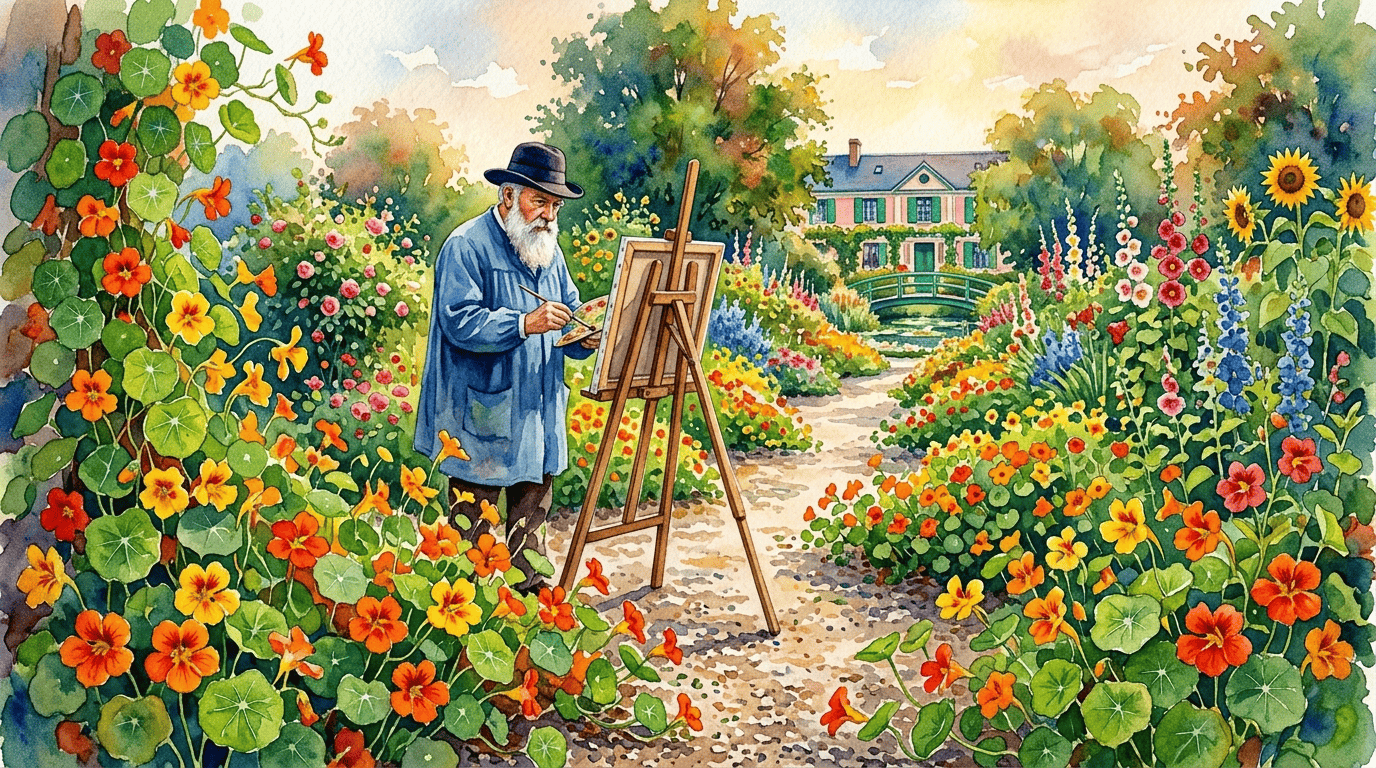
Tropaeolum majus is native to the Andes of South America — Peru, Ecuador, Colombia, and Bolivia — where it was cultivated by Indigenous peoples as both an ornamental and a culinary plant well before European contact. Spanish conquistadors and colonial botanists introduced it to Spain and thence to wider Europe in the mid-16th century, where it became a fixture of cottage-garden and kitchen-garden planting under the names "Indian cress" and "nasturtium" (the latter borrowed from an unrelated Old World watercress genus, due to similar peppery flavor). The entire aboveground plant is edible: the flowers add a vibrant orange-yellow garnish with a slightly sweet spicy taste, the young leaves have a distinctly peppery watercress flavor, and the unripe green seed pods can be pickled as a caper substitute. Nasturtiums were a favorite plant of Impressionist painter Claude Monet, who planted a famous central path of them at his Giverny garden, over which they were allowed to spill and sprawl for the warmest months; the motif appears in many of his late paintings.
The plant also plays a role in companion-planting tradition as a supposed trap crop for aphids, though evidence for such effects is mixed. In Europe, they were initially grown as an exotic ornamental before their culinary uses were appreciated. King Louis XIV of France grew them in the royal gardens at Versailles.
The plant produces natural antibiotics — its mustard oil compounds are being studied for their antimicrobial properties. Thomas Jefferson grew eight varieties at Monticello and frequently served the flowers in salads.
Symbolism & meaning
What It Symbolizes
Garden Nasturtium suggests Victory — its very name comes from the Latin for trophy poles, on which Romans hung the captured arms of defeated enemies. Its red and gold blooms also carry Patriotism in many gardens, evoking national flags through bold color combinations. A flower whose every petal echoes an ancient idea of triumph.
- Victory — Named after trophy poles, the bright flowers represent triumph and conquest
- Patriotism — Its bold red and gold flowers evoke pride and national spirit
Where the Name Comes From
'Tropaeolum' from Greek 'tropaion' (trophy) — Linnaeus thought the round leaves resembled shields and the flowers helmets on a trophy pole. 'Majus' means 'larger' in Latin, distinguishing it from smaller species.
Uses & Fun Facts
- Peppery leaves and flowers add zest to salads
- Round leaves and warm-hued blooms tumble through borders
- Trailing habit perfect for hanging baskets and pots
- Spurred flowers feed hummingbirds and long-tongued bees
Related plants
More Tropaeolum plants

Plants with similar care
 Chinese AbeliaAbelia chinensis
 Fragrant AbeliaAbelia mosanensis
 Large-Flowered AbeliaAbelia uniflora
 Glossy AbeliaAbelia x grandiflora
Frequently asked questions
How often should I water Garden Nasturtium?
Water about every 3 days during the growing season, and always let excess water drain away.
How much light does Garden Nasturtium need?
Full sun: 6+ hrs direct. Watch the leaves — scorching or stretching means the light needs adjusting.
Is Garden Nasturtium toxic to cats or dogs?
Pets Slight (Dogs Slight · Cats Slight) Educational information, not medical or veterinary advice. If exposure is suspected, contact a doctor or veterinarian.
Is Garden Nasturtium easy to grow?
Yes — it is considered an easy, beginner-friendly plant.
When does Garden Nasturtium bloom?
It typically blooms Jun–Nov in the Northern Hemisphere.
YardMate
Identify any plant in seconds
Snap a photo — YardMate names the plant, diagnoses problems, and reminds you when to water.
Download on the App Store