 YardMate


Garlic
Allium sativum
Easy · Beginner friendlyAbout Garlic
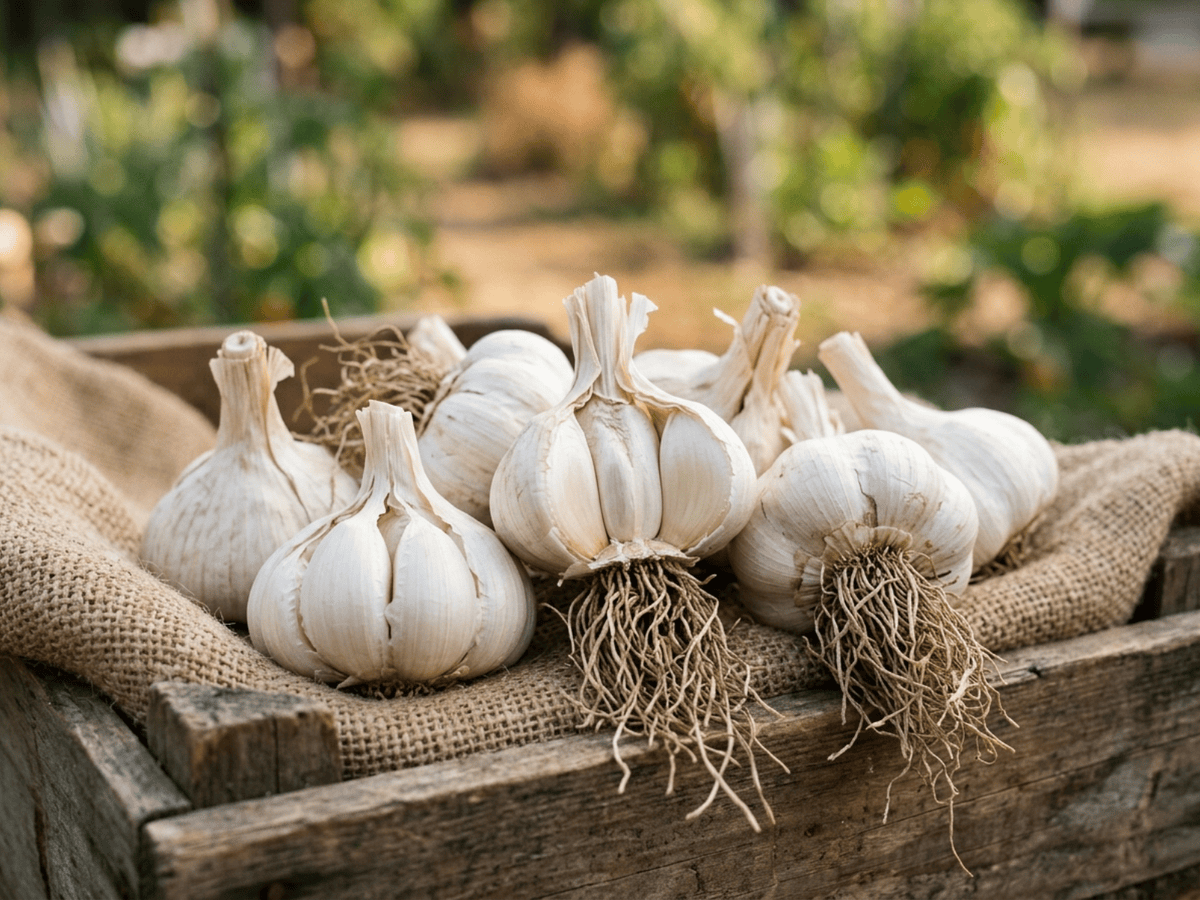
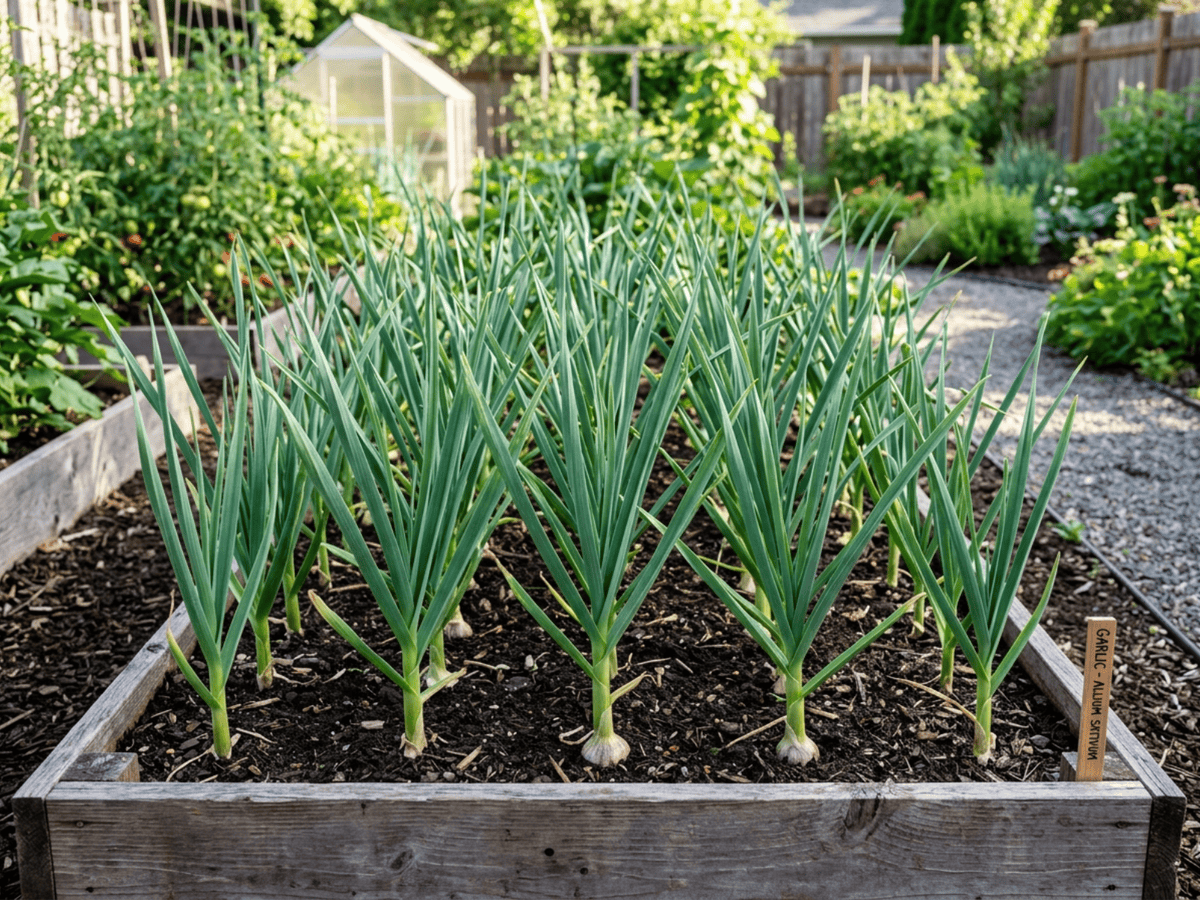
Allium sativum, garlic, is a bulbous perennial grown as an annual and one of humanity's indispensable flavor plants. Native to Central Asia, it has been cultivated for at least 5,000 years. A bulb divides into cloves, each able to form a new plant; hardneck types produce edible curling scapes, while softneck types store well and dominate supermarkets. Garlic is planted in autumn or early spring, then harvested in midsummer after the foliage begins to dry. Its crushed cloves release allicin and other sulfur compounds that shape its pungent aroma and long-standing food and herbal reputation. From Mediterranean sauces to East Asian stir-fries and black garlic fermentation, few plants have carried so much flavor through so many kitchens.
- Edible
- Medicinal
- Fragrant
- Cold-hardy
How to care for Garlic
Watering
- Springevery 3 days
- Summerevery 2 days
- Fallevery 4 days
- Winterevery 7 days
Soil · Well-draining
- Main mixLoam + coarse sand 3:175%
- DrainageGravel25%
Sharp drainage matters most — bulbs rot in wet soil while dormant.
FERTILIZER
Bulb Feed 3-5-3
With bulbs, when matters more than what. One dose goes in the hole at planting, the second when shoots break ground.
- Nitrogen · Leaves
- Phosphorus · Roots + Blooms
- Potassium · Strength
- Springevery 21 days
- Summerevery 21 days
- Fallevery 30 days
At a Glance
- NativeWestern Asia
- Height1–2 ft (0.3–0.6 m)
- Spread0.5–1 ft (0.2–0.3 m)
- Foliage colorGreen
- SoilLoamy, Well-drained, Rich
- LocationsYard · Indoor · Balcony
Fragrance
STRONG FRAGRANCE
Intense pungent sulfur aroma from allicin, released on crushing.
Toxicity
Pets Toxic
allicin, diallyl sulfide, and organosulfur compounds
Not reported
EXPOSURE No exposure route is reported.
EFFECT Widely consumed, gI irritation at extreme doses, and mild anticoagulant effect relevant to surgical patients.
NOTE No human toxicity is reported in this catalog; avoid eating ornamental plants unless confirmed edible.
Toxic
- All
- Ingestion
EXPOSURE Eating any part of the plant.
EFFECT Hemolytic anemia, more potent than onion per gram, and even small amounts cumulative.
NOTE ASPCA lists all Allium species as toxic to dogs and cats; garlic more toxic per gram than onion.
Toxic
- All
- Ingestion
EXPOSURE Eating any part of the plant.
EFFECT Hemolytic anemia and cats especially vulnerable.
NOTE ASPCA lists all Allium species as toxic to dogs and cats; garlic more toxic per gram than onion.
Educational information, not medical or veterinary advice. If exposure is suspected, contact a doctor or veterinarian.
DISTRIBUTION


- Native
- Introduced
- Western Asia
History

Allium sativum is a fully cultivated species with no confirmed wild population; its closest wild relative, A. longicuspis, grows in Tien Shan of central Asia and is considered the likely ancestor. Garlic has been grown for at least 7,000 years. It featured in Egyptian workers' rations during pyramid construction — a clay tablet from Tell el-Amarna records garlic and onion payments.
The Greek Hippocrates prescribed garlic for fatigue and infection, Roman soldiers ate it to boost courage and dedicated it to Mars god of war, and Pliny the Elder recorded 61 ailments treated with garlic. Medieval European plague medicine used garlic as antibacterial prophylaxis — "Four Thieves Vinegar" of the 14th century featured garlic alongside other herbs. Garlic's antimicrobial activity from allicin is genuinely substantial and was documented by Louis Pasteur and by WWI British army researchers.
WWII Russian medics used garlic on wounds when antibiotics ran out. The modern "stinking rose" garlic-appreciation tradition, the annual Gilroy Garlic Festival in California (launched 1979), and black garlic fermentation (Korean/Japanese origin, popularized globally in the 2000s) represent recent cultural elaborations. Garlic was found in Tutankhamun's tomb and fed to Egyptian pyramid builders for stamina. In medieval Europe it warded off plague (and vampires). Louis Pasteur documented its antibacterial properties in 1858. Today it is the world's most consumed herbal supplement.
Symbolism & meaning
What It Symbolizes
Garlic is protection made edible. Across cultures it has hung in kitchens, guarded doorways in folklore, and become the first fragrance in countless pans of hot oil. Its symbolism is earthy courage: a humble bulb that turns sharpness into warmth and makes ordinary food feel defended, generous, and alive.
- Protection — From warding off vampires to fighting infection, garlic is the universal symbol of protective strength
- Vitality — Fed to warriors and labourers throughout history, garlic represents enduring vigour and health
Where the Name Comes From
Allium is Latin for garlic; 'sativum' means cultivated. The English 'garlic' comes from Old English 'garleac' — 'gar' (spear) + 'leac' (leek), describing the spear-shaped leaves.
Uses & Fun Facts
- Pungent bulb cloves used worldwide as essential culinary seasoning
- Long-standing folk remedy for circulation, colds, and immune support
- Pinkish-white globe umbels draw bees when allowed to bolt
Related plants
More Allium plants
 Common OnionAllium cepa
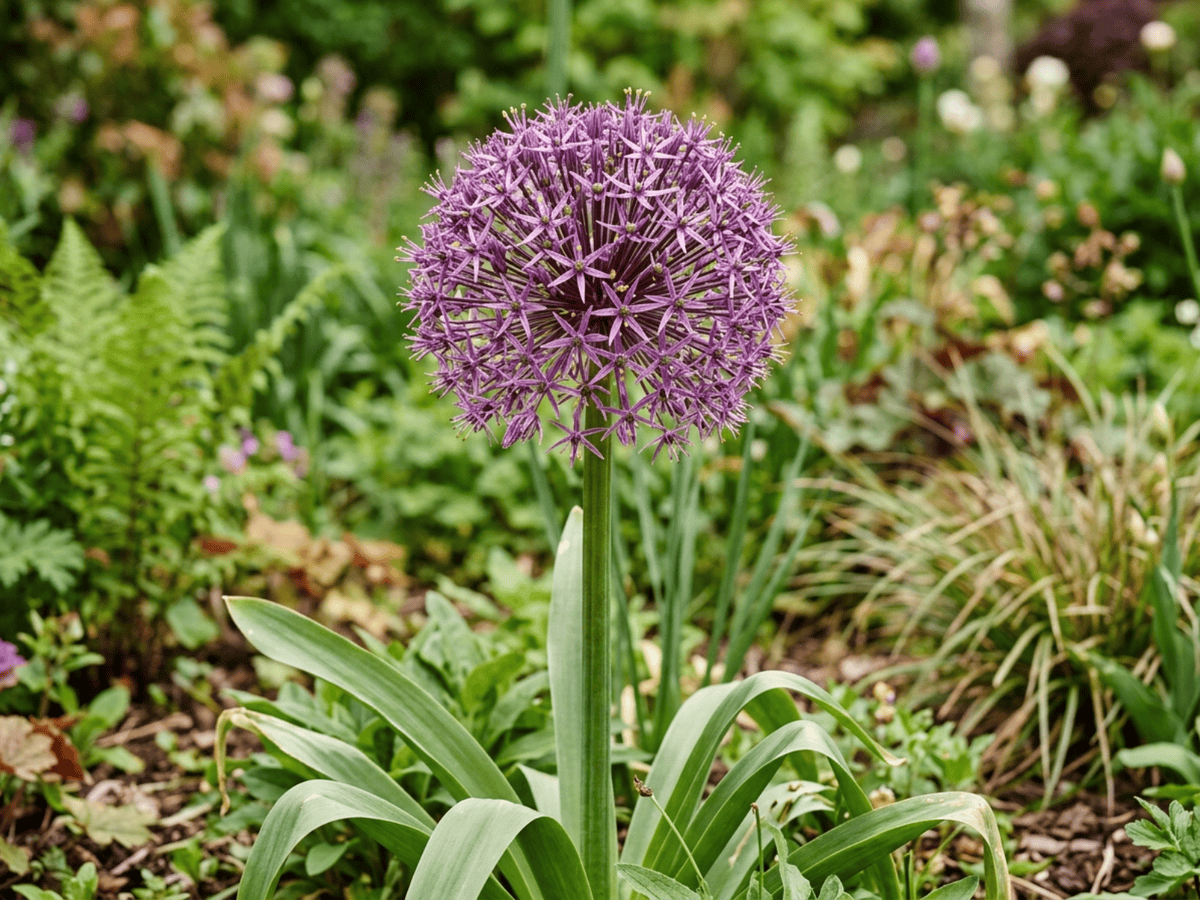 Star Of PersiaAllium christophii
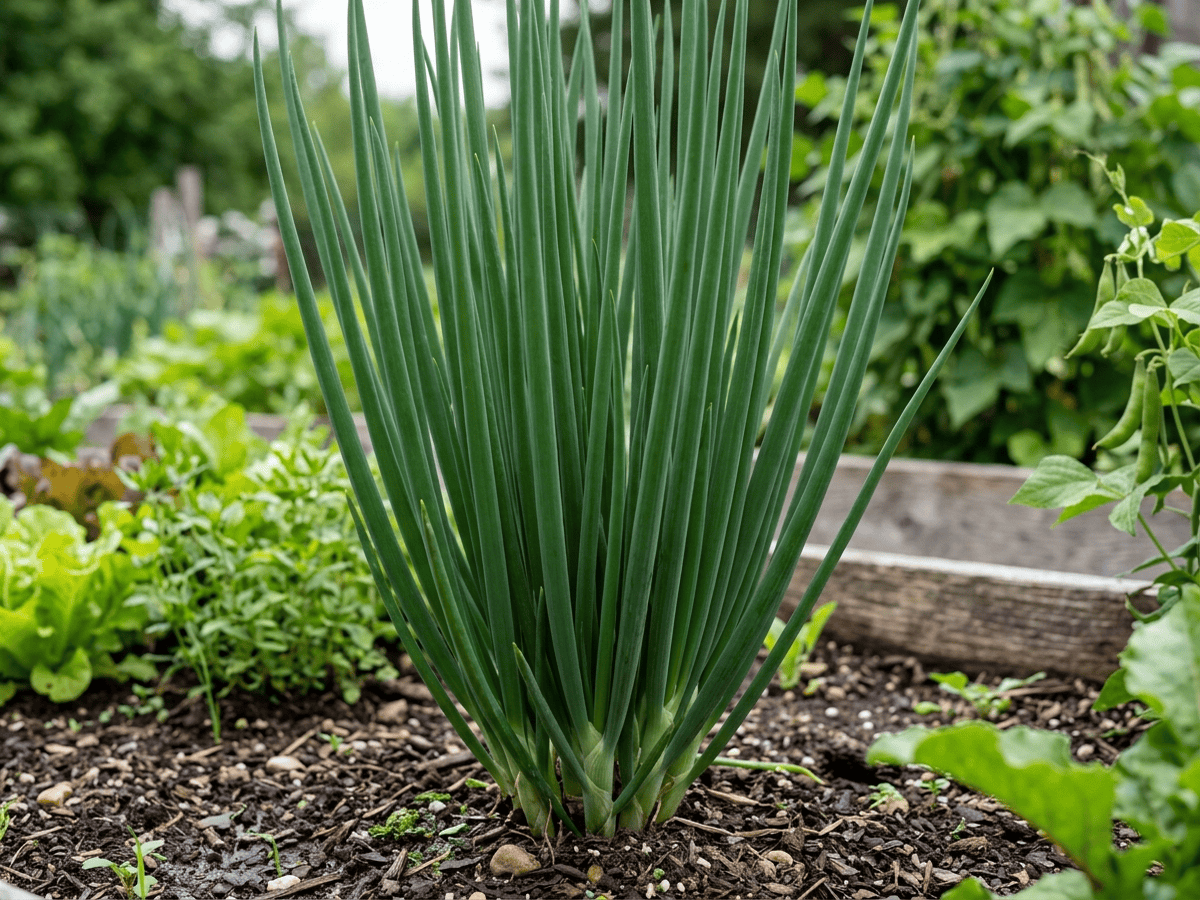 Welsh OnionAllium fistulosum
 Turkistan OnionAllium karataviense
Plants with similar care
 Chinese AbeliaAbelia chinensis
 Fragrant AbeliaAbelia mosanensis
 Large-Flowered AbeliaAbelia uniflora
 Glossy AbeliaAbelia x grandiflora
Frequently asked questions
How often should I water Garlic?
In summer, water about every 2 days; in winter, about every 7 days. Adjust for heat, pot size and drainage.
How much light does Garlic need?
Full sun: 6+ hrs direct. Watch the leaves — scorching or stretching means the light needs adjusting.
Is Garlic toxic to cats or dogs?
Pets Toxic (Dogs Toxic · Cats Toxic) Educational information, not medical or veterinary advice. If exposure is suspected, contact a doctor or veterinarian.
Is Garlic easy to grow?
Yes — it is considered an easy, beginner-friendly plant.
Can Garlic be grown indoors?
Yes, it adapts well to indoor growing given the right light.
YardMate
Identify any plant in seconds
Snap a photo — YardMate names the plant, diagnoses problems, and reminds you when to water.
Download on the App Store