 YardMate

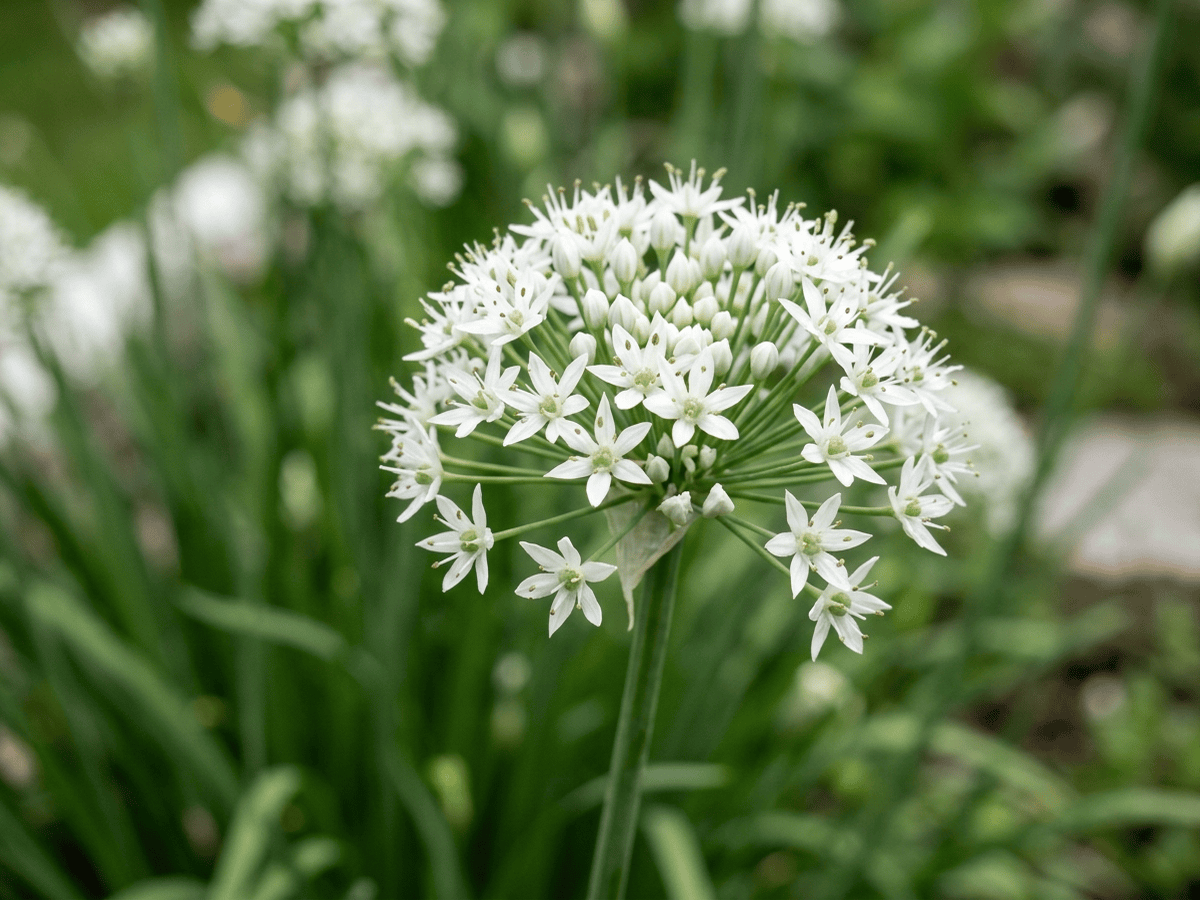


Garlic Chives
Allium tuberosum
Easy · Beginner friendlyAbout Garlic Chives
Garlic Chives or Chinese Chives is an East Asian perennial herb reaching 12-18 inches tall, with flat grass-like garlic-flavored leaves used widely in Chinese, Korean, and Vietnamese cuisine. From mid-summer through fall it produces clusters of pretty white star-shaped flowers atop stiff stems. Increasingly popular in American culinary gardens as Asian cooking grows in mainstream popularity. Self-seeds prolifically—deadhead before seed maturation.
- Edible
- Fragrant
- Pollinator-friendly
How to care for Garlic Chives
Watering
- Springevery 10 days
- Summerevery 10 days
- Fallevery 14 days
- Winterevery 30 days
Soil · Well-draining
- Main mixLoam + coarse sand 3:175%
- DrainageGravel25%
Sharp drainage matters most — bulbs rot in wet soil while dormant.
FERTILIZER
Balanced Feed 14-14-14
An even feed covers all three needs at once, keeping leaves, roots and blooms moving together with nothing pushed out of balance.
- Nitrogen · Leaves
- Phosphorus · Roots + Blooms
- Potassium · Strength
- Springevery 45 days
- Summerevery 45 days
At a Glance
- NativeEast Asia
- Height1–2 ft (0.3–0.6 m)
- Spread0.5–1 ft (0.2–0.3 m)
- Flower colorWhite
- Foliage colorDark-green
- SoilLoamy, Well-drained, Neutral
- LocationsYard · Balcony
Bloom time
BLOOM CYCLE
Peak bloom
Jul–Nov
Clusters of white star-shaped flowers mid-summer through fall
Fragrance
MODERATE FRAGRANCE
Garlicky aroma from leaves; sweet honey scent from flowers.
Toxicity
Humans Slight · Pets Toxic
n-propyl disulfide and thiosulfates
Slight
- Leaf
- Bulb
- Flower
- Ingestion
EXPOSURE Eating leaves, bulbs, and flowers.
EFFECT Nausea, vomiting, and diarrhea if eaten in quantity.
NOTE Leaves, bulbs, and flowers are edible in culinary amounts, but NC State flags poisonous-to-humans ingestion symptoms. Allium species are severe hazards for dogs and cats.
Toxic
- Leaf
- Bulb
- Flower
- Ingestion
EXPOSURE Eating leaves, bulbs, and flowers.
EFFECT Hemolytic anemia, vomiting, and lethargy.
NOTE Leaves, bulbs, and flowers are edible in culinary amounts, but NC State flags poisonous-to-humans ingestion symptoms. Allium species are severe hazards for dogs and cats.
Toxic
- Leaf
- Bulb
- Flower
- Ingestion
EXPOSURE Eating leaves, bulbs, and flowers.
EFFECT Hemolytic anemia, vomiting, and lethargy.
NOTE Leaves, bulbs, and flowers are edible in culinary amounts, but NC State flags poisonous-to-humans ingestion symptoms. Allium species are severe hazards for dogs and cats.
Educational information, not medical or veterinary advice. If exposure is suspected, contact a doctor or veterinarian.
DISTRIBUTION

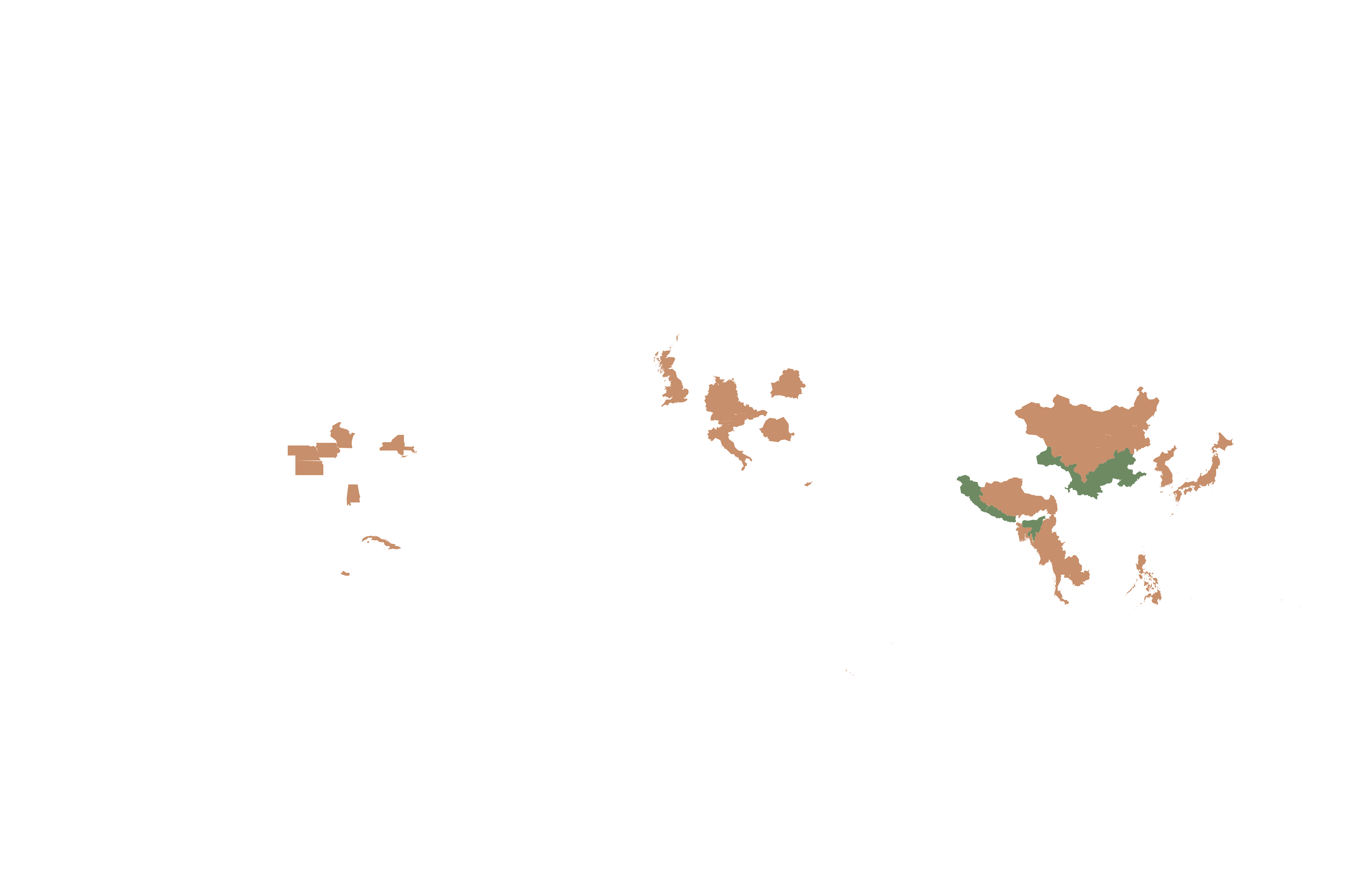
- Native
- Introduced
- East Asia
History
Allium tuberosum, commonly called garlic chives, Chinese chives, or jiucai in Mandarin, is a clumping perennial in the onion subfamily of the asparagus family (Amaryllidaceae) native to a broad area of East Asia including northern and central China, Mongolia, and the Russian Far East, though long cultivation across East Asia obscures the precise wild range. German botanist Johann Peter Rottler's manuscript was validly published by Kurt Sprengel in 1825. The epithet tuberosum refers to the thickened rhizome-like tuberous bulb bases.
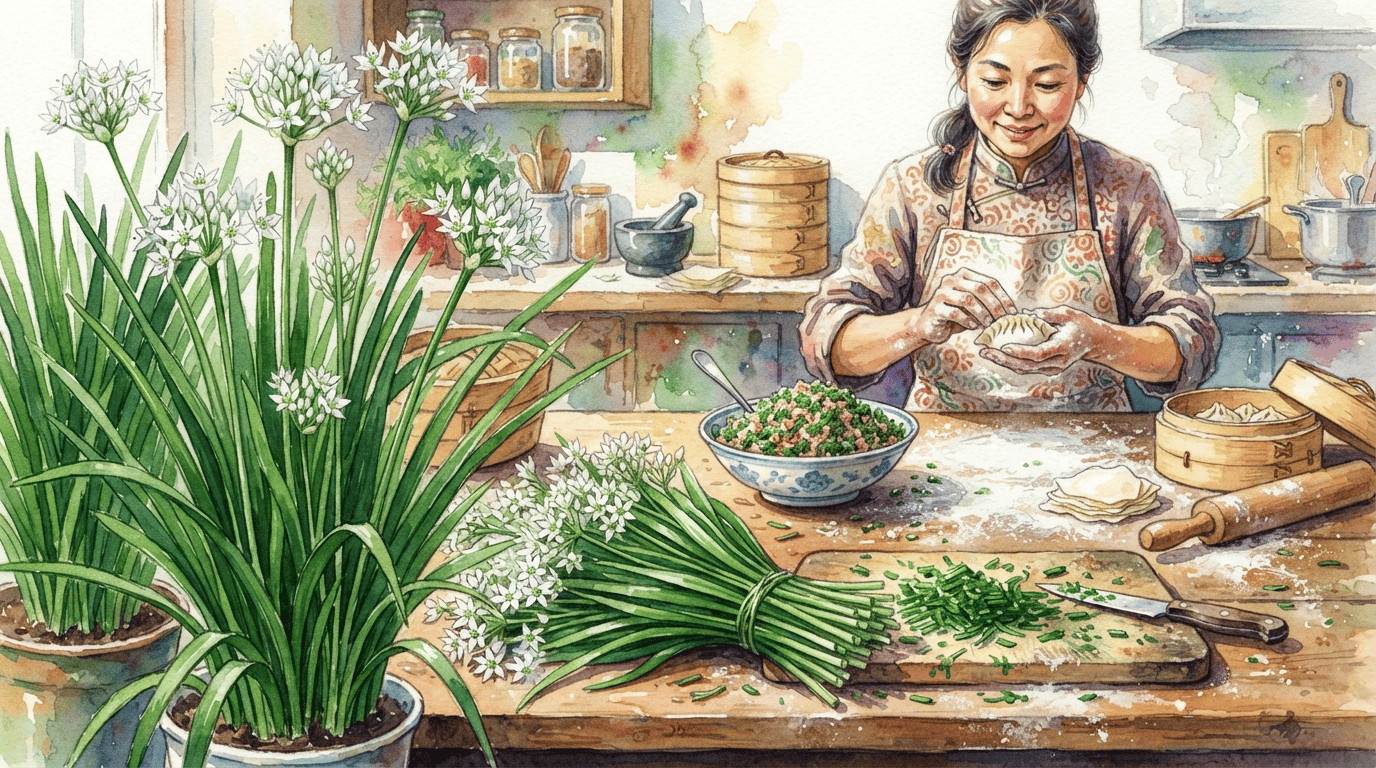
Plants form upright 30-45 cm tall clumps of flat narrow solid (not hollow) dark green leaves with distinctive garlicky flavor intermediate between onion and garlic, milder than either. In late summer flat-topped umbels of pure white starry fragrant flowers appear on upright stems, attractive to butterflies and often self-seeding. Cultivated throughout East Asia for at least 2500 years, used fresh or in jiaozi (dumplings), stir-fries, pancakes, and Korean jeon.
The flower buds and flowers are also edible. Native to China and Mongolia, cultivated for over 4,000 years. Essential ingredient in Chinese pork-and-chive dumplings, Korean bibimbap, and Vietnamese pho. Became widely available in American garden centers as Asian cooking entered the mainstream in the 1990s and 2000s.
Symbolism & meaning
What It Symbolizes
Garlic Chives speak of patience and heritage rooted in soil. As a long-lived perennial, it returns reliably each year, its starry white umbels arriving in late summer like a quiet annual promise. Behind that humble clump lies a 4,000-year-old Chinese culinary tradition — every snipped leaf carrying a thread of ancient kitchens forward into modern gardens.
- Patience — long-lived perennial returns each year
- Heritage — 4,000-year-old Chinese culinary tradition
Where the Name Comes From
'Allium' is the classical Latin name for garlic; 'tuberosum' refers to the small bulb-like base.
Uses & Fun Facts
- Garlic-flavored leaves and buds used in Asian cooking
- White star flowers carry a light sweet honey scent
- Late-summer umbels feed bees, hoverflies, and butterflies
Related plants
More Allium plants
 Common OnionAllium cepa
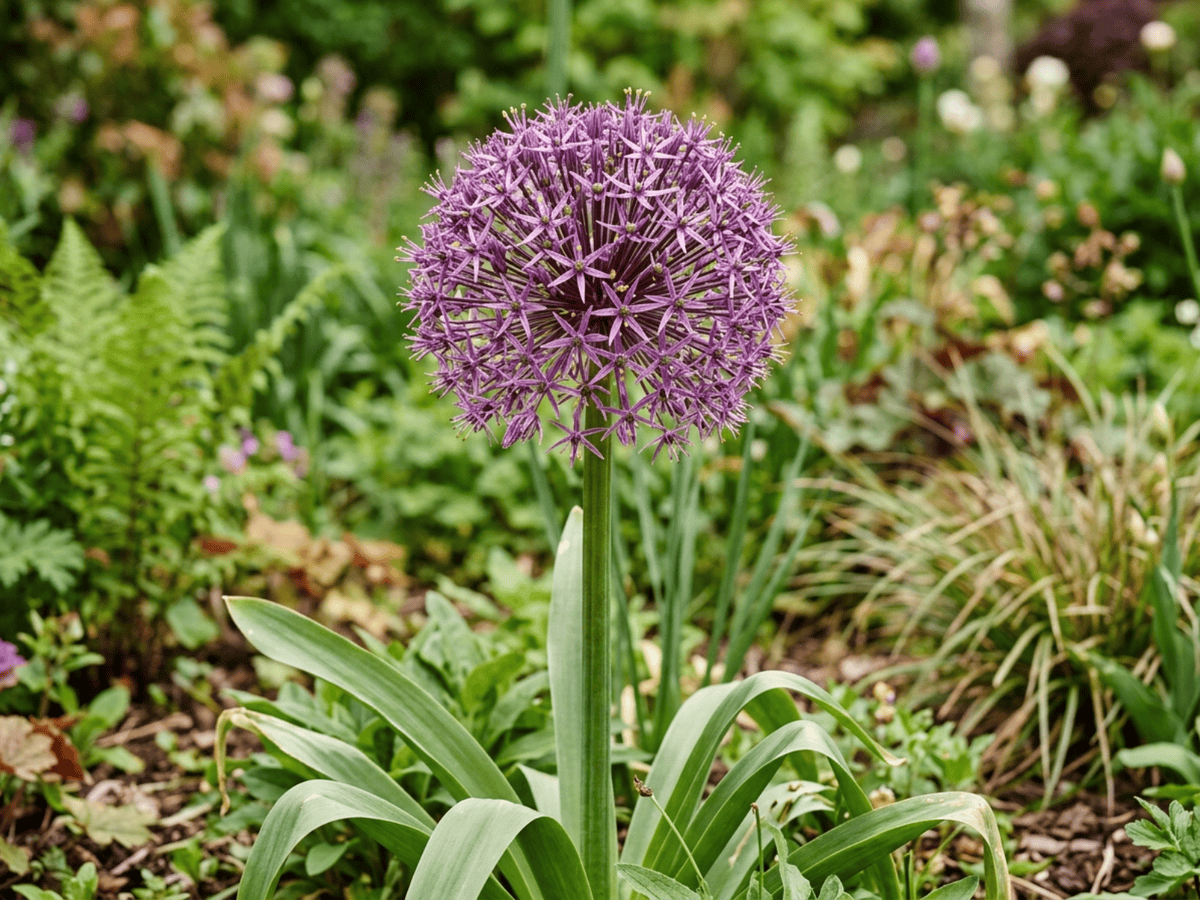 Star Of PersiaAllium christophii
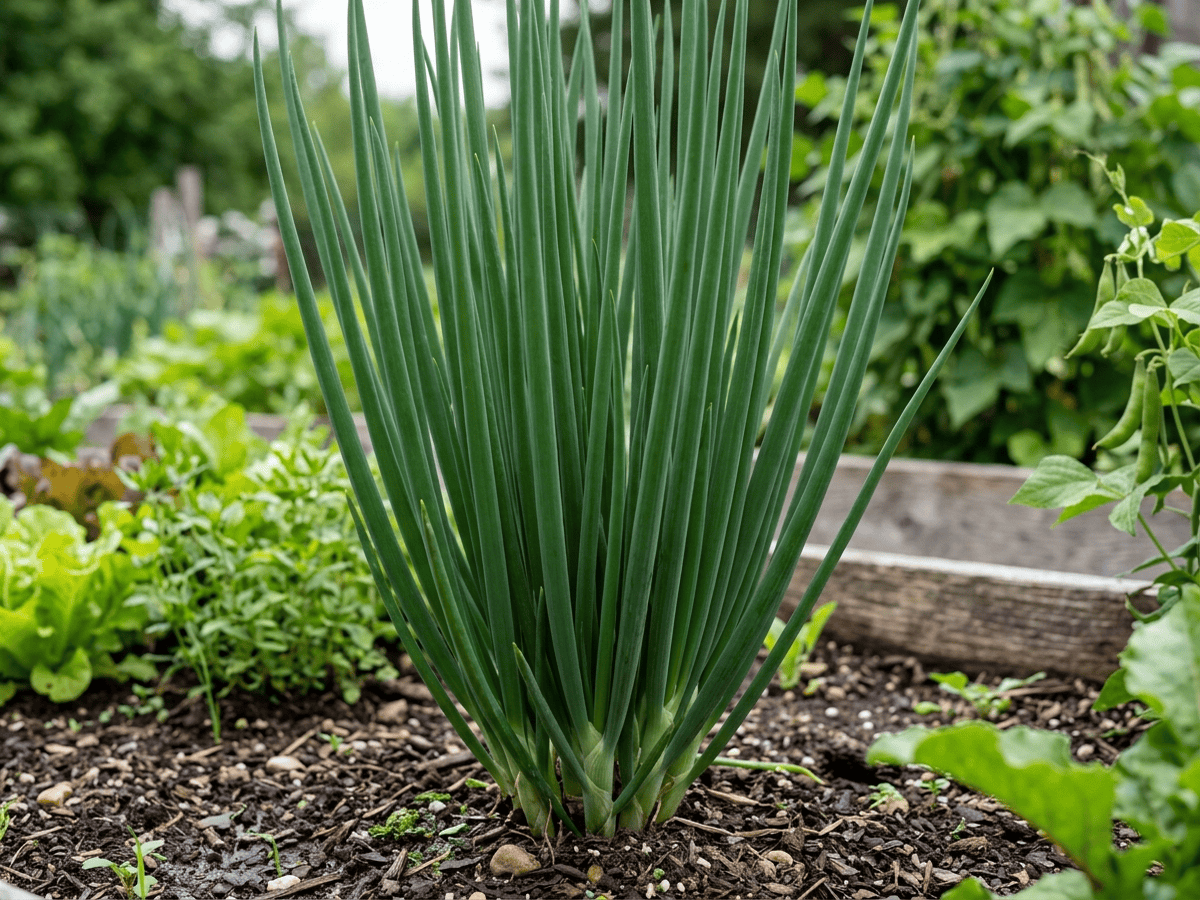 Welsh OnionAllium fistulosum
 Turkistan OnionAllium karataviense
Plants with similar care
 Chinese AbeliaAbelia chinensis
 Fragrant AbeliaAbelia mosanensis
 Large-Flowered AbeliaAbelia uniflora
 Glossy AbeliaAbelia x grandiflora
Frequently asked questions
How often should I water Garlic Chives?
In summer, water about every 10 days; in winter, about every 30 days. Adjust for heat, pot size and drainage.
How much light does Garlic Chives need?
Full sun: 6+ hrs direct. Watch the leaves — scorching or stretching means the light needs adjusting.
Is Garlic Chives toxic to cats or dogs?
Pets Toxic (Dogs Toxic · Cats Toxic) Educational information, not medical or veterinary advice. If exposure is suspected, contact a doctor or veterinarian.
Is Garlic Chives easy to grow?
Yes — it is considered an easy, beginner-friendly plant.
When does Garlic Chives bloom?
It typically blooms Jul–Nov in the Northern Hemisphere.
YardMate
Identify any plant in seconds
Snap a photo — YardMate names the plant, diagnoses problems, and reminds you when to water.
Download on the App Store