 YardMate



Joseph's Coat
Amaranthus tricolor
Easy · Beginner friendlyAbout Joseph's Coat
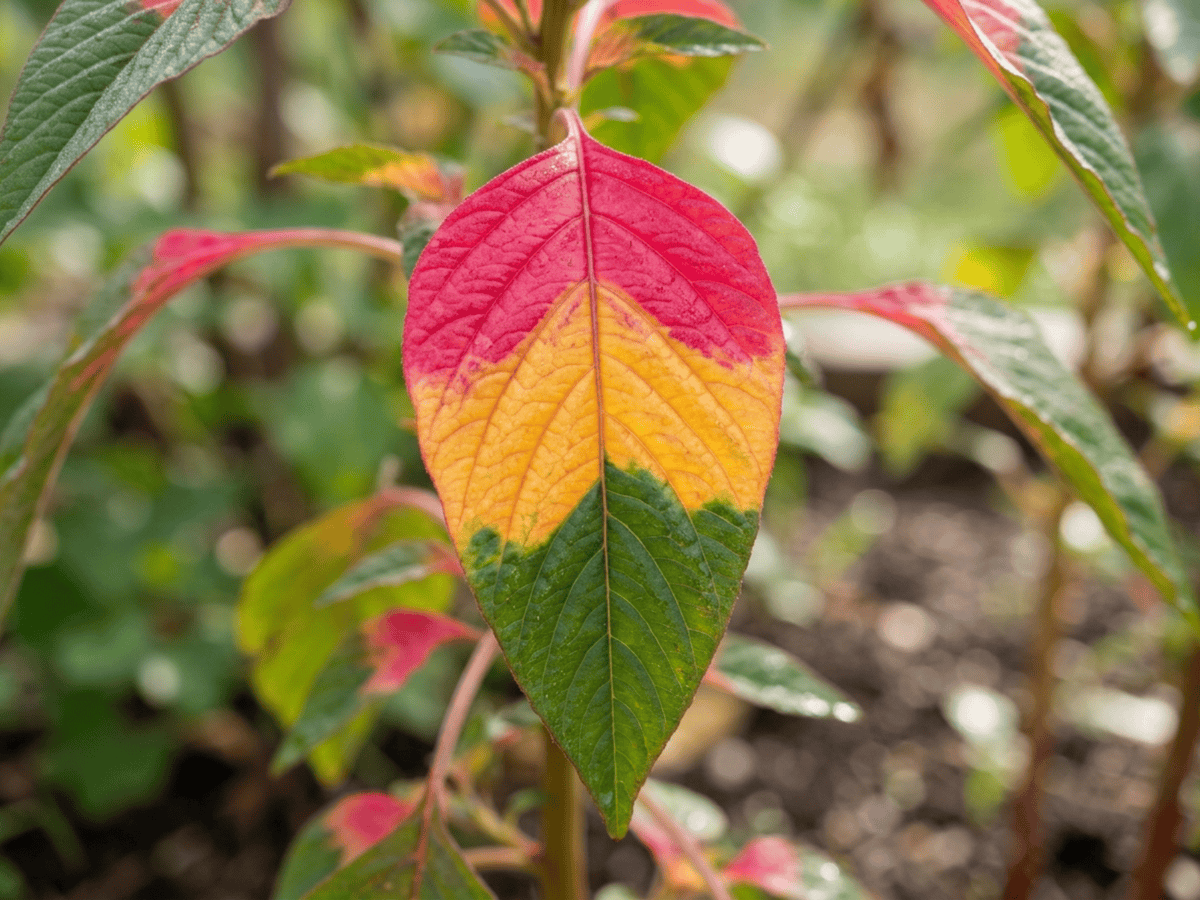
Joseph's Coat is a tropical annual 2–4 feet tall grown for its dazzling tri-colored foliage—upper leaves blaze in red, yellow, and green rosettes like living flames. Particularly spectacular in Southern and Midwestern US gardens where summer heat intensifies color. Young leaves are edible and used as a vegetable in Asian cuisine (callaloo, een choy). Seeds self-sow modestly. Bold accent in tropical-look and Southern heritage gardens.
- Edible
- Heat-tolerant
- Architectural
How to care for Joseph's Coat
Watering
- Springevery 5 days
- Summerevery 4 days
- Fallevery 10 days
- Winterpause watering
Soil · Rich & well-draining
- Top dressingCompost10%
- Main mixPotting soil + compost 3:180%
- DrainageGravel10%
Top up the compost layer each season.
FERTILIZER
Balanced Feed 14-14-14
An even feed covers all three needs at once, keeping leaves, roots and blooms moving together with nothing pushed out of balance.
- Nitrogen · Leaves
- Phosphorus · Roots + Blooms
- Potassium · Strength
- Springevery 21 days
- Summerevery 21 days
At a Glance
- NativeSoutheast Asia
- Height2–4 ft (0.6–1.2 m)
- Spread1–2 ft (0.3–0.6 m)
- Foliage colorRed, Yellow, Bronze, Green
- SoilLoamy, Well-drained, Rich
- LocationsYard · Balcony
Fragrance
NO FRAGRANCE
No notable fragrance.
Toxicity
No toxicity has been reported for this plant. Still, it is wise to keep pets from chewing on any houseplant.
Educational information, not medical or veterinary advice. If exposure is suspected, contact a doctor or veterinarian.
DISTRIBUTION


- Native
- Introduced
- Southeast Asia
History
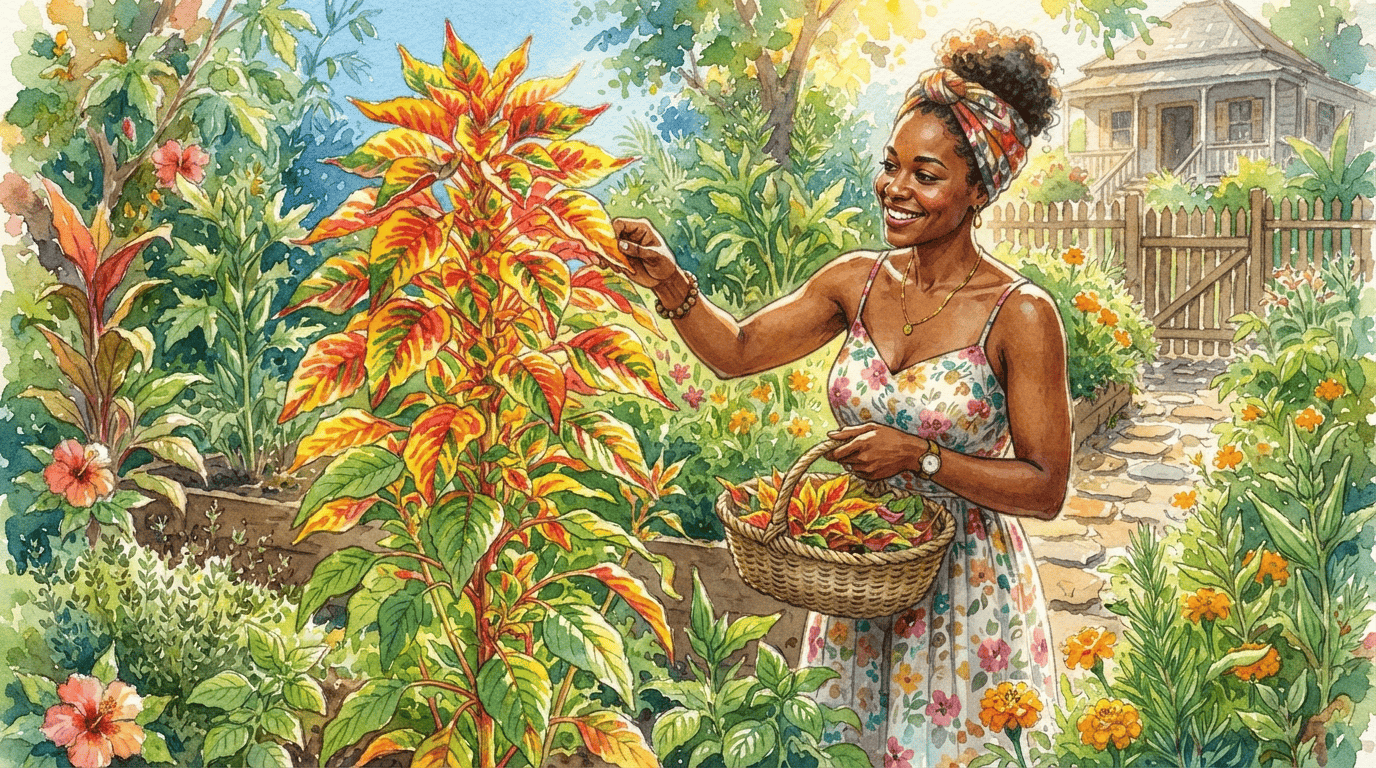
Amaranthus tricolor is native to tropical and subtropical Asia — India, Sri Lanka, and Southeast Asia — where it has been cultivated for millennia as both an ornamental and as a leaf vegetable. In the Asian leaf-vegetable context it is one of the most important warm-season cooked greens, sold under various regional names: "een choy" or "yin choy" (Cantonese), "tampala" (South Asian), "bayam merah" (Malay), "chaulai" (Hindi), "thotakura" (Telugu), and simply "red amaranth" in English. The young leaves are prepared stir-fried, steamed, or added to soups and curries; they have a pleasant mild spinach-like flavor with a hint of earthy sweetness, and a distinctive red color (from betalain pigments) that stains cooking liquids vivid pink. As an ornamental, the plant is grown for the spectacular multicolored top foliage of mature plants: as the plant matures, the upper leaves and growing-tip leaves develop increasingly intense color zoning in brilliant combinations of yellow, orange, red, bronze, and green — flaming rosettes of colored leaves that rise above the plain-green lower foliage like a living tropical flame.
The plant grows erect 90-180 cm tall as an annual and produces small inconspicuous green flower clusters at leaf axils. Popular ornamental cultivars include "Joseph's Coat" (classic red-yellow-green tricolor), "Early Splendor" (red-and-crimson), "Perfecta," and "Illumination." Native to South and Southeast Asia, introduced to American gardens in colonial times.
The name 'Joseph's Coat' refers to the biblical many-colored garment. Grown in Southern heirloom gardens for its flaming foliage and edible leaves, and widely used in callaloo cuisine across Caribbean-American communities.
Symbolism & meaning
What It Symbolizes
Joseph's Coat carries the flame-bright robe of its biblical namesake, every leaf a banner in scarlet, gold, and green. The genus Amaranthus, whose Greek name means 'unfading,' has long stood for enduring affection — love that does not wilt with the season. To grow it is to plant celebration itself, a garden festival that wears its feelings in unmistakable color.
- Enduring affection — Amaranthus symbolism of lasting love
- Celebration — festive flame colors
Where the Name Comes From
Genus from Greek 'unfading'; 'tricolor' for three-colored foliage.
Uses & Fun Facts
- Young leaves cooked as nutritious tropical leafy green
- Tri-colored red, yellow, green foliage glows in summer heat
- Architectural annual brings tropical height to large planters
Related plants
More Amaranthus plants
 Love-Lies-BleedingAmaranthus caudatus
 Smooth PigweedAmaranthus hybridus
 Palmer's AmaranthAmaranthus palmeri
 Redroot AmaranthAmaranthus retroflexus
Plants with similar care
 Chinese AbeliaAbelia chinensis
 Fragrant AbeliaAbelia mosanensis
 Large-Flowered AbeliaAbelia uniflora
 Glossy AbeliaAbelia x grandiflora
Frequently asked questions
How often should I water Joseph's Coat?
Water about every 5 days during the growing season, and always let excess water drain away.
How much light does Joseph's Coat need?
Full sun: 6+ hrs direct. Watch the leaves — scorching or stretching means the light needs adjusting.
Is Joseph's Coat toxic to cats or dogs?
No toxicity has been reported for this plant. Still, it is wise to keep pets from chewing on any houseplant. Educational information, not medical or veterinary advice. If exposure is suspected, contact a doctor or veterinarian.
Is Joseph's Coat easy to grow?
Yes — it is considered an easy, beginner-friendly plant.
YardMate
Identify any plant in seconds
Snap a photo — YardMate names the plant, diagnoses problems, and reminds you when to water.
Download on the App Store