 YardMate

Kohl-Rabi
Brassica oleracea var. gongylodes
Easy · Beginner friendlyAbout Kohl-Rabi
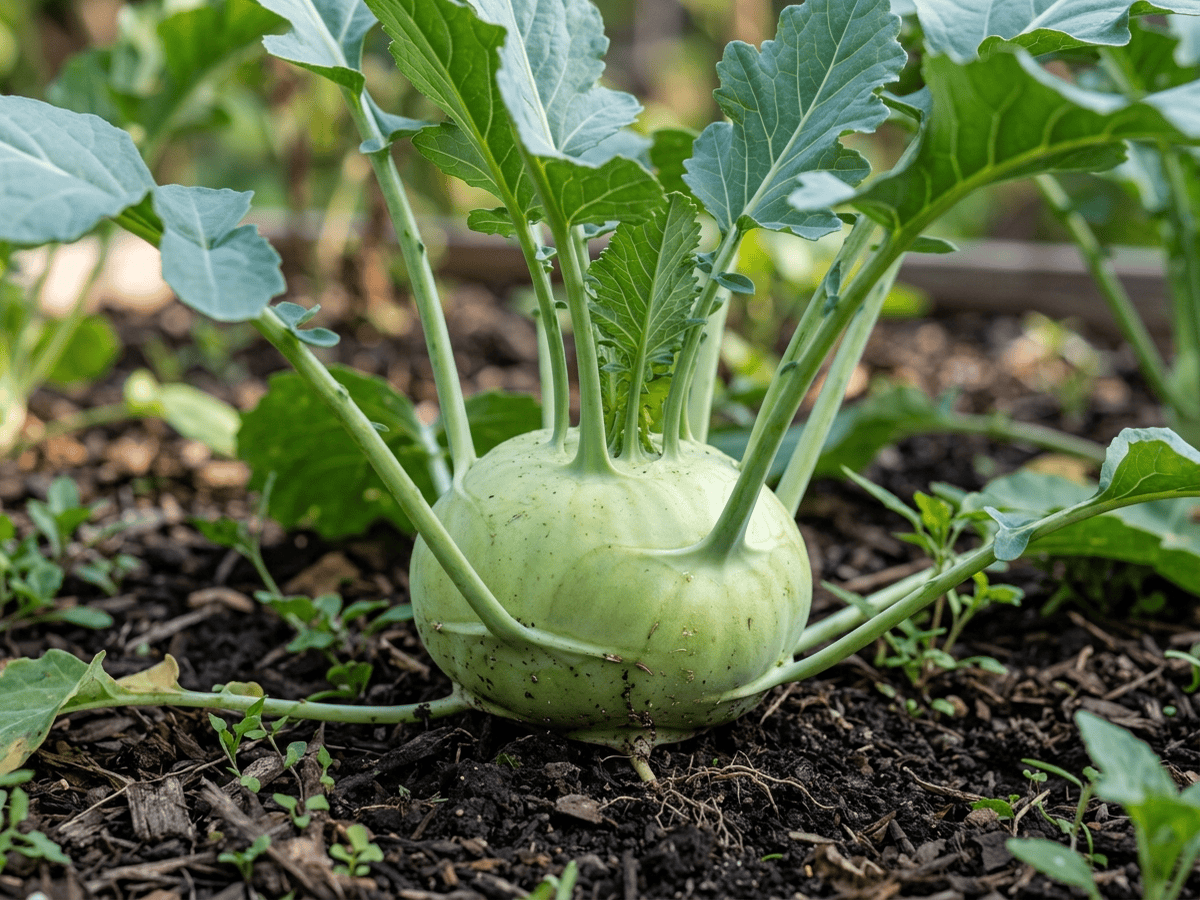
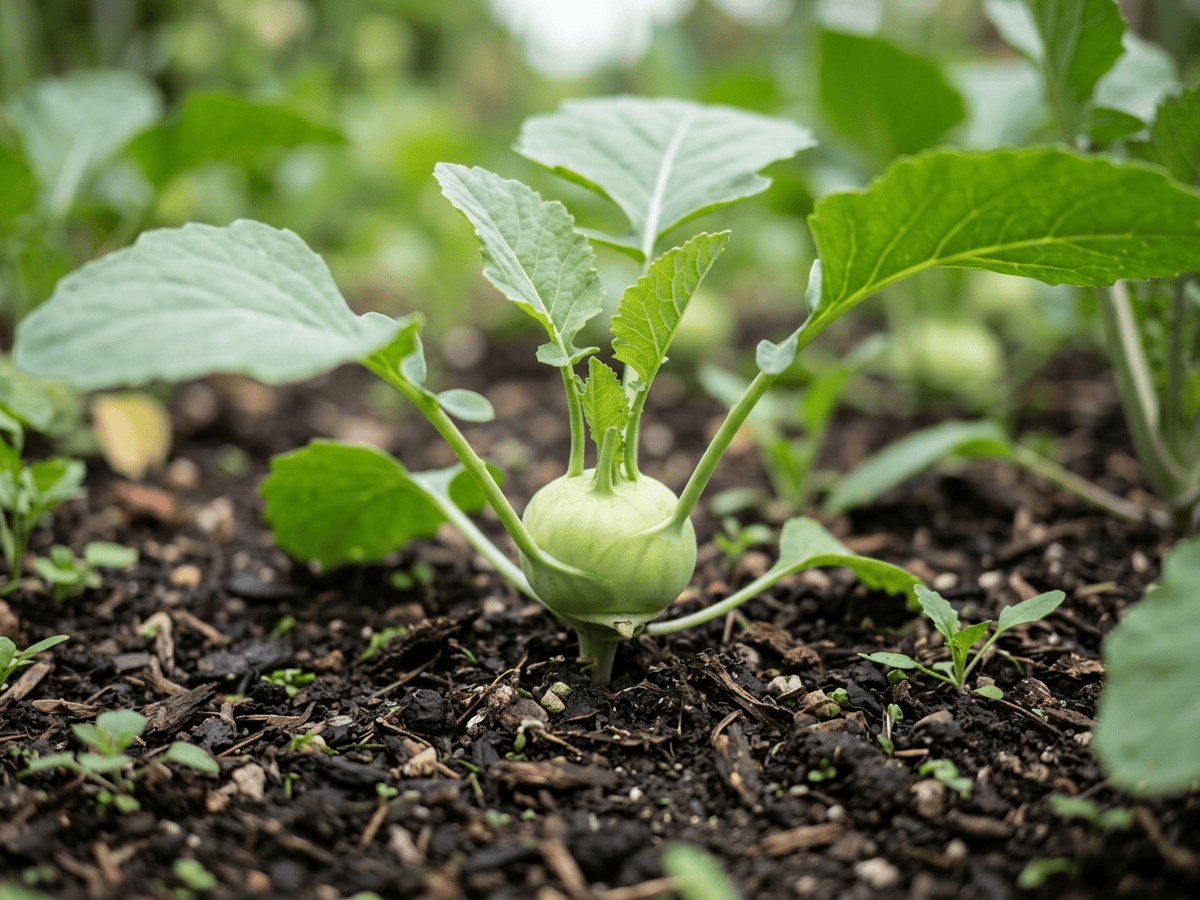
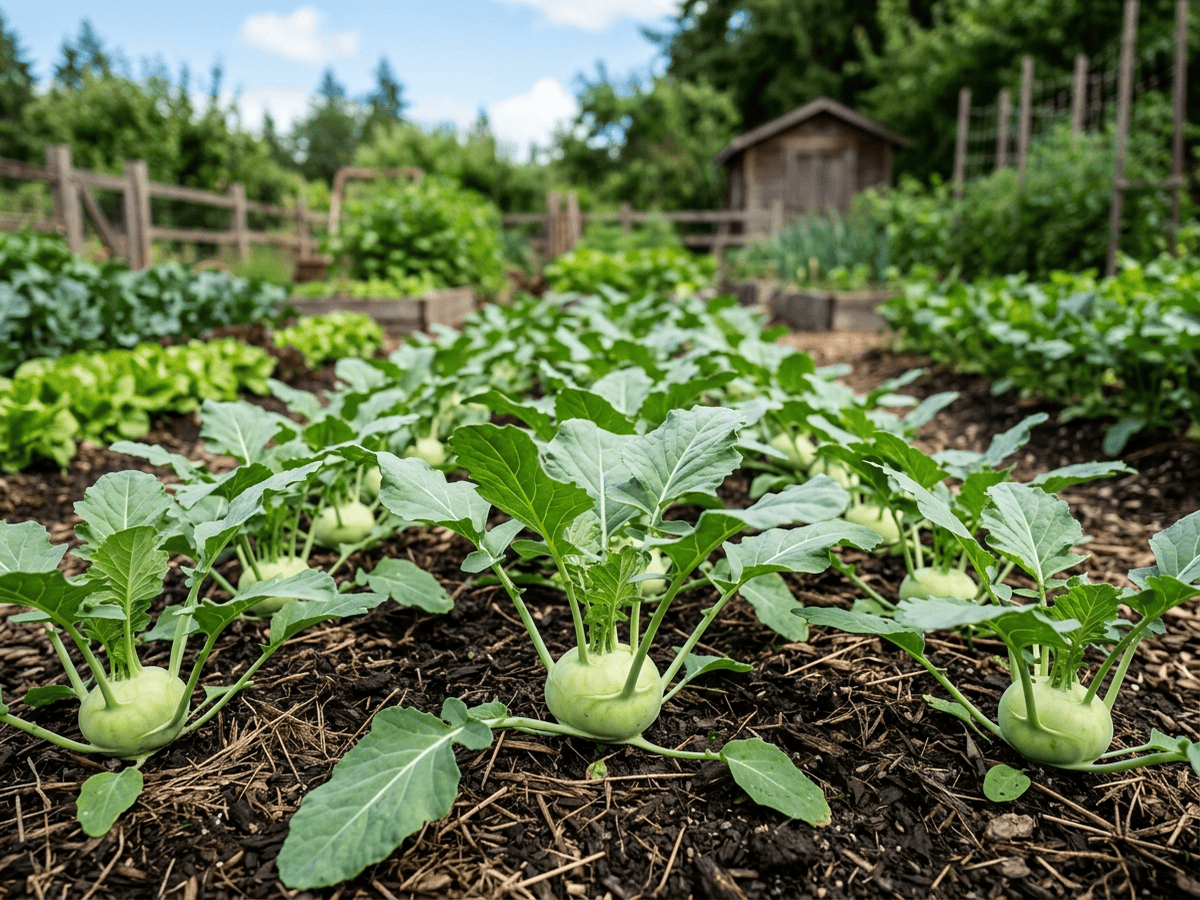
Kohlrabi is a cultivated form of wild cabbage producing a swollen above-ground bulbous stem in green or purple, topped by a rosette of cabbage-like leaves. Reaching 12-18 inches tall, the crisp slightly sweet bulbous stem is eaten raw in salads and slaws or cooked in soups and stir-fries. A staple of Central European, German, and Indian cuisine, increasingly popular in modern American kitchen gardens for its quick growth and unusual appearance.
- Edible
- Fast-growing
How to care for Kohl-Rabi
Watering
- Springevery 3 days
- Summerevery 3 days
- Fallevery 5 days
- Winterevery 7 days
Soil · Rich & well-draining
- Top dressingCompost10%
- Main mixPotting soil + compost 3:180%
- DrainageGravel10%
Top up the compost layer each season.
FERTILIZER
Balanced Feed 14-14-14
An even feed covers all three needs at once, keeping leaves, roots and blooms moving together with nothing pushed out of balance.
- Nitrogen · Leaves
- Phosphorus · Roots + Blooms
- Potassium · Strength
- Springevery 30 days
- Summerevery 30 days
- Fallevery 30 days
At a Glance
- NativeEurope
- Height1–1.5 ft (0.3–0.5 m)
- Spread1–1.5 ft (0.3–0.5 m)
- Flower colorYellow
- Foliage colorBlue-green, Purple
- SoilRich, Loamy, Well-drained
- LocationsYard · Balcony
Bloom time
BLOOM CYCLE
Peak bloom
Jun–Aug
Yellow cruciferous flowers if bolted
Toxicity
Humans Safe · Pets Safe
glucosinolates
Safe
EXPOSURE No exposure route is reported.
EFFECT No toxic effect is reported.
NOTE Listed as non-toxic for humans; avoid eating ornamental plants unless confirmed edible.
Safe
EXPOSURE No exposure route is reported.
EFFECT No toxic effect is reported.
NOTE Listed as non-toxic for dogs; avoid eating ornamental plants unless confirmed edible.
Safe
EXPOSURE No exposure route is reported.
EFFECT No toxic effect is reported.
NOTE Listed as non-toxic for cats; avoid eating ornamental plants unless confirmed edible.
Educational information, not medical or veterinary advice. If exposure is suspected, contact a doctor or veterinarian.
DISTRIBUTION

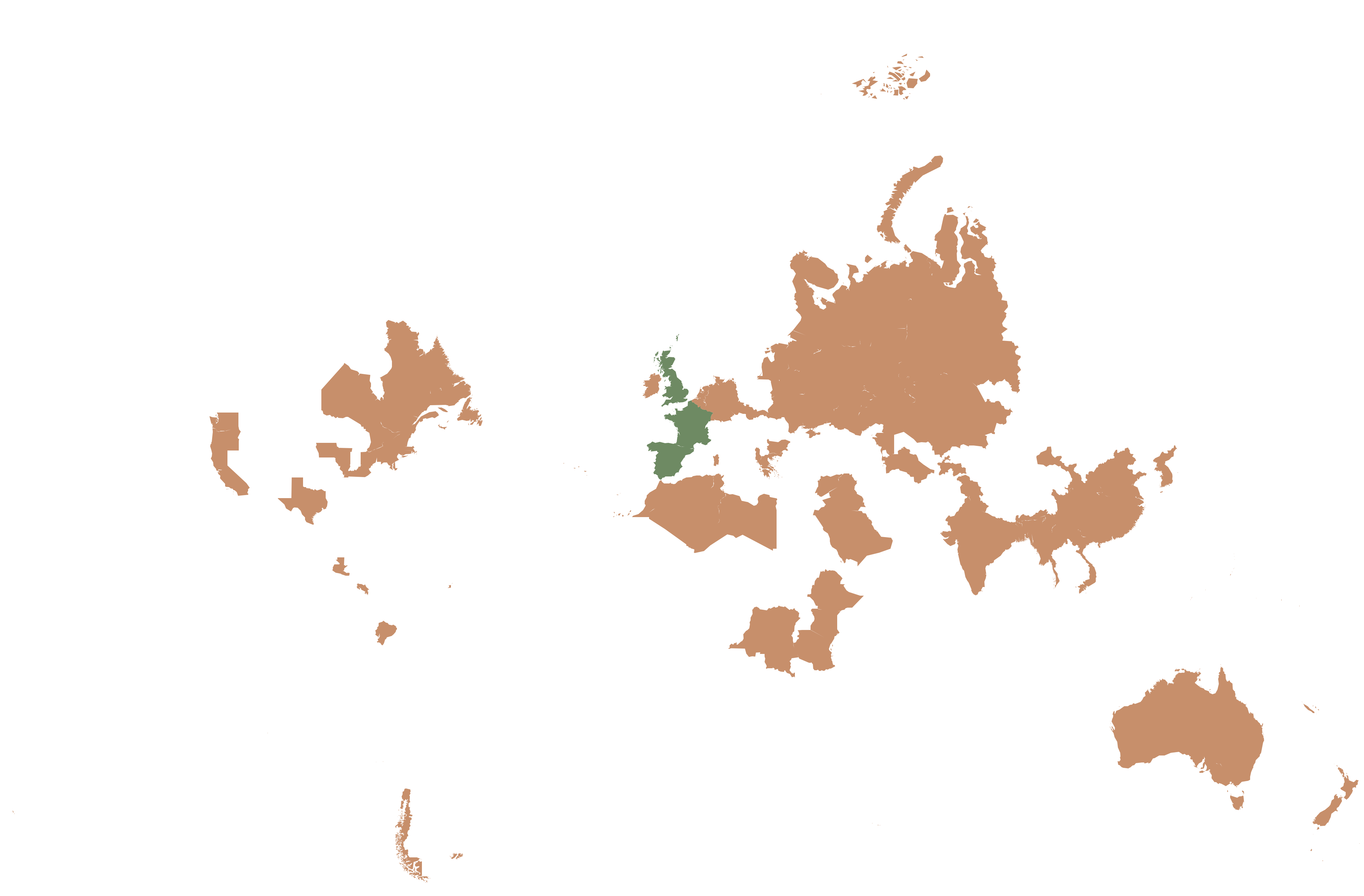
- Native
- Introduced
- Europe
History
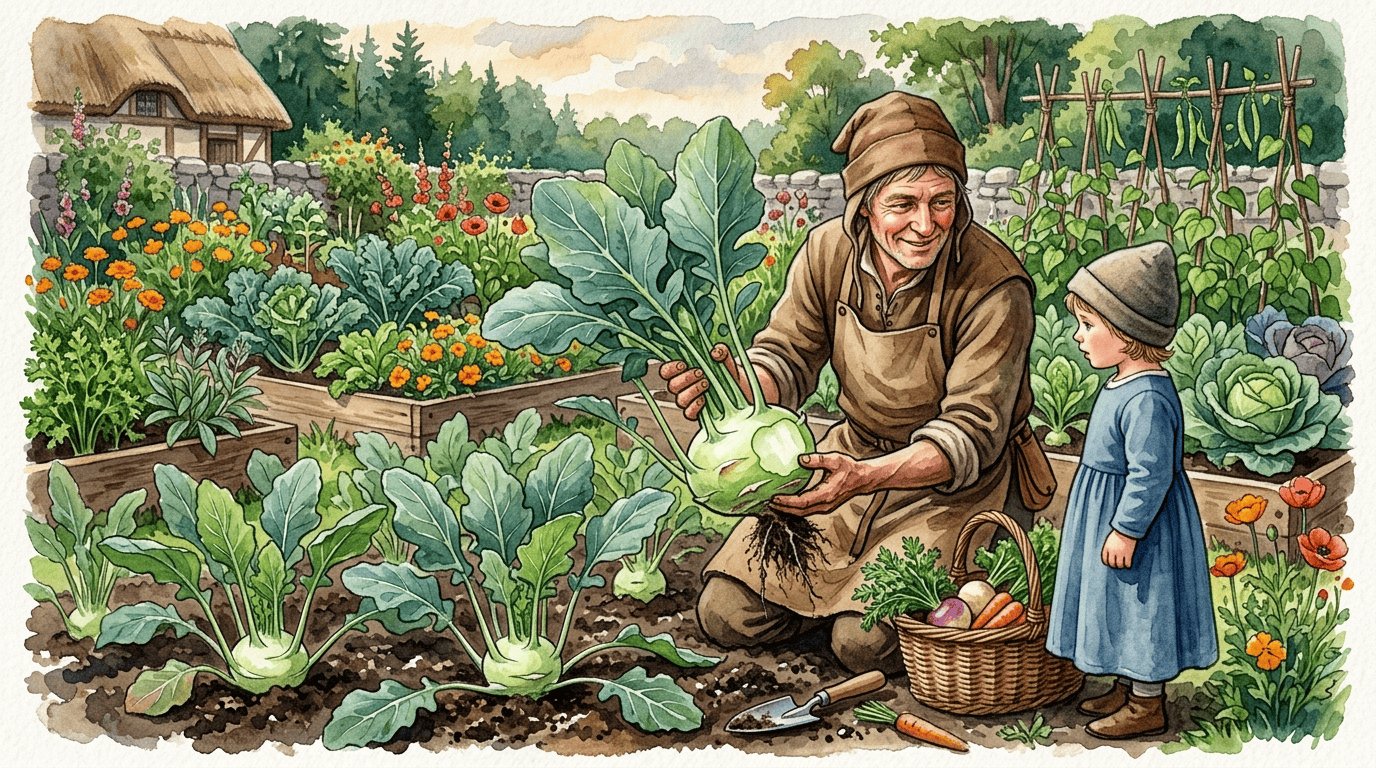
Brassica oleracea var. gongylodes, commonly called kohlrabi or German turnip, is one of the cultivar groups of the domesticated Brassica oleracea complex, distinguished by a greatly enlarged, swollen, rounded, globular stem base eaten as a crisp vegetable. American botanist Liberty Hyde Bailey formally described the variety in 1922. The cultivar group likely developed in northern Europe during the 15th-16th centuries and was first recorded in writing by Pietro Andrea Mattioli in his 1554 herbal.
The name kohlrabi combines German Kohl (cabbage) and Rabi (turnip), describing its intermediate character. Plants are grown as short-season biennials treated as annual crops: the thickened stem above soil level swells into a 8-15 cm round 'bulb' with long-petioled blue-green leaves arising from it at various angles, giving the plant a distinctive UFO-like appearance. The peeled interior has a crisp texture and mild sweet flavor reminiscent of broccoli stem or jicama, eaten raw in slaws and salads or cooked in Central European stews and Indian subji.
Pale-green forms like 'Kolibri' and 'Early White Vienna' and purple-skinned 'Purple Vienna' and 'Kossak' are common. Developed in northern Europe in the late medieval period as a unique selection of wild cabbage. A staple of German, Czech, Hungarian, and Polish cuisine, also widely used in Indian (gunth gobhi) and Chinese cooking. Increasingly grown by adventurous American home gardeners.
Symbolism & meaning
What It Symbolizes
Kohl-Rabi is curiosity made edible — its alien swollen stem rises strangely from the soil, knobbed and antennaed with leaf-stalks. Yet it carries a long heritage in Central European peasant kitchens, where it sustained generations as a sweet, crisp staple. To grow it is to invite a small wonder into the vegetable bed: a vegetable that asks questions of the eye before it ever reaches the plate.
- Curiosity — alien-looking swollen stem rises from the ground
- Heritage — Central European peasant vegetable tradition
Where the Name Comes From
'Gongylodes' from Greek meaning rounded, referring to the swollen stem.
Uses & Fun Facts
- Swollen stems eaten raw or cooked as crisp vegetable
Related plants
More Brassica plants
 Brown MustardBrassica juncea
 Acephala GroupBrassica oleracea var. acephala
 BroccoliBrassica oleracea var. botrytis
 Shetland CabbageBrassica oleracea var. capitata
Plants with similar care
 Chinese AbeliaAbelia chinensis
 Fragrant AbeliaAbelia mosanensis
 Large-Flowered AbeliaAbelia uniflora
 Glossy AbeliaAbelia x grandiflora
Frequently asked questions
How often should I water Kohl-Rabi?
In summer, water about every 3 days; in winter, about every 7 days. Adjust for heat, pot size and drainage.
How much light does Kohl-Rabi need?
Full sun: 6+ hrs direct. Watch the leaves — scorching or stretching means the light needs adjusting.
Is Kohl-Rabi toxic to cats or dogs?
Pets Safe (Dogs Safe · Cats Safe) Educational information, not medical or veterinary advice. If exposure is suspected, contact a doctor or veterinarian.
Is Kohl-Rabi easy to grow?
Yes — it is considered an easy, beginner-friendly plant.
When does Kohl-Rabi bloom?
It typically blooms Jun–Aug in the Northern Hemisphere.
YardMate
Identify any plant in seconds
Snap a photo — YardMate names the plant, diagnoses problems, and reminds you when to water.
Download on the App Store