 YardMate



Eggplant
Solanum melongena
Medium · Some experienceAbout Eggplant
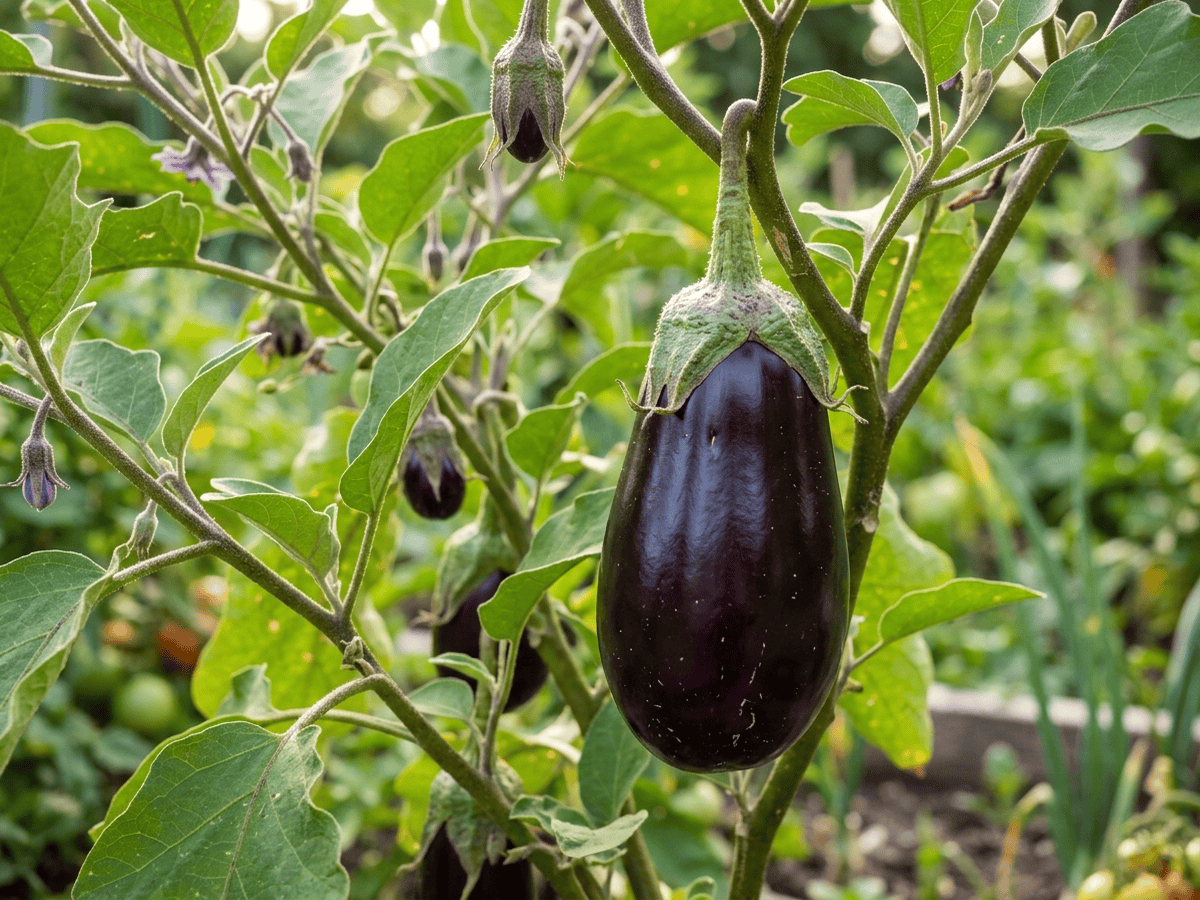
Solanum melongena, the eggplant or aubergine, produces glossy, purple, white, green, or striped fruit on bushy plants with soft, grey-green foliage. Native to India and Southeast Asia, it has been cultivated for over 4,000 years. The standard globe eggplant is just one form — Japanese, Chinese, Thai, and Italian varieties offer long, slender, round, or tiny fruit types. Eggplant requires long, warm summers and rich soil. The fruit is a culinary chameleon — it absorbs flavors and transforms in texture from spongy raw to silky cooked. Essential in baba ghanoush, moussaka, and eggplant parmesan.
- Edible
- Heat-tolerant
How to care for Eggplant
Watering
- Springevery 3 days
- Summerevery 2 days
- Fallevery 4 days
- Winterevery 7 days
Soil · Rich & well-draining
- Top dressingCompost10%
- Main mixPotting soil + compost 3:180%
- DrainageGravel10%
Top up the compost layer each season.
FERTILIZER
Balanced Feed 14-14-14
An even feed covers all three needs at once, keeping leaves, roots and blooms moving together with nothing pushed out of balance.
- Nitrogen · Leaves
- Phosphorus · Roots + Blooms
- Potassium · Strength
- Springevery 14 days
- Summerevery 14 days
- Fallevery 21 days
At a Glance
- NativeSouth Asia
- Height2–4 ft (0.6–1.2 m)
- Spread2–3 ft (0.6–0.9 m)
- Flower colorPurple, White
- Foliage colorGreen
- Fruit colorPurple, White, Green
- SoilLoamy, Well-drained, Rich
- LocationsYard · Balcony
Bloom time
BLOOM CYCLE
Peak bloom
Jun–Aug
Purple star flowers; harvest fruit when glossy — dull skin means overripe
Fragrance
NO FRAGRANCE
No notable fragrance.
Toxicity
Humans Slight · Pets Moderate
solanine and solasonine
Slight
- Leaf
- Stem
- Ingestion
EXPOSURE Eating leaves and stems.
EFFECT Ripe fruit safe and foliage and green unripe fruit contain solanine causing GI upset.
NOTE Cooked ripe fruit is safe and widely consumed; foliage mildly toxic.
Moderate
- Leaf
- Stem
- Ingestion
EXPOSURE Eating leaves and stems.
EFFECT Weakness, confusion, GI signs from solanine.
NOTE Cooked ripe fruit is safe and widely consumed; foliage mildly toxic.
Moderate
- Leaf
- Stem
- Ingestion
EXPOSURE Eating leaves and stems.
EFFECT Weakness, confusion, GI signs from solanine.
NOTE Cooked ripe fruit is safe and widely consumed; foliage mildly toxic.
Educational information, not medical or veterinary advice. If exposure is suspected, contact a doctor or veterinarian.
DISTRIBUTION

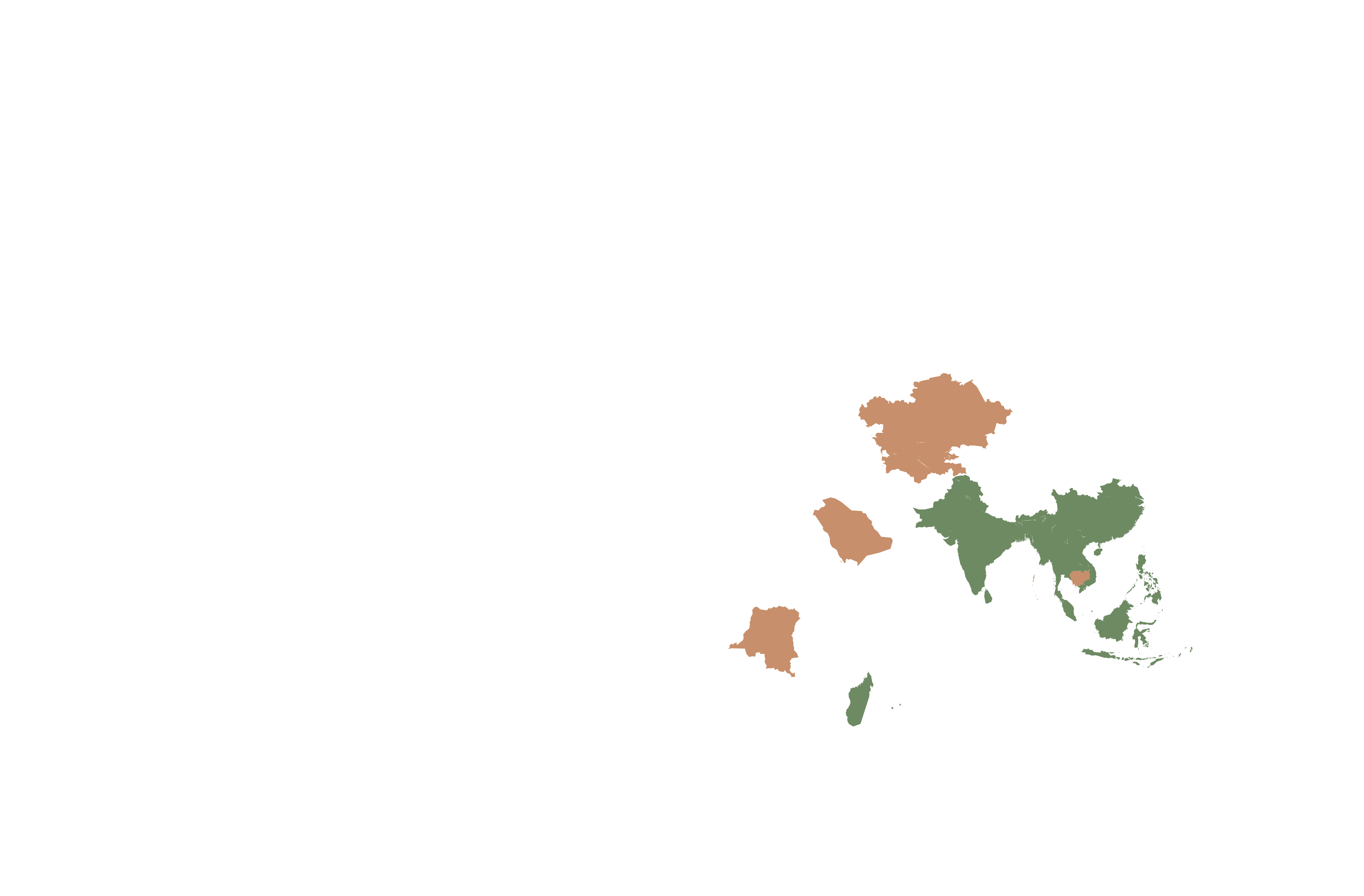
- Native
- Introduced
- South Asia
History
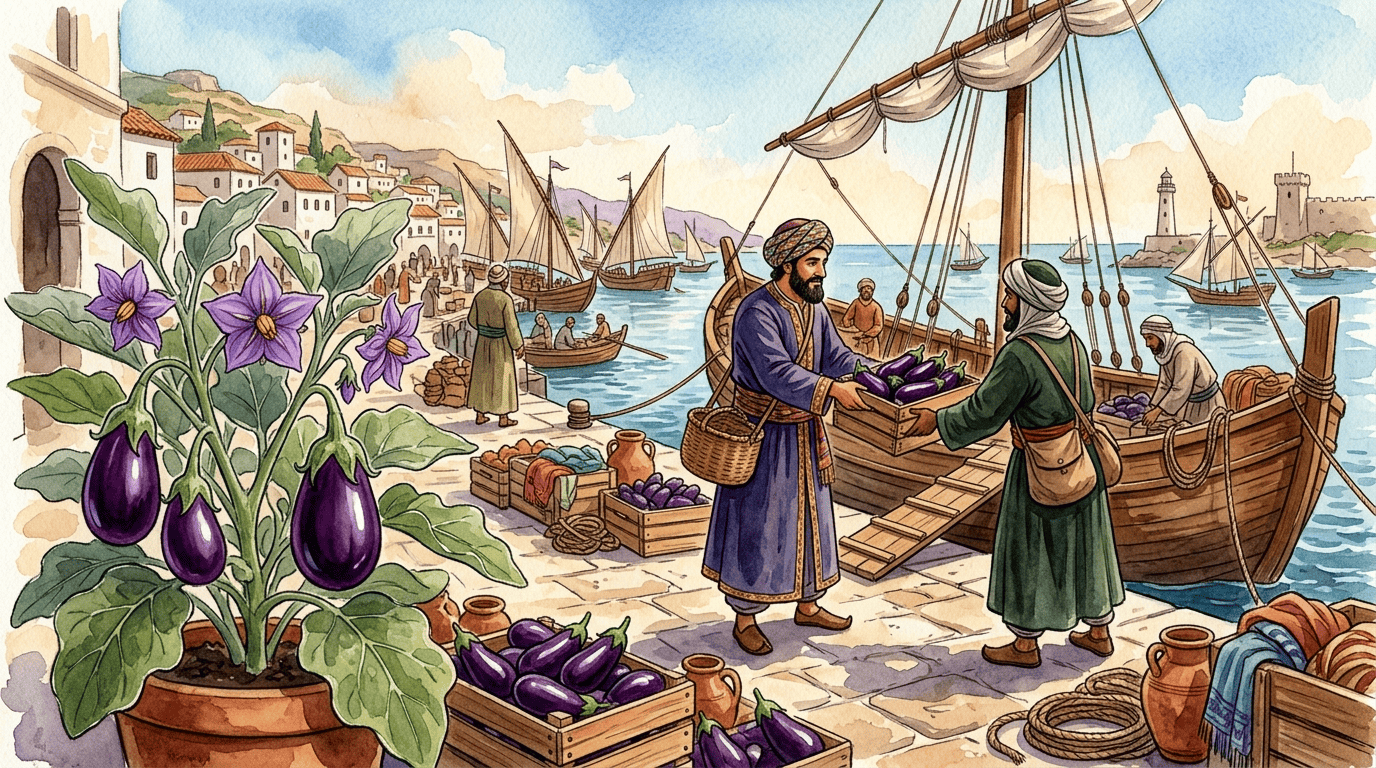
Solanum melongena was domesticated in South Asia, probably in India, over 4,000 years ago — wild ancestors Solanum incanum and S. insanum grow across the Indian subcontinent. Sanskrit texts reference it as "vatingana," the root of Arabic "badinjan," Spanish "berenjena," and Italian "melanzana." Arab traders carried eggplant to the Mediterranean in the 7th-8th centuries CE, and the Moors introduced it to Spain and southern Italy. Medieval Europeans were initially suspicious — as a Solanaceae relative of deadly nightshade it was called "mad apple," and the species name "melongena" or "insana" reflects this — but by the Renaissance it became staple in Mediterranean cuisine.
It anchors Italian caponata and parmigiana, French ratatouille, Greek moussaka, Turkish imam bayildi and karnıyarık, Middle Eastern baba ghanoush, and dozens of Indian, Sri Lankan, Chinese (yúxiāng qiézi), Japanese (nasu), and Southeast Asian dishes. Over 1,000 named cultivars produce fruit in white, green, purple, striped, and nearly-black forms. Eggplant's English name comes from 18th-century European varieties that were small, white, and egg-shaped.
In medieval Europe, it was called 'mala insana' (mad apple), believed to cause insanity — a reputation that delayed its culinary acceptance for centuries. Meanwhile, Indian, Chinese, and Arab cuisines had embraced it for millennia. Arab traders spread it across the Mediterranean, where it became essential in Turkish, Greek, and Italian cooking. The word 'aubergine' traces through French, Catalan, Arabic 'al-badinjan,' Persian 'badingan,' and ultimately Sanskrit 'vatinganah' — a linguistic journey matching the plant's physical journey.
Symbolism & meaning
What It Symbolizes
The Eggplant makes visible abundance, its glossy purple fruits held in generous numbers along the curving stems. Across Mediterranean, Middle Eastern, and Asian cuisines, no other vegetable shape-shifts so willingly — into baba ghanoush, ratatouille, parmigiana, and a hundred curries. To grow it is to invite culinary plenty into the kitchen, a single plant capable of feeding many tables across many cultural traditions throughout the long, hot summer.
- Abundance — Its generous fruit production and culinary versatility represent plenty and nourishment
Where the Name Comes From
Solanum from Latin 'solamen' (comfort/solace). Melongena from Arabic 'badinjan' via Italian 'melanzana.'
Uses & Fun Facts
- Fruits are cooked in stews, grills, curries, and dips worldwide
Related plants
More Solanum plants
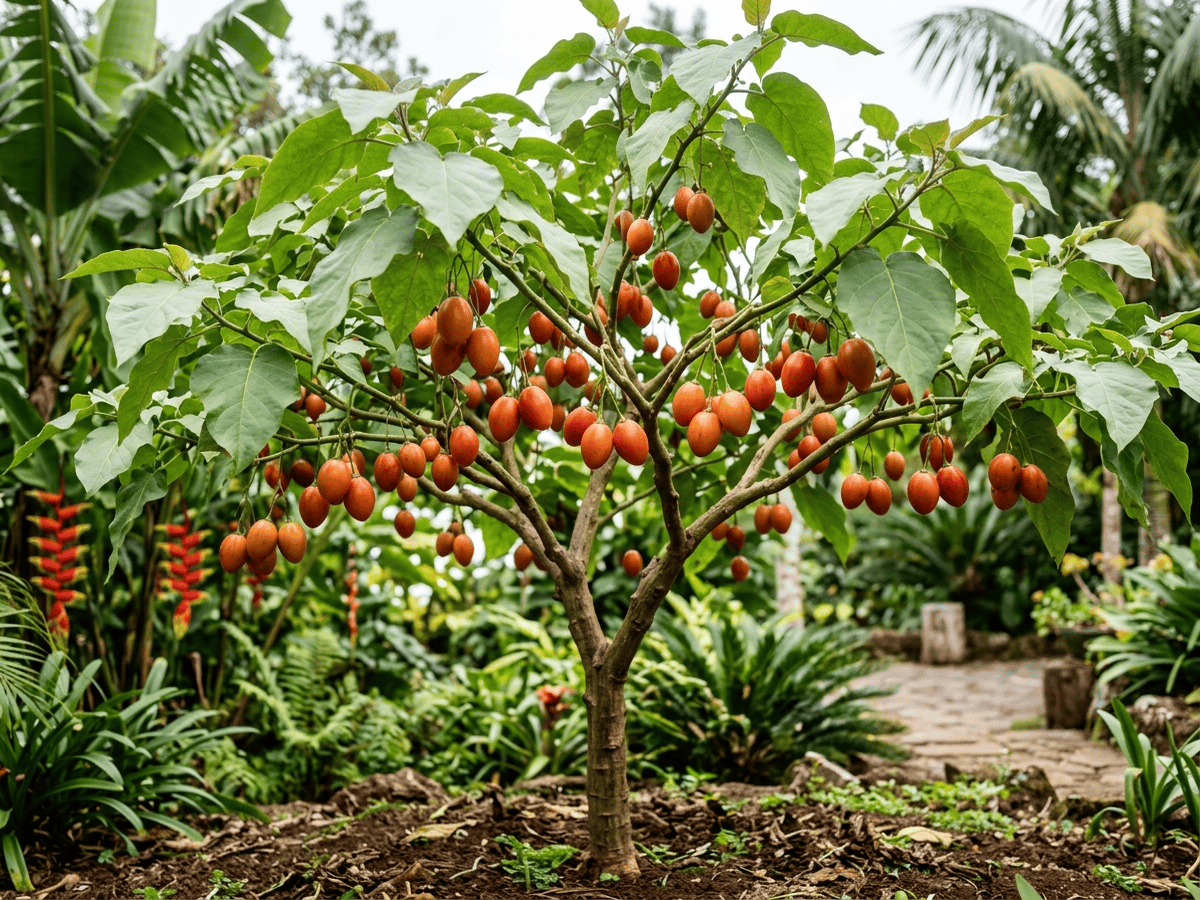 TamarilloSolanum betaceum
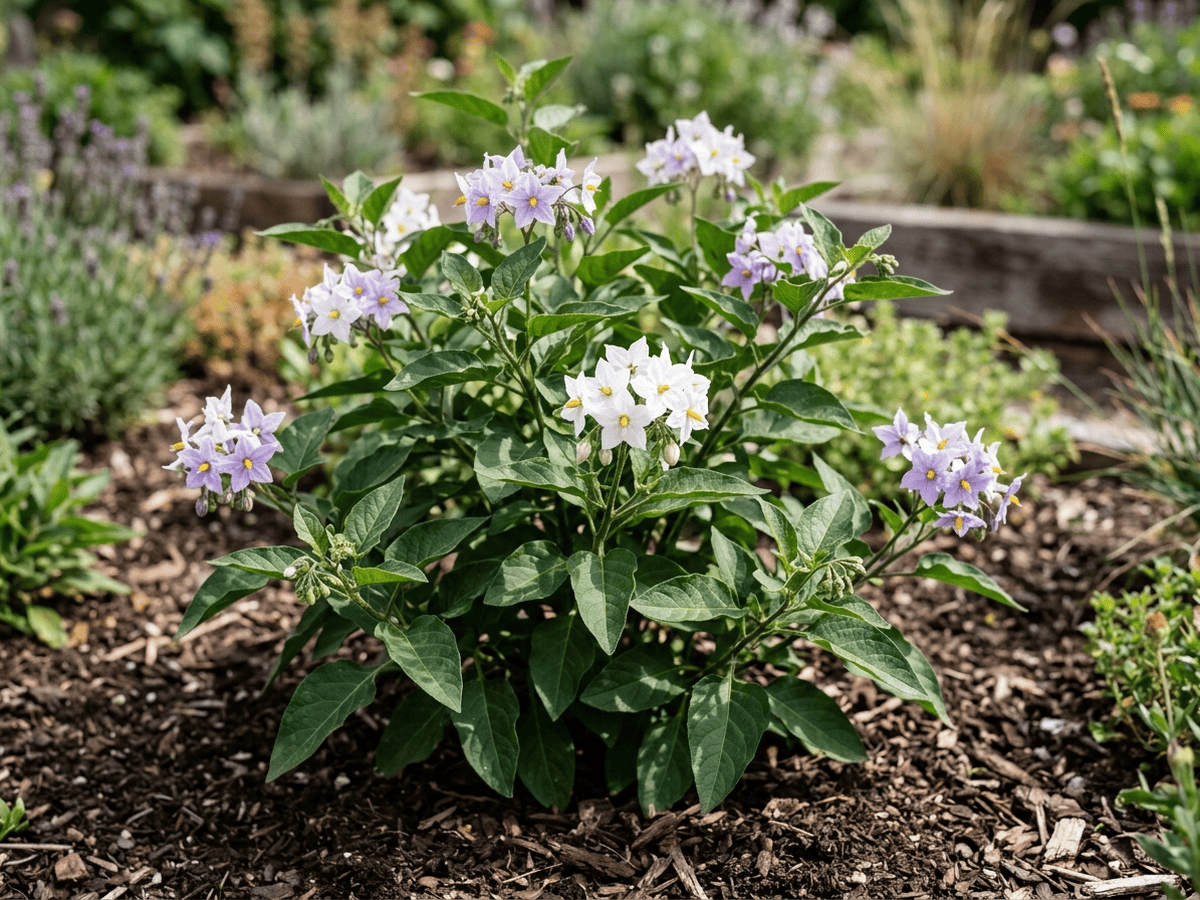 Buenos Aires NightshadeSolanum bonariense
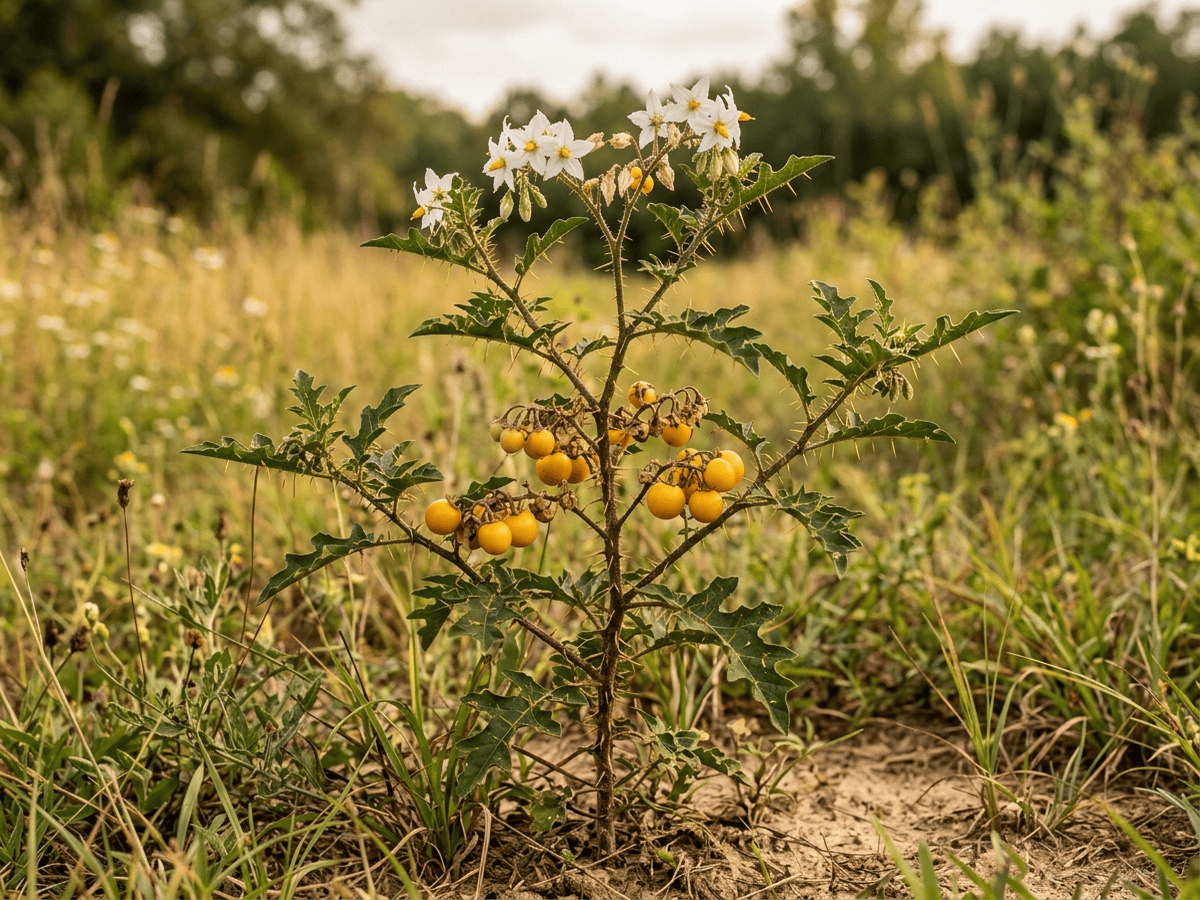 Carolina HorsenettleSolanum carolinense
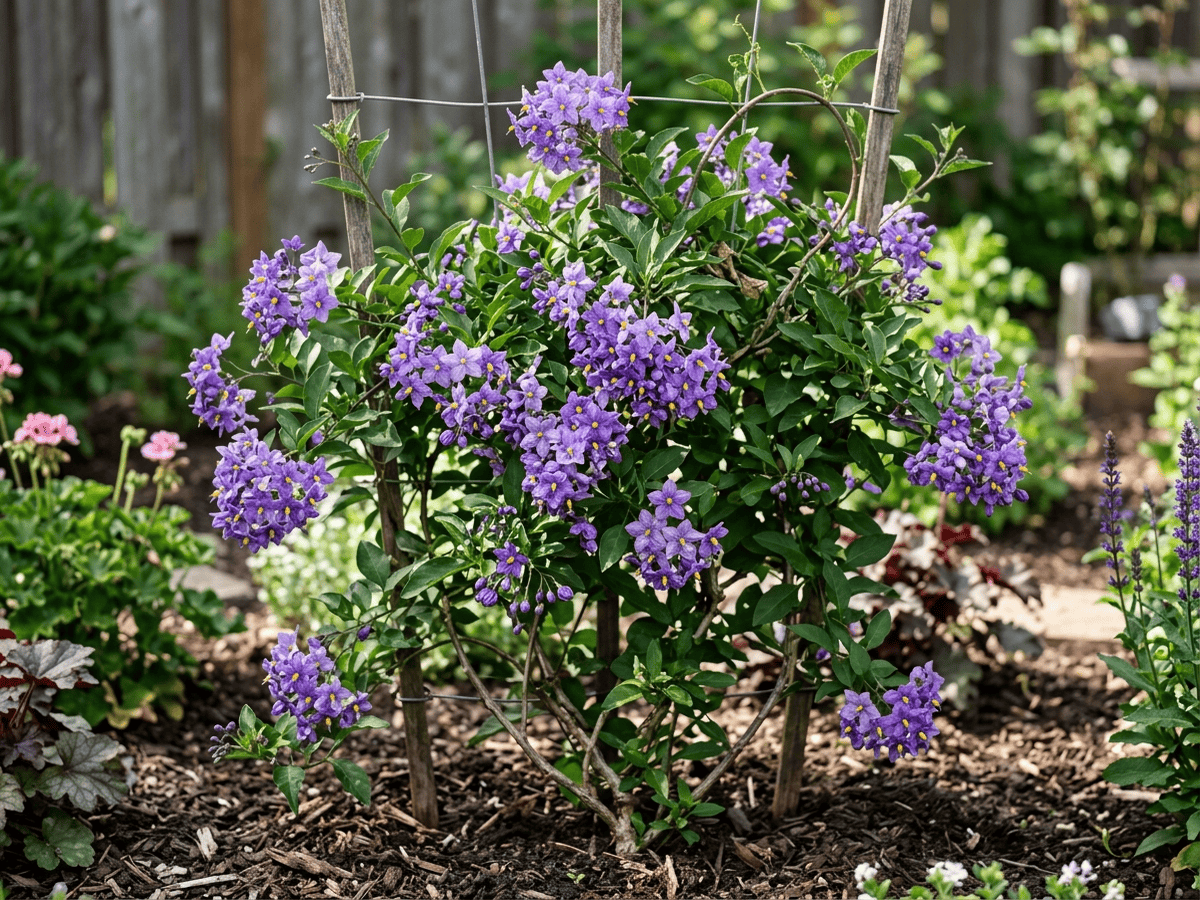 Chilean Potato VineSolanum crispum
Plants with similar care
 Mexican AbeliaAbelia floribunda
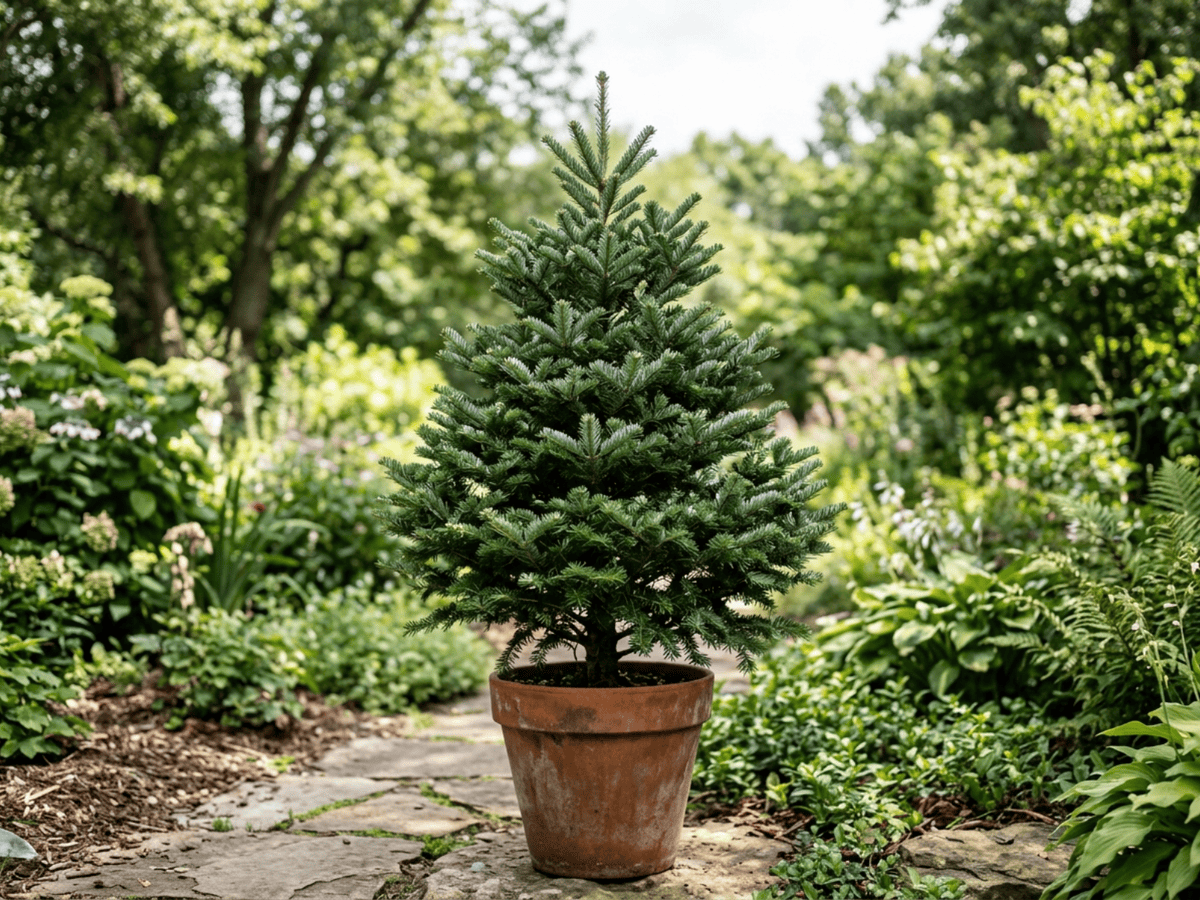 Fraser FirAbies fraseri
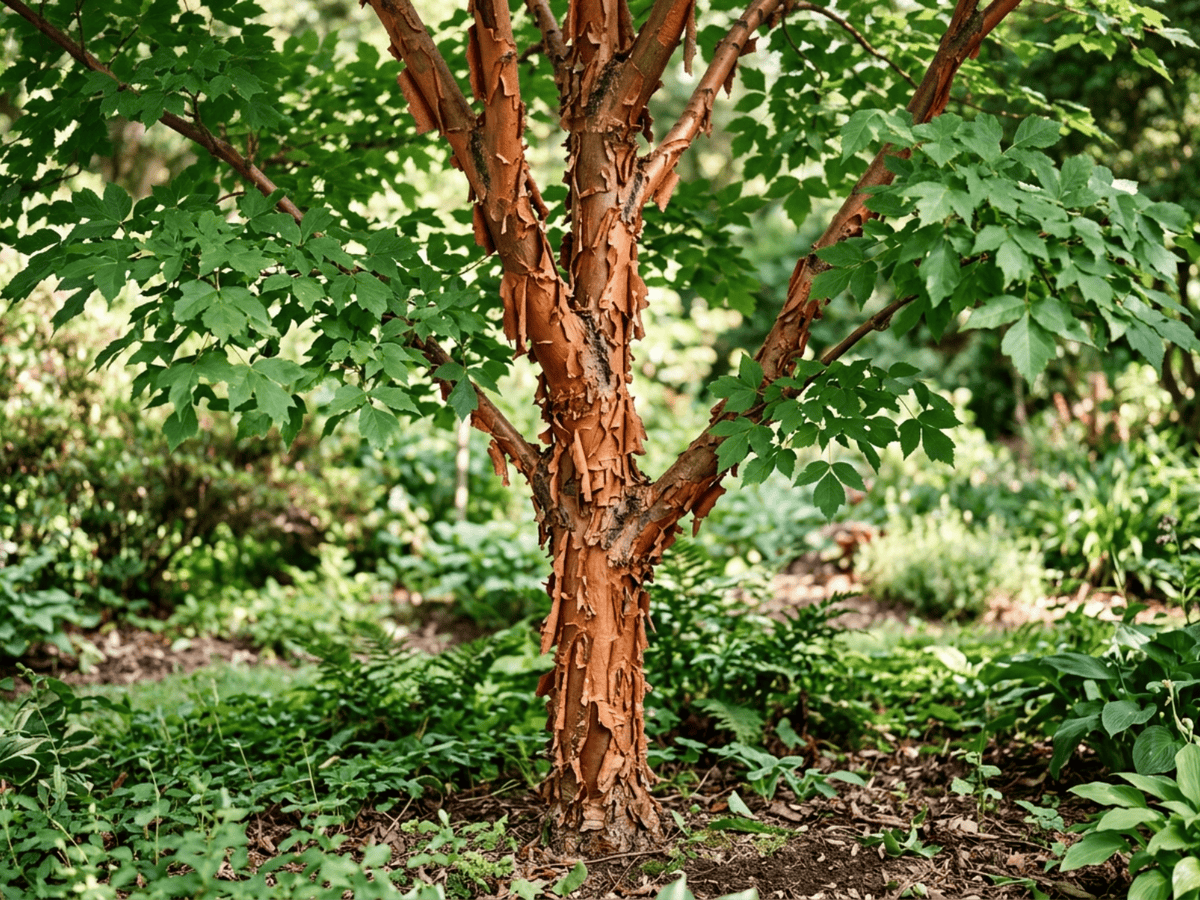 Paperbark MapleAcer griseum
 Sugar MapleAcer saccharum
Frequently asked questions
How often should I water Eggplant?
In summer, water about every 2 days; in winter, about every 7 days. Adjust for heat, pot size and drainage.
How much light does Eggplant need?
Full sun: 6+ hrs direct. Watch the leaves — scorching or stretching means the light needs adjusting.
Is Eggplant toxic to cats or dogs?
Pets Moderate (Dogs Moderate · Cats Moderate) Educational information, not medical or veterinary advice. If exposure is suspected, contact a doctor or veterinarian.
Is Eggplant easy to grow?
It is moderately demanding: a good choice once you have a little experience.
When does Eggplant bloom?
It typically blooms Jun–Aug in the Northern Hemisphere.
YardMate
Identify any plant in seconds
Snap a photo — YardMate names the plant, diagnoses problems, and reminds you when to water.
Download on the App Store